How to Create and Sell AI Workforces for Beginners
TL;DR
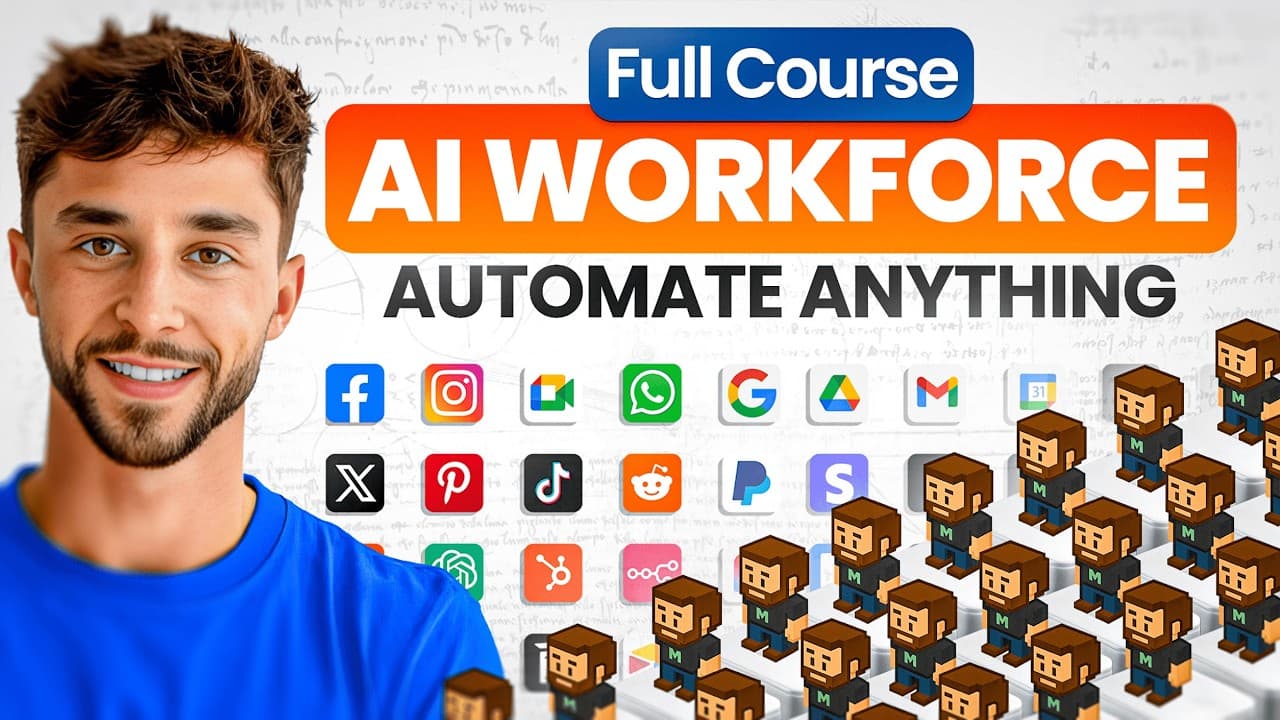
AI workforces are transforming industries by automating tasks that traditionally required human teams. These digital teams operate continuously without fatigue or salaries, offering businesses a competitive edge. By learning to build and sell AI workforces, individuals can capitalize on this trend, offering solutions to businesses eager for efficiency and innovation.
Transcript
AI isn't just coming for jobs. It's coming for entire departments. Teams that once required dozens of people can now be replaced by something entirely new. An AI workforce. These are digital teams that run all day and all night that never get tired. They never quit. And they never ask for a paycheck. And they're showing up in every department these... Read More
Key Insights
- AI workforces are digital teams that automate tasks, reducing the need for human labor.
- They operate 24/7 without the costs associated with human employees, like salaries and benefits.
- AI workforces can be built without coding, using platforms like Relevance AI.
- The demand for AI workforces is growing as businesses seek efficiency and competitive advantages.
- Building AI workforces involves creating specialized agents that collaborate to complete tasks.
- AI agents can integrate with tools like Google Meet, HubSpot, and Trello to enhance functionality.
- Individuals can monetize AI workforce skills by offering audits and building solutions for businesses.
- The AI workforce market is projected to reach $52.6 billion by 2030, presenting vast opportunities.
Install to Summarize YouTube Videos and Get Transcripts
Explore YouTube Video Summarizer or Get YouTube Transcript Extractor
Questions & Answers
Q: How do AI workforces operate without human intervention?
AI workforces consist of digital agents that automate tasks traditionally performed by humans. These agents work together, each specializing in a specific task, to complete processes without fatigue or the need for salaries. They can integrate with various tools and platforms, enabling seamless operation and coordination.
Q: What are the benefits of implementing AI workforces in businesses?
AI workforces offer significant advantages, including continuous operation without human-related costs such as salaries and benefits. They enhance efficiency by automating repetitive tasks, allowing businesses to focus on strategic activities. Additionally, they provide a competitive edge by enabling rapid scaling and consistent performance standards.
Q: How can individuals monetize their AI workforce skills?
Individuals can monetize AI workforce skills by conducting audits for businesses to identify areas for automation and then designing and implementing custom AI solutions. They can offer ongoing management and optimization services, creating a recurring revenue stream. Building a reputation through successful projects can lead to more client opportunities.
Q: What tools are essential for building AI workforces?
Building AI workforces involves using platforms like Relevance AI, which allow for the creation of digital agents without coding. Essential tools include integrations with platforms like Google Meet for scheduling, HubSpot for lead management, and Trello for task organization. These tools enable seamless operation and coordination among agents.
Q: What is the projected market growth for AI workforces?
The AI workforce market is projected to grow significantly, reaching an estimated $52.6 billion by 2030. This growth is driven by the increasing demand for automation solutions that enhance efficiency and reduce costs. As businesses seek competitive advantages, the adoption of AI workforces is expected to accelerate across industries.
Q: How do AI agents collaborate within a workforce?
AI agents collaborate by specializing in specific tasks and working together to complete processes. They communicate and coordinate through an orchestrator agent, which manages the workflow and ensures tasks are passed between agents efficiently. This collaboration mimics the structure of human teams, enhancing overall productivity.
Q: What are the key components of an AI agent?
An AI agent consists of a prompt that defines its role and responsibilities, access to necessary resources and tools, and the ability to integrate with external platforms. It can also have memory capabilities to recall previous interactions and improve over time. These components enable the agent to perform its tasks effectively.
Q: Why is now the right time to invest in AI workforce skills?
Investing in AI workforce skills is timely due to the rapid growth and adoption of AI technologies across industries. As businesses seek to enhance efficiency and reduce costs, the demand for AI solutions is increasing. By acquiring these skills, individuals can position themselves as leaders in a market poised for substantial growth.
Summary & Key Takeaways
-
AI workforces replace traditional departments by automating tasks with digital agents, offering businesses continuous operation without human-related costs. Platforms like Relevance AI enable users to build these workforces without coding, using integrations with tools like Google Meet and Trello.
-
The growing demand for AI workforces presents opportunities for individuals to monetize their skills by offering audits and building custom solutions for businesses. This trend is driven by the need for efficiency and innovation in a competitive market.
-
AI agents work collaboratively, each specializing in a task, to form an effective workforce. By understanding and implementing these systems, individuals can lead the AI workforce revolution and secure a role in the evolving job market.
Read in Other Languages (beta)
Share This Summary 📚
Summarize YouTube Videos and Get Video Transcripts with 1-Click
Try YouTube Summary with ChatGPT & Claude or YouTube Transcript Generator
Explore More Summaries from Liam Ottley 📚






Summarize YouTube Videos and Get Video Transcripts with 1-Click
Try YouTube Summary with ChatGPT & Claude or YouTube Transcript Generator