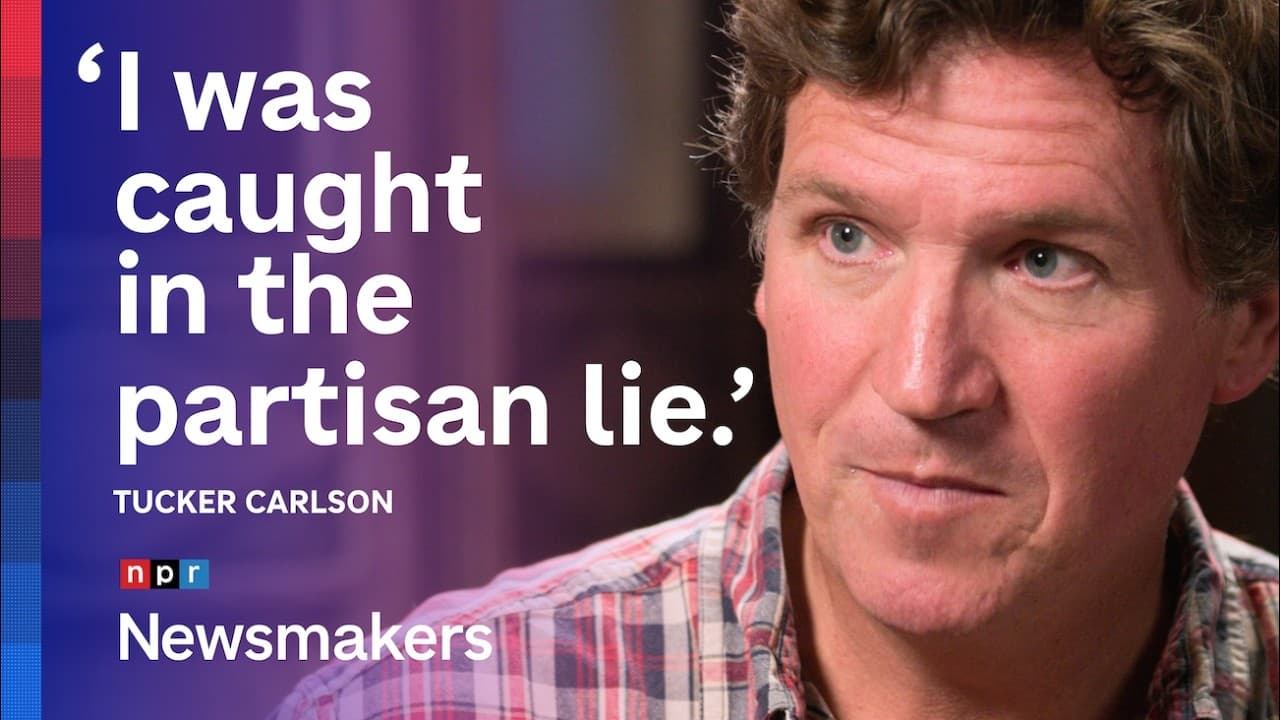
Why did Carlson break with Trump over Iran and Israel
TL;DR
Carlson argues that Trump was led into war with Iran by foreign influence and warned that threatening nuclear action could be catastrophic. He contends both parties enabled problematic policies and questions who really sets US foreign policy, noting Israel and its lobby money influence. He also critiques media and protests surrounding the war.
Transcript
He should have been removed from office immediately when he threatened nuclear war, threatening the offensive use of nuclear weapons, which is to say threatening the destruction of humanity. I said to Trump, you know, 4 days before the war started, if you do this, you know, the United States will be kicked out of the Gulf. The American Empire will ... Read More
Key Insights
- Tucker Carlson challenges the premise that party politics fully explain US foreign policy decisions, suggesting outside influence and domestic power structures steer presidents.
- The key to understanding Carlson’s view on Iran is his claim that the US is pressured by foreign interests to pursue regime change and military options.
- Carlson argues that threatening nuclear action should trigger severe internal accountability, implying a constitutional mechanism like the 25th amendment could apply.
- He distinguishes between Israel as a regional actor and the US, blaming policy directions on foreign embassy influence and lobby networks rather than purely American interests.
- Carlson insists sanctions and diplomacy were not adequately pursued, arguing that previous Democratic administrations did not fundamentally alter the anti Iran orientation that he criticizes.
- The conversation emphasizes the role of media, protests, and political donors in shaping public perception and legitimizing militarized policy.
- Carlson highlights the strategic importance of Iran as a regional power with geographic leverage in the Gulf, framing it as an enduring challenge rather than a reducible threat.
- He uses historical context of past wars and protests to compare the response to Iran with earlier conflicts, suggesting a lack of mass anti war mobilization today could reflect political dynamics in Washington
Install to Summarize YouTube Videos and Get Transcripts
Explore YouTube Video Summarizer or Get YouTube Transcript Extractor
Questions & Answers
Q: A real search query question about the video (e.g. 'How to...', 'What is...', 'Why does...'). Question 1
What does Carlson say about who really controls US foreign policy and how does this affect decisions on Iran? Carlson argues that the influence comes from various sources beyond the presidency, including foreign embassies and lobbying networks. He contends this dynamic shapes major policy choices like sanctions and potential regime change, suggesting leadership should be held accountable when policy aligns with external pressure rather than national interest.
Q: Question 2
Why does Carlson say the 25th amendment should have been used in relation to a nuclear threat? He states that threatening first use of nuclear weapons is an extreme act that he believes warrants removal from office. He argues this demonstrates a breakdown in the moral framework guiding leadership and calls for immediate action to safeguard humanity, framing it as a serious constitutional concern.
Q: Question 3
What is Carlson's view of the uni party in Washington regarding Iran? He claims both major parties share responsibility for a pro war orientation and argues that this one party approach hides deeper leverage by foreign interests. He contrasts this with the idea that real policy shifts require challenging the consensus between parties rather than simply changing administrations.
Q: Question 4
How does Carlson describe Israel's influence in US policy? He asserts that decisions about weapons sales and military support are driven by Israel lobby money and embassy connections, rather than independent US strategy. He emphasizes the role of figures tied to Israel in key positions, arguing this shapes foreign policy toward intervention in the region.
Q: Question 5
What does Carlson say about protests after the Iran war began? He notes a perceived lack of large anti war protests compared to earlier conflicts, suggesting that Democratic backers organize demonstrations through nonprofits and donors rather than broad spontaneous mobilization. This observation forms part of his critique of how public response influences policy.
Q: Question 6
What does Carlson propose about re evaluating foreign policy strategy with Iran? He argues that Iran is a regional power shaped by geography, including access to coastlines and strategic waterways. He suggests policy should center on national interest and realistic engagement with Iran rather than pursuing regime change simply to undercut regional rivals like Israel.
Q: Question 7
How does Carlson compare Democratic and Republican positions on Iran? He acknowledges some disagreements, such as Obama era diplomacy, but maintains that both parties ultimately accepted war like tendencies. He credits Democratic leaders for the nuclear deal while criticizing the broader anti Iran stance of successive administrations as insufficient for lasting peace.
Q: Question 8
What role does Carlson see for the media in shaping foreign policy narratives? He implies that media coverage can normalize warlike stances and influence public opinion, affecting how policy is pursued. He urges more critical scrutiny of policymakers and stronger public discourse about the costs and legitimacy of military actions.
Summary & Key Takeaways
-
Carlson reflects on his past Trump support and contrasts it with his current stance on the Iran war, suggesting external influence shaped presidents’ decisions. He argues that a cabinet driven removal could have prevented escalation. The discussion broadens to media, faith, and power in Washington.
-
He critiques the uni party dynamic, asserting that both major parties share some blame for warlike policy while contending Israel has undue influence on US decisions, and he questions the effectiveness of sanctions versus diplomacy.
-
The interview covers the rallying points around anti war movements, questioning their visibility and influence, while hinting at the consequences of current policy for America and its allies, and proposing reevaluations of foreign policy strategies.
Read in Other Languages (beta)
Share This Summary 📚
Summarize YouTube Videos and Get Video Transcripts with 1-Click
Try YouTube Summary with ChatGPT & Claude or YouTube Transcript Generator
Explore More Summaries from NPR 📚


Summarize YouTube Videos and Get Video Transcripts with 1-Click
Try YouTube Summary with ChatGPT & Claude or YouTube Transcript Generator