How to Talk About Your Daily Routine in English
TL;DR
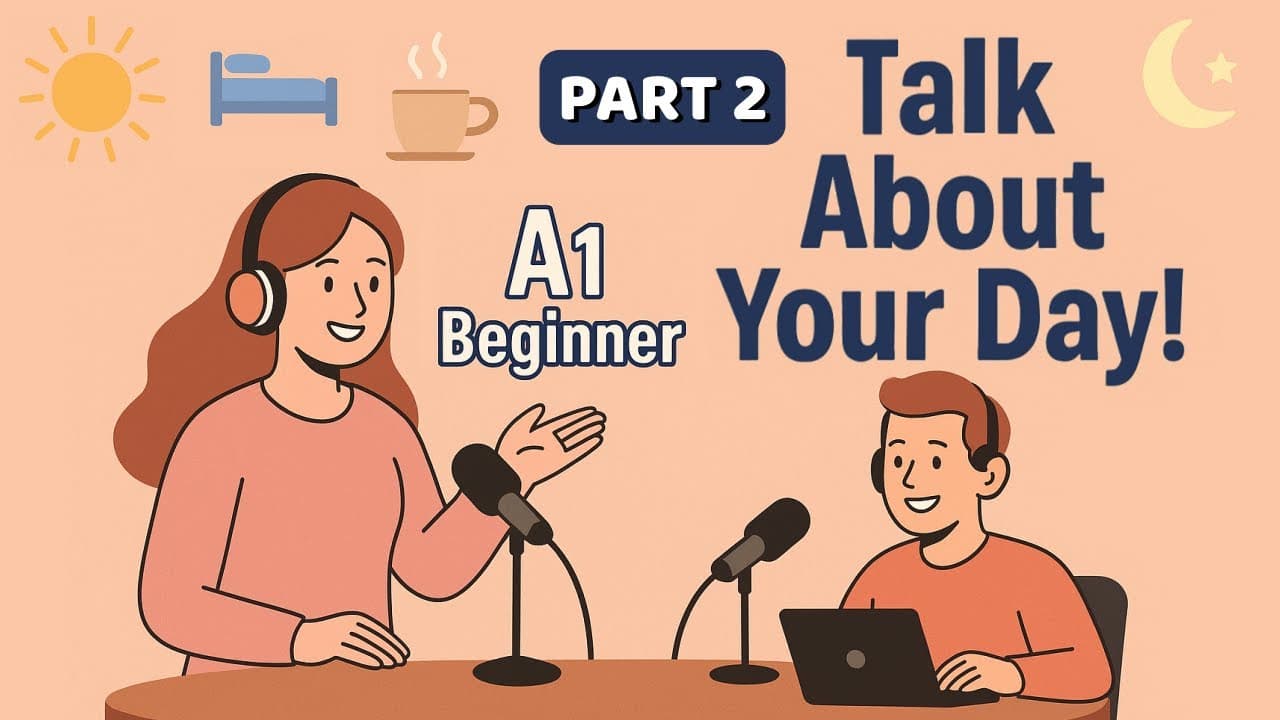
Describe your day with simple present-tense sentences such as “I wake up,” “I eat breakfast,” and “I start working.” Organize activities with sequence words like “first,” “then,” “after that,” and “finally,” and build confidence by speaking to yourself, talking with a friend, or writing about your morning, afternoon, and evening in a notebook.
Transcript
Hello everyone and welcome back to Mr. English Channel. I'm Emily and I'm Paul. We're so happy to have you join us today for another fun English lesson. That's right, Paul. Before we start, please remember to share this episode with your friends. Subscribe to Mr. English channel if you haven't already and give us a big like. It really helps us a lo... Read More
Key Insights
- Daily routines are useful subjects for A1 English practice because learners can describe familiar actions from morning through bedtime. Common questions about what someone does, eats, feels, or where they go provide clear prompts for building short sentences about everyday life.
- The simple present tense is used to describe regular activities with sentences such as “I wake up,” “I eat breakfast,” and “I go to work.” These short patterns let beginners discuss routines without needing difficult grammar or complicated sentence structures.
- Sequence words are tools for placing daily actions in a clear order. “First,” “then,” “after that,” and “finally” connect separate activities, as in waking up first, brushing your teeth next, and making coffee afterward.
- Morning vocabulary includes waking up, stretching, getting out of bed, brushing your teeth, washing your face, taking a shower, getting dressed, making coffee, and eating breakfast. These actions can be combined into a short description of how the day begins.
- Afternoon vocabulary covers working on projects, attending online meetings, answering emails, preparing materials, eating lunch, and taking a break. Emily and Paul also describe finishing tasks, researching ideas, organizing files, and ending work around 5 or 6 p.m.
- Evening activities can include preparing dinner, watching television, listening to a podcast, playing a game, reading, playing guitar, calling family or friends, walking, or practicing another language. These familiar actions give beginners varied vocabulary for describing time after work.
- Bedtime routines can be described with actions such as brushing your teeth, washing your face, taking a warm shower, putting on pajamas, reading in bed, and planning tomorrow. Emily and Paul aim to sleep around 10 or 11 p.m.
- Regular practice makes new daily-life vocabulary easier to remember. Learners can speak to themselves, talk with a friend, or write in a notebook, beginning with the morning before gradually adding afternoon and evening activities, feelings, and negative sentences.
Install to Summarize YouTube Videos and Get Transcripts
Explore YouTube Video Summarizer or Get YouTube Transcript Extractor
Questions & Answers
Q: How can beginners describe a daily routine in English?
Beginners can divide the day into morning, afternoon, and evening, then describe familiar actions with short present-tense sentences. They might say, “I wake up,” “I eat breakfast,” “I check my emails,” and “I prepare dinner.” Starting with only the morning can make practice manageable. The afternoon and evening can be added gradually as confidence grows.
Q: What sequence words help organize a daily routine?
The words “first,” “then,” “after that,” and “finally” help place daily actions in chronological order. A learner could say, “First I wake up, then I brush my teeth, and after that I make coffee.” These connectors turn separate statements into a clear description and make it easier for a listener to follow the routine from one activity to another.
Q: What English vocabulary can describe a morning routine?
Useful morning expressions include wake up, stretch, get out of bed, brush my teeth, wash my face, take a shower, get dressed, make coffee, and eat breakfast. A morning description can also mention checking the news, opening a laptop, reviewing a schedule, checking emails, or planning the work that needs to be completed during the day.
Q: How can someone talk about an afternoon routine in English?
An afternoon routine can include working on projects, attending meetings, writing scripts, answering emails, preparing lesson materials, and eating lunch. It can also describe taking a 15 or 20 minute break to walk, read, listen to music, or relax. Later activities might include finishing morning tasks, researching ideas, sending emails, and organizing files.
Q: How can someone describe evening activities in English?
A learner can describe the evening by mentioning dinner, relaxation, hobbies, and contact with other people. Example activities from the conversation include cooking a proper meal, trying a new recipe, watching a show or movie, listening to a podcast, playing a game or guitar, reading, walking, practicing Spanish, and talking with family or friends by phone.
Q: How can learners practice writing about their day?
Learners can keep a small notebook and write separate descriptions of their morning, afternoon, and evening. They can record what they did, what they ate, where they went, and how they felt. They can also add negative sentences, such as “I didn’t watch TV today” or “I didn’t cook dinner,” to create more variety in their daily writing practice.
Q: Why should learners talk about feelings during the day?
Feelings add useful detail to a routine and allow learners to express more than a list of actions. Simple examples include “I feel tired in the morning” and “I feel happy when I finish work.” Learners can ask themselves what they feel at different times and connect those feelings to activities they already know how to describe.
Q: What is an effective way to remember new daily routine words?
The effective approach presented is to use each new word while describing a real routine. For example, after learning “stretch,” a learner can include stretching in a sentence about the morning. Repeated use makes words easier to remember. Practice can happen through speaking alone, talking to a friend, or writing daily activities in a notebook.
Summary & Key Takeaways
-
Morning routines provide practical vocabulary for describing everyday actions in simple English. Emily and Paul discuss waking up, stretching, brushing their teeth, washing their faces, showering, getting dressed, making coffee, and eating breakfast. They then check schedules or emails and begin work involving reading, writing, planning, and other tasks.
-
Afternoon routines include meetings, project work, answering emails, preparing lesson materials, eating lunch, and taking short breaks. Lunch may be a sandwich, salad, soup, chicken and vegetables, leftovers, or a quick snack. Walking, reading, listening to music, and resting away from the computer help separate work periods.
-
Evening routines combine dinner, relaxation, hobbies, and preparation for sleep. Activities include cooking, watching television, listening to podcasts, playing games or guitar, reading, walking, practicing Spanish, and calling family or friends. Before bed, the hosts wash, change into pajamas, plan tomorrow, and aim for seven or eight hours of sleep.
Read in Other Languages (beta)
Share This Summary 📚
Summarize YouTube Videos and Get Video Transcripts with 1-Click
Try YouTube Summary with ChatGPT & Claude or YouTube Transcript Generator
Explore More Summaries from Mr. English Channel 📚





Summarize YouTube Videos and Get Video Transcripts with 1-Click
Try YouTube Summary with ChatGPT & Claude or YouTube Transcript Generator