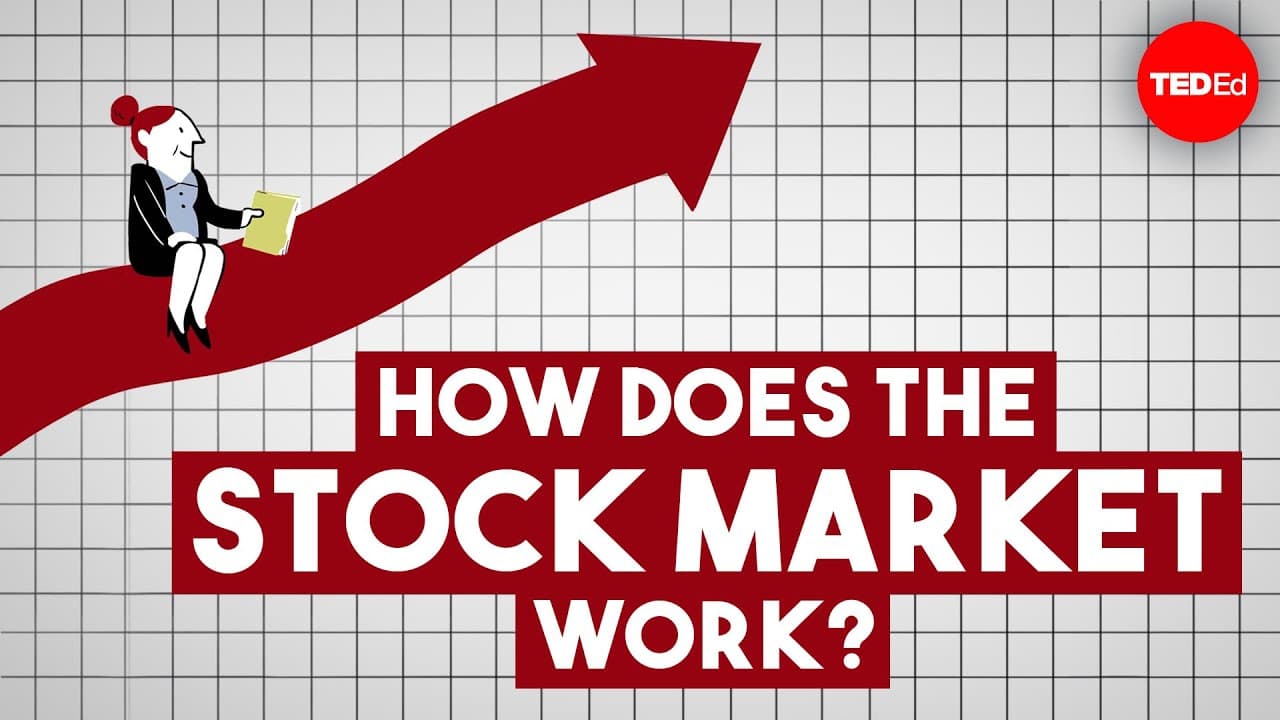
How does the stock market work? - Oliver Elfenbaum
TL;DR
The stock market functions as a platform for companies to raise funds from investors by selling shares during initial public offerings (IPOs). Investors become partial owners and can profit from the company's growth, but stock prices fluctuate based on market forces, investor confidence, and external factors, impacting their value and investors' financial outcomes.
Transcript
In the 1600s the Dutch East India Company employed hundreds of ships to trade gold, porcelain, spices, and silks around the globe. But running this massive operation wasn’t cheap. In order to fund their expensive voyages, the company turned to private citizens– individuals who could invest money to support the trip in exchange for a share of t... Read More
Key Insights
- 🌍 The Dutch East India Company inadvertently created the world's first stock market by selling shares to private citizens.
- 😃 Modern companies launch on the stock market through initial public offerings (IPOs) after advertising to big investors.
- 🥳 Market forces, leadership changes, public perception, and other factors contribute to the day-to-day fluctuations and perceived value of stocks.
- 😚 Investors can make or lose money based on the rising or falling stock prices.
- 🍉 Long-term investing is often recommended over trying to make quick cash in the unpredictable stock market.
- ❓ The advent of the Internet has made stock trading accessible to everyday investors.
- 👨💼 Individuals can support businesses they believe in and pursue financial goals through stock market participation.
Install to Summarize YouTube Videos and Get Transcripts
Explore YouTube Video Summarizer or Get YouTube Transcript Extractor
Questions & Answers
Q: How did the Dutch East India Company contribute to the creation of the modern stock market?
The Dutch East India Company sought funding from private citizens by selling shares, which unknowingly laid the foundation for the first stock market and the concept of investing in companies for potential profits.
Q: How does a company launch on the stock market today?
A company advertises itself to big investors, who can invest during the initial public offering (IPO) and become sponsors. This allows the company to enter the public market, where anyone can buy their stocks.
Q: How does the demand for stocks affect their price and a company's market value?
As the demand for stocks increases, their price rises. This reflects the company's perceived value and attracts more buyers. The increased interest also helps fund new initiatives and boosts the company's overall market value.
Q: What factors influence the stock market's day-to-day fluctuations?
Factors such as market forces, including material prices and labor costs, changes in leadership, public perception, and external factors like new laws or trade policies, can all impact the stock market and a company's perceived value.
Key Insights:
- The Dutch East India Company inadvertently created the world's first stock market by selling shares to private citizens.
- Modern companies launch on the stock market through initial public offerings (IPOs) after advertising to big investors.
- Market forces, leadership changes, public perception, and other factors contribute to the day-to-day fluctuations and perceived value of stocks.
- Investors can make or lose money based on the rising or falling stock prices.
- Long-term investing is often recommended over trying to make quick cash in the unpredictable stock market.
- The advent of the Internet has made stock trading accessible to everyday investors.
- Individuals can support businesses they believe in and pursue financial goals through stock market participation.
- Getting invested is the first step for anyone interested in participating in the stock market.
Summary
This video discusses the history and evolution of the stock market, starting with the Dutch East India Company in the 1600s. It explains how companies raise funds by selling shares to investors, who become partial owners of the business. The demand and supply of stocks influence their prices and the market value of the company. Various factors, such as market forces, changes in leadership, and new laws, can impact stock prices. The video emphasizes the importance of long-term investing and how anyone can participate in the stock market through online platforms.
Questions & Answers
Q: How did the Dutch East India Company finance their voyages in the 1600s?
The Dutch East India Company financed their voyages by turning to private citizens who could invest money in exchange for a share of the ship's profits.
Q: What did selling shares to private citizens allow the Dutch East India Company to do?
Selling shares to private citizens allowed the Dutch East India Company to afford even grander voyages and increase profits for themselves and their investors.
Q: What did the Dutch East India Company unknowingly invent?
The Dutch East India Company unknowingly invented the world's first stock market by selling shares in coffee houses and shipping ports.
Q: How do companies launch on the stock market today?
Companies today launch on the stock market by first advertising themselves to big investors and then having an initial public offering (IPO) sponsored by these investors.
Q: What happens when investors buy stocks in a company?
When investors buy stocks in a company, they become partial owners of the business, and their investment helps the company grow.
Q: How does a company's success impact the value of its stocks?
As a company becomes more successful, more buyers may see potential and start buying stocks. This increased demand raises the price of stocks and the overall market value of the company.
Q: What happens when investors think a company is becoming less profitable?
If investors think a company is becoming less profitable, they may sell their stocks to make a profit before the company loses more value. This reduces demand and causes the stock price and the company's market value to fall.
Q: What factors influence the stock market?
Market forces, such as fluctuating prices of materials, changes in production technology, and shifting costs of labor, influence the stock market. Other factors include changes in leadership, bad publicity, and new laws and trade policies.
Q: Why is appearing to lose value in the stock market detrimental?
Appearing to lose value often leads to losing investors, which further decreases the company's value. Human confidence in the market has the power to trigger economic booms or financial crises.
Q: Why do experts promote long-term investing over making quick cash?
Experts promote long-term investing because the stock market is highly unpredictable, and day-to-day noise can make companies appear more or less successful. Long-term investing increases the chances of success and reduces the impact of market fluctuations.
Takeaways
The stock market has a rich history, starting with the Dutch East India Company in the 1600s. It has evolved to become a complex system influenced by various factors. Long-term investing is encouraged to navigate the unpredictability of the market. With the advent of the Internet, everyday investors have the opportunity to participate in the stock market and pursue their financial goals. The first step is to get invested and learn about the stock market.
Summary & Key Takeaways
-
The Dutch East India Company pioneered the concept of selling shares to private citizens in exchange for funding their voyages, inadvertently inventing the world's first stock market.
-
Modern companies advertise to big investors before launching their initial public offerings (IPOs) to the public market. Investors who buy stocks become partial owners of the business, which helps it grow and increase its market value.
-
Market forces, changes in leadership, public perception, and other factors influence the stock market's day-to-day fluctuations, affecting a company's perceived value and attracting or losing investors.
Read in Other Languages (beta)
Share This Summary 📚
Summarize YouTube Videos and Get Video Transcripts with 1-Click
Try YouTube Summary with ChatGPT & Claude or YouTube Transcript Generator
Explore More Summaries from TED-Ed 📚





Summarize YouTube Videos and Get Video Transcripts with 1-Click
Try YouTube Summary with ChatGPT & Claude or YouTube Transcript Generator