The myth of Sisyphus - Alex Gendler
TL;DR
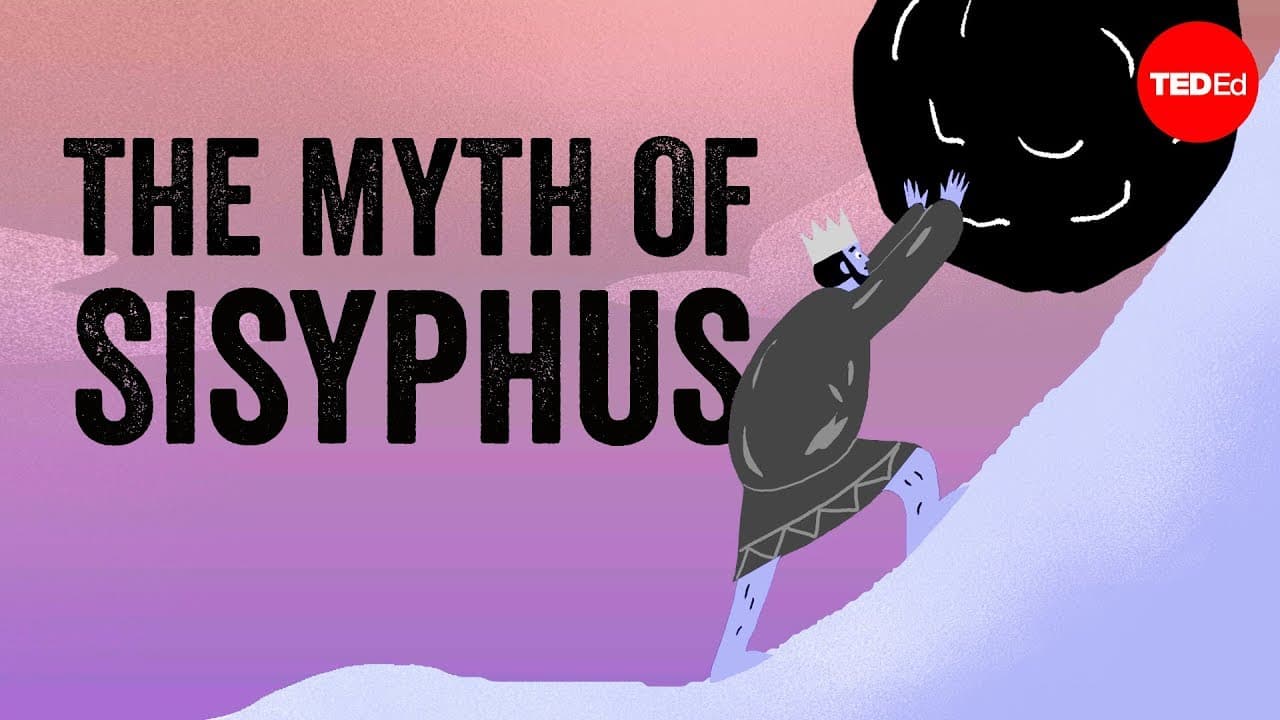
Sisyphus's eternal task of rolling a boulder up a hill, only for it to roll back down, symbolizes the human struggle for meaning in a seemingly indifferent universe. This myth resonates with the idea that despite the absurdity of life, individuals can find significance and value in their daily struggles, as explored by existentialist philosopher Albert Camus.
Transcript
Whether it’s being chained to a burning wheel, turned into a spider, or having an eagle eat one’s liver, Greek mythology is filled with stories of the gods inflicting gruesome horrors on mortals who angered them. Yet one of their most famous punishments is not remembered for its outrageous cruelty, but for its disturbing familiarity. Sisyphus ... Read More
Key Insights
- 🫡 Sisyphus angers the gods through his deceitful actions and lack of respect for traditions.
- 🤣 Zeus punishes Sisyphus with a cruel but fitting eternal task of rolling a boulder, symbolizing futility.
- ❓ Sisyphus's ability to outwit the gods highlights his cunning nature and defiance against fate.
- 🛟 The myth of Sisyphus serves as an allegory for the human quest for meaning in a seemingly meaningless universe.
- ❓ Albert Camus further explores the themes of absurdity and defiance in his essay, "The Myth of Sisyphus."
- 🤕 Sisyphus's story resonates through the ages, reminding us of the repetitive struggles and search for significance in life.
- 🌇 The punishment of Sisyphus reflects ancient myths about natural cycles and the rising and setting sun.
Install to Summarize YouTube Videos and Get Transcripts
Explore YouTube Video Summarizer or Get YouTube Transcript Extractor
Questions & Answers
Q: How did Sisyphus anger the gods?
Sisyphus angered the gods by violating sacred traditions, such as seducing his niece and killing visitors, leading to his punishment.
Q: How does Sisyphus outwit the gods to escape death?
Sisyphus tricks Thanatos, the god of Death, by asking to see the chains and binding him instead, disrupting the natural order and causing chaos.
Q: What does Sisyphus's punishment of rolling a boulder symbolize?
Sisyphus's eternal task symbolizes the human struggle for meaning in a meaningless universe, as explored by Albert Camus in his essay.
Q: How does the tale of Sisyphus resonate as an allegory about the human condition?
Sisyphus's futile task and defiance symbolize humanity's struggles to find meaning and truth in a world perceived as indifferent and absurd.
Summary
The story of Sisyphus, the first king of Ephyra, is one of punishment and defiance. Sisyphus angers the gods through his tyrannical behavior and trickery, leading to his imprisonment in the underworld. However, he outwits Death and escapes back to the land of the living, only to face his ultimate demise. Sisyphus is forever condemned to roll a boulder up a hill, only to have it roll back down, symbolizing the futility of repetitive tasks. This allegory has resonated to represent the human condition and our search for meaning in an indifferent world.
Questions & Answers
Q: Who was Sisyphus and what were his actions that angered the gods?
Sisyphus was the first king of Ephyra, later known as Corinth. While he was a clever ruler who brought prosperity to his city, he was also a devious tyrant. He seduced his niece and killed visitors to demonstrate his power, violating the sacred tradition of hospitality. These actions greatly angered the gods.
Q: How did Sisyphus end up facing punishment from the gods?
Sisyphus's troubles began when Zeus kidnapped the nymph Aegina and carried her away in the form of an eagle. Aegina's father, the river god Asopus, pursued them and encountered Sisyphus. The king offered Asopus information in exchange for Zeus making a spring in Ephyra. When Zeus discovered Sisyphus's betrayal, he ordered Death (Thanatos) to chain him in the underworld.
Q: How did Sisyphus manage to escape his punishment initially?
As Sisyphus was about to be imprisoned by Death, he cunningly asked to see how the chains worked. Taking advantage of Death's compliance, Sisyphus quickly bound him instead and made his escape back among the living. With Death trapped, nobody could die, causing chaos in the world.
Q: How was Sisyphus caught and his escape foiled?
The god of war Ares grew upset when battles were no longer enjoyable due to the absence of death. To restore balance, he freed Death from his chains. Sisyphus knew that his time was limited but attempted another trick. He asked his wife to throw his body into the public square, where it eventually washed up on the river Styx. Rejoining the dead, Sisyphus complained to Persephone about his improper burial, gaining permission to go back to punish his wife. However, he refused to keep his promise and was dragged back to Hades by the messenger Hermes.
Q: What was Sisyphus's punishment and its significance?
Sisyphus's punishment was to endlessly roll a massive boulder up a hill in the underworld, only to have it roll back down each time he reached the top. This circular and futile task symbolizes the human condition and our relentless pursuit of meaning and truth in a seemingly meaningless and indifferent universe.
Q: How does Albert Camus interpret the myth of Sisyphus?
Existentialist philosopher Albert Camus viewed Sisyphus's punishment as an allegory for humanity's struggle to find meaning and truth in an absurd and indifferent world. In his essay "The Myth of Sisyphus," Camus suggests that rather than despairing, Sisyphus defies his fate as he walks down the hill to restart the task of rolling the rock. Camus encourages us to find significance and value in our daily struggles, even if they may appear repetitive and absurd.
Q: What are some possible origins or interpretations for the myth of Sisyphus?
Historians propose various theories regarding the origins of the Sisyphus myth. Some suggest it may stem from ancient myths related to the rising and setting sun or other natural cycles. The image of endlessly repeating a futile task has resonated as an allegory for the human condition, representing our eternal search for meaning and our defiance in the face of absurdity.
Q: How does the story of Sisyphus resonate with the human condition?
The story of Sisyphus symbolizes the human struggle for meaning and truth despite the seemingly repetitive and absurd nature of existence. It serves as a reminder that even in a seemingly indifferent universe, we have the agency to give significance and value to our daily struggles by embracing them as our own and defying our fate.
Q: What is the lesson or message we can take away from the myth of Sisyphus?
The myth of Sisyphus emphasizes that despite the challenges and seemingly futile nature of our efforts, we have the power to find meaning in our actions and create value in our lives. Rather than being defeated by the absurdity of existence, we can defiantly confront our fate and infuse our daily struggles with purpose and significance.
Q: How does the myth of Sisyphus continue to be relevant today?
The myth of Sisyphus remains relevant as it speaks to our universal search for meaning and our resilience in the face of life's challenges. In a world that often feels repetitive, monotonous, and absurd, the tale of Sisyphus reminds us to embrace our struggles and find our own sense of purpose and fulfillment, even if the universe itself seems indifferent to our efforts.
Takeaways
The story of Sisyphus, the cunning king of Ephyra, serves as a powerful allegory for the human condition. While his punishment of rolling a boulder up a hill represents the repetitive and seemingly meaningless nature of life, it also reminds us of our capacity to find purpose and value in our daily struggles. Existentialist philosopher Albert Camus further explored the significance of Sisyphus's plight, emphasizing the defiance and agency we can embody in our own lives. Ultimately, the myth of Sisyphus teaches us to embrace the challenges we face, find meaning amidst the absurdity, and create our own significance in an indifferent world.
Summary & Key Takeaways
-
Sisyphus, a clever yet tyrannical king, angers the gods by violating sacred traditions.
-
Zeus punishes Sisyphus by chaining him in the underworld but is outwitted by the crafty king.
-
Sisyphus's eternal punishment of rolling a boulder symbolizes the human struggle for meaning in a meaningless universe.
Read in Other Languages (beta)
Share This Summary 📚
Summarize YouTube Videos and Get Video Transcripts with 1-Click
Try YouTube Summary with ChatGPT & Claude or YouTube Transcript Generator
Explore More Summaries from TED-Ed 📚




Summarize YouTube Videos and Get Video Transcripts with 1-Click
Try YouTube Summary with ChatGPT & Claude or YouTube Transcript Generator