How Did Uniqlo Succeed in North America?
TL;DR
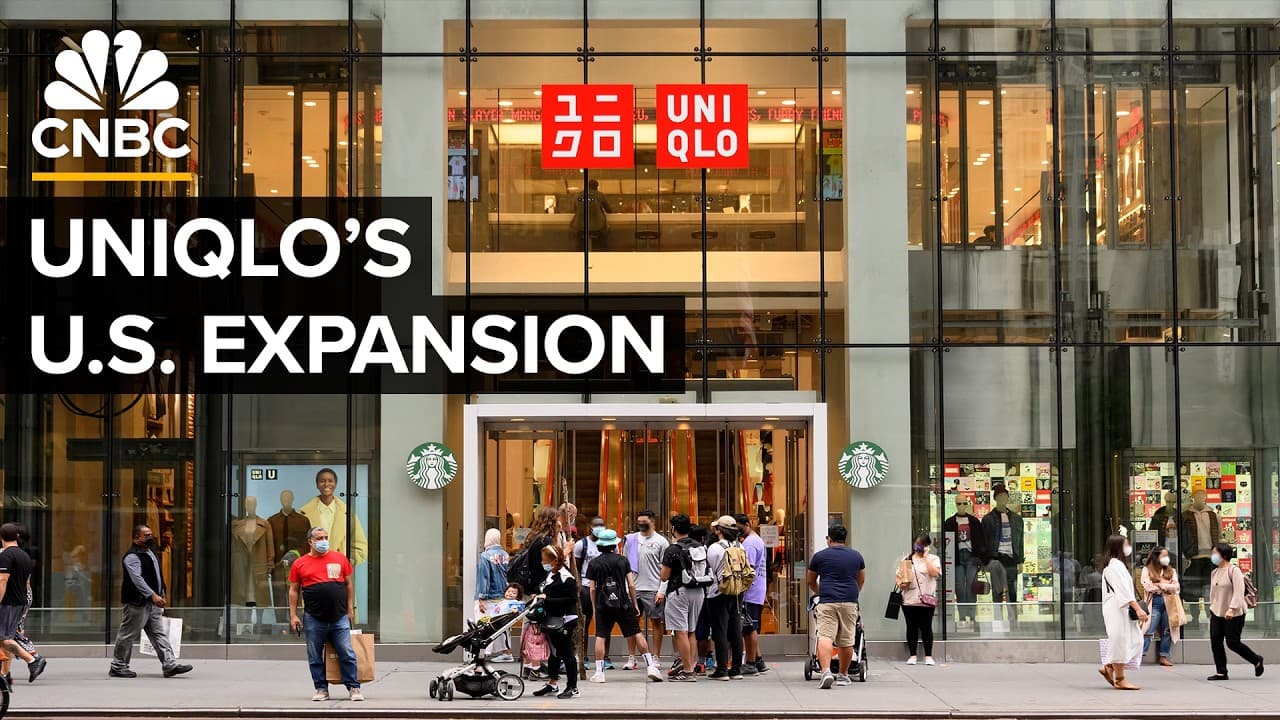
Uniqlo gained traction in North America by selling durable, functional basics, improving stores, listening closely to customers, and adapting selected products and campaigns to local markets. Its expansion is supported by strong international growth, but reaching 200 U.S. stores by 2027 will require better e-commerce, disciplined store openings, competitive differentiation, and a credible succession plan.
Transcript
You may have seen this viral mini shoulder bag on social media or on the streets somewhere, or even noticed one of the 11 new stores that opened in the U.S . in 2024. In a saturated retail market, Japanese Uniqlo, is an outlier. In fiscal year 2014, the company's international business brought in $2 billion in revenue. Ten years later, that number ... Read More
Key Insights
- Uniqlo's differentiation is based on timeless, functional basics rather than rapid reactions to fashion trends. Its broad selections of colors and fits, reasonable prices, durable construction, and uncluttered presentation give customers dependable wardrobe essentials while placing the brand in a distinct competitive position.
- Uniqlo's international business grew from $2 billion in fiscal 2014 to $11 billion ten years later. International operations also generated more than 20% in operating profits during the past three years, while the business increasingly outpaced the company's domestic operations over the last four years.
- HEATTECH and AIRism are product lines designed around practical customer problems. HEATTECH surpassed 1.5 billion cumulative unit sales through 2022, while AIRism provides breathable, moisture-wicking alternatives to cotton garments that can feel heavy and uncomfortable during hot weather.
- Customer feedback directly shapes Uniqlo's product development and iteration. The company gathers comments through social media, surveys, store associates, and other two-way communication, then applies the findings to products such as Souffle Yarn knitwear, which answered requests for a sweater that did not itch.
- Uniqlo's stores serve as a major marketing channel because the company does relatively little promotion outside them. Bright windows, clean aisles, orderly merchandise, clear divisions by gender and season, and friendly service create an accessible experience for the 72% of consumers who still shop in stores.
- RFID technology makes Uniqlo's checkout process faster by identifying multiple tagged products placed together in a checkout bin. Customers do not need each item scanned individually, creating a streamlined payment experience that demonstrates why CEO Tadashi Yanai describes Uniqlo as a technology company.
- Local adaptation helps Uniqlo remain relevant without abandoning its consistent international identity. Stores feature selected clothing, artists, businesses, activations, and campaigns connected to their communities, allowing customers to recognize local culture within an experience that remains broadly consistent across global locations.
- Uniqlo's North American expansion faces risks from weak e-commerce, intense competition, overexpansion, and leadership succession. The company had 69 U.S. stores as of February 2025 but aimed for 200 by 2027, while its 75-year-old CEO Tadashi Yanai remained central to management and brand vision.
Install to Summarize YouTube Videos and Get Transcripts
Explore YouTube Video Summarizer or Get YouTube Transcript Extractor
Questions & Answers
Q: How did Uniqlo become successful in North America?
Uniqlo built North American momentum by developing a clear identity around minimal, durable, and functional basics instead of chasing every fashion trend. It combined products such as HEATTECH and AIRism with clean stores, convenient RFID checkout, active customer feedback, local collaborations, and tailoring services. This approach helped the company recover from its unsuccessful 2005 U.S. launch and pursue a much larger store network.
Q: Why did Uniqlo's first U.S. expansion fail?
Uniqlo opened its first U.S. store in New Jersey in 2005, but low brand recognition and weak differentiation contributed to the closure of its stores within a year. When the brand returned to the United States in 2012, its functional basics, technology-based apparel, organized retail experience, and distinct position outside trend-driven fashion gave customers clearer reasons to choose it.
Q: What makes Uniqlo different from Zara, H&M, and Gap?
Uniqlo primarily differentiates itself through everyday essentials offered in numerous colors and fits, with an emphasis on durability, function, and minimal design. Unlike retailers trained to respond quickly to the latest trends, Uniqlo focuses on timeless wardrobe items and practical technologies. Zara, H&M, and Gap remain direct competitors, but Uniqlo's essentials-centered model allows it to operate in a distinct space.
Q: How do HEATTECH and AIRism support Uniqlo's strategy?
HEATTECH and AIRism demonstrate Uniqlo's focus on clothing that solves practical problems. HEATTECH became a major staple and exceeded 1.5 billion cumulative unit sales through 2022, 19 years after its launch. AIRism offers breathable, moisture-wicking clothing for people who find cotton shirts or pants heavy and uncomfortable in warm weather. Both lines turn everyday needs into repeatable product categories.
Q: How does Uniqlo use customer feedback to develop products?
Uniqlo gathers customer feedback through social media, surveys, conversations with store associates, and other forms of two-way communication. It uses those observations to design products and improve later versions. One example is Souffle Yarn knitwear, developed after customers requested a sweater that did not itch. The resulting product became a favorite and illustrated the company's customer-centered development process.
Q: Why are Uniqlo stores important to its marketing?
Uniqlo's stores are a primary marketing channel because the retailer does not rely heavily on promotion outside them. Large windows, bright lighting, uncluttered aisles, orderly merchandise, friendly employees, and clear divisions by gender, season, and product make shopping straightforward. That experience is especially valuable because the transcript states that 72% of consumers still shop in stores rather than online.
Q: How does Uniqlo use technology in its stores?
Uniqlo uses RFID, or Radio Frequency Identification, to streamline checkout. Customers can place several garments into a checkout bin, and the system identifies the tagged items without requiring a cashier to scan every barcode individually. This reduces friction and makes the store experience more efficient. The technology is one reason the company presents itself as more than a conventional fashion retailer.
Q: What risks could slow Uniqlo's North American growth?
Uniqlo faces direct competition from Gap, H&M, and Zara, as well as growing pressure from Shein and Temu. Its U.S. e-commerce operation trails major rivals, limiting reach where stores are unavailable. Expansion also creates a risk of opening locations too quickly. Finally, CEO Tadashi Yanai is 75, making leadership succession an important management issue as the company pursues ambitious growth.
Summary & Key Takeaways
-
Uniqlo recovered from an unsuccessful 2005 U.S. launch by returning with a clearer identity centered on minimal, durable, and functional clothing. Products such as HEATTECH, AIRism, fleece, and Souffle Yarn address everyday customer needs rather than rapidly changing trends, helping the retailer occupy a distinctive position among major apparel competitors.
-
Stores function as Uniqlo's primary marketing channel through bright windows, orderly displays, clear product divisions, friendly service, and streamlined RFID checkout. The company maintains a consistent global experience while incorporating local artists, businesses, campaigns, and products. Tailoring and hemming through Uniqlo Studio add personalized services that can strengthen customer loyalty.
-
Uniqlo plans to expand aggressively from 69 U.S. stores as of February 2025 toward 200 by 2027. The strategy faces significant risks, including weaker e-commerce reach, pressure from Gap, H&M, Zara, Shein, and Temu, possible overexpansion, declining China growth, and uncertainty surrounding the eventual successor to CEO Tadashi Yanai.
Read in Other Languages (beta)
Share This Summary 📚
Summarize YouTube Videos and Get Video Transcripts with 1-Click
Try YouTube Summary with ChatGPT & Claude or YouTube Transcript Generator
Explore More Summaries from CNBC 📚



Summarize YouTube Videos and Get Video Transcripts with 1-Click
Try YouTube Summary with ChatGPT & Claude or YouTube Transcript Generator