What Is Solvolysis and How Does It Work?
TL;DR
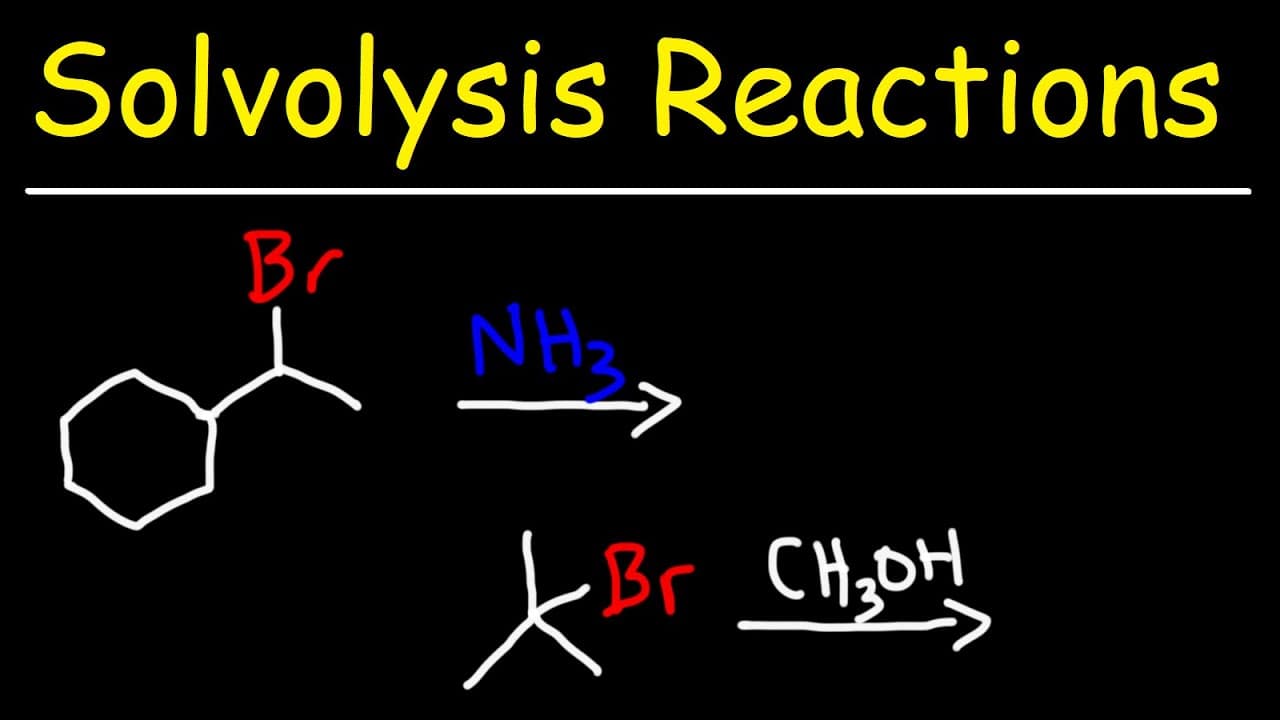
Solvolysis is a reaction where a solvent acts as a nucleophile to break a carbon-halide bond, typically producing a carbocation intermediate. This process often leads to new compounds, like ethers or amines, and can involve stereochemical outcomes such as retention or inversion of configuration.
Transcript
in this video we're going to focus on sovolysis reactions what are cephalosis reactions when you hear this word what do you think of if you focus on a prefix solvable think of the word solvent and if you look at the suffix lysis lysis means to split apart so when we combine these two things together what does this mean in a solvolysis reaction we'r... Read More
Key Insights
- 😒 Solvolysis reactions involve the use of a solvent as a nucleophile to break apart a carbon halide bond.
- 😑 The leaving group in solvolysis reactions is typically a halide ion.
- ❓ Solvolysis reactions are associated with the SM1 reaction mechanism.
- 👶 The solvent in solvolysis reactions can react with a carbocation intermediate to form new compounds.
- 💁 Solvolysis reactions can result in the formation of different product stereochemistry, such as retention or inversion.
- 💦 Solvents used in solvolysis reactions can include methanol, water, ethanol, or others.
- 🤲 Solvolysis reactions can result in the formation of ethers or amines.
Install to Summarize YouTube Videos and Get Transcripts
Explore YouTube Video Summarizer or Get YouTube Transcript Extractor
Questions & Answers
Q: What is a solvolysis reaction?
A solvolysis reaction is a type of reaction where a solvent acts as a nucleophile to split apart a carbon halide bond in an alkyl halide molecule.
Q: What role does the solvent play in solvolysis reactions?
The solvent acts as a nucleophile in solvolysis reactions, reacting with the carbocation intermediate formed after the leaving group (halide ion) departs.
Q: Are solvolysis reactions typically associated with a specific reaction mechanism?
Yes, solvolysis reactions are typically associated with the SM1 (unimolecular substitution) reaction mechanism.
Q: Can solvolysis reactions result in the formation of different products?
Yes, solvolysis reactions can result in the formation of different products, depending on factors such as the solvent used and the presence of chiral centers.
Summary & Key Takeaways
-
Solvolysis reactions involve reacting an alkyl halide with a solvent, such as methanol or water, to break apart the carbon halide bond.
-
The leaving group in solvolysis reactions is the halide ion, resulting in the formation of a carbocation intermediate.
-
The solvent acts as a nucleophile and reacts with the carbocation, leading to the formation of new compounds, such as ethers or amines.
Read in Other Languages (beta)
Share This Summary 📚
Summarize YouTube Videos and Get Video Transcripts with 1-Click
Try YouTube Summary with ChatGPT & Claude or YouTube Transcript Generator
Explore More Summaries from The Organic Chemistry Tutor 📚



Summarize YouTube Videos and Get Video Transcripts with 1-Click
Try YouTube Summary with ChatGPT & Claude or YouTube Transcript Generator