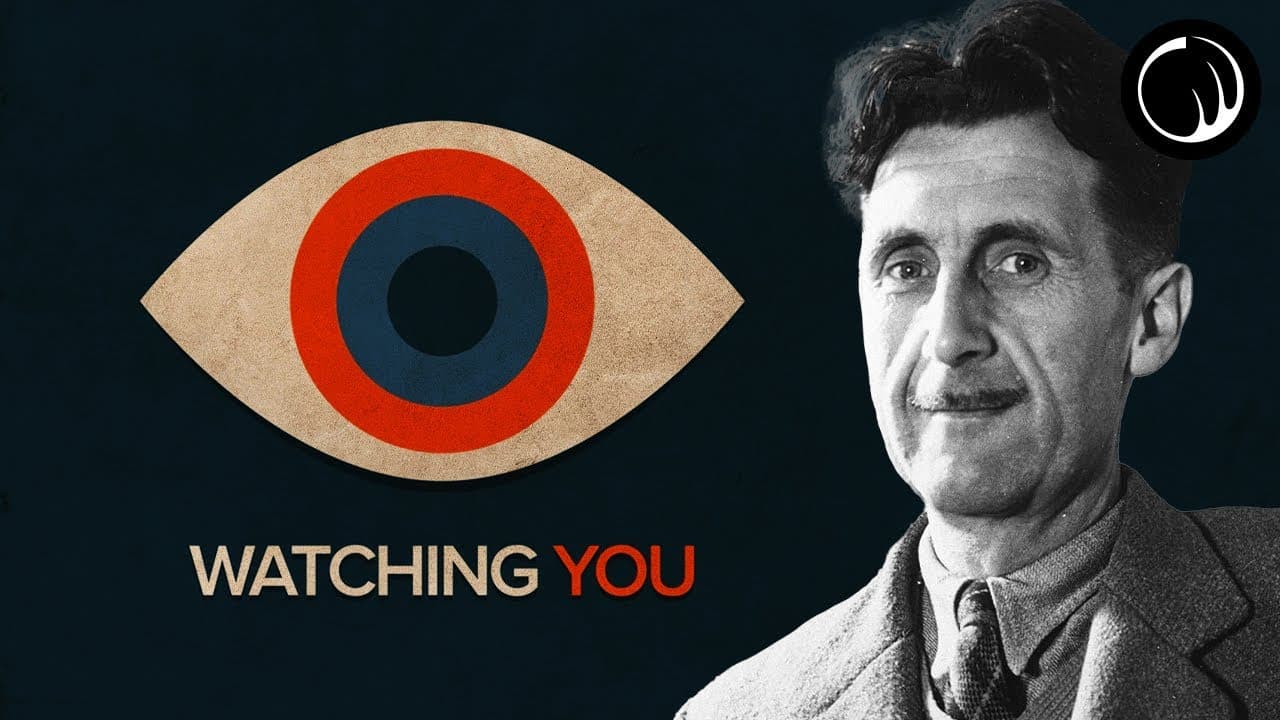
Who Was George Orwell and Why Do His Warnings Matter?
TL;DR
George Orwell warned that abandoning the belief in objective truth opens the door to totalitarianism, because when truth exists only in the human mind it becomes easy to manipulate. Shaped by the Spanish Civil War, where he saw newspapers report battles that never happened, he turned political writing into art through Animal Farm and 1984.
Transcript
George Orwell is perhaps one of the most widely read and referenced literary figures of all time—certainly of the twentieth century. Cited and mentioned by nearly every contemporary ideology and political worldview, his voice echoes down the halls of history. His insights about the power of language and technology as well as his warnings about ... Read More
Key Insights
- Objective truth is what totalitarianism destroys, according to Orwell. He argued that the shared basis of agreement about facts, which implies all human beings are one species, is precisely what totalitarian systems attack regardless of left or right leaning.
- The unique feature of Orwell's age was the abandonment of the idea that history could be truthfully written. He accepted that history is often inaccurate and biased, but saw a new danger in giving up truthful history entirely.
- The Spanish Civil War was the catalyzing experience of Orwell's life. He went in 1936 as a journalist, enlisted in the Republican militia to fight fascism, was shot in the throat by a sniper, and witnessed press coverage bearing no relation to facts.
- Orwell's stated goal was to make political writing into an art. He wrote not to produce a work of art but because there was a lie he wanted to expose or a fact he wanted to draw attention to, always starting from a sense of injustice.
- Animal Farm works as a fable because it turns complex social and political movements into an accessible allegory. Using anthropomorphized animals on Manor Farm, it appeals to mass audiences across time and space rather than targeting one moment.
- Animal Farm is a thinly veiled critique of the Russian Revolution and Stalin's rule. It warns against the fallibilities of revolutionary movements, showing pigs Napoleon and Snowball leading a revolt that ends with the pigs becoming indistinguishable from the humans.
- Newspeak in 1984 works by eliminating words from the vernacular to prevent nuanced critical thinking. Language is simplified and words are used contradictorily, so labor camps become joy camps and the department falsifying facts is called the ministry of truth.
- Orwell valued ordinary people and ordinary life over intellectuals. Influenced by his lower-upper-middle-class upbringing and jobs across Burma, Paris, and London, he admired those without material obsession or education, yet ironically became a leading intellectual himself.
Install to Summarize YouTube Videos and Get Transcripts
Explore YouTube Video Summarizer or Get YouTube Transcript Extractor
Questions & Answers
Q: Why did George Orwell believe objective truth was so important?
Orwell believed objective truth was the common basis of agreement that holds society together and implies all human beings are one species of animal. He argued this is exactly what totalitarianism seeks to destroy. When there is no belief in objective truth, truth exists solely in the human mind, becoming easily malleable and manipulatable by the central authority of the state, which threatens individual freedom regardless of political leaning.
Q: What did Orwell witness during the Spanish Civil War?
Orwell went to Spain in 1936 as a journalist, then enlisted in the Republican militia to fight fascism. He was shot in the throat by a sniper and nearly killed. Even more affecting was the war coverage: he saw newspaper reports bearing no relation to facts, great battles reported where there was no fighting, silence where hundreds died, brave troops denounced as cowards, and intellectuals building emotional superstructures over events that never happened.
Q: What is Animal Farm about and what does it critique?
Animal Farm is a novella with no single main character, instead following a population of anthropomorphized animals on Manor Farm. A pig named Old Major inspires a revolution against the humans who exploit them, establishing a philosophy called animalism. Pigs Snowball and Napoleon lead, but Napoleon seizes control through manipulation and violence, ultimately becoming indistinguishable from the humans. Broadly it is a thinly veiled critique of the Russian Revolution and Stalin's rule.
Q: How does newspeak work in the novel 1984?
In 1984, newspeak is the simplified and reduced language used in Oceania, where words are eliminated from the vernacular to prevent the likelihood of nuanced critical thinking. Words are also used in contradictory ways to undermine the true nature of what they describe. For example, labor camps are called joy camps, torture takes place in the ministry of love, the military is the ministry of peace, and the department that falsifies data is the ministry of truth.
Q: Why did George Orwell change his name from Eric Arthur Blair?
He was born Eric Arthur Blair in 1903 in Bengal, India, then part of the British Empire. He adopted the pseudonym George Orwell many years later, using the name to protect his family and their reputation as well as his own. The change came around the time he began writing and publishing his own books after working various low-paying service jobs throughout Paris and London.
Q: What was Orwell's attitude toward ordinary people versus intellectuals?
Orwell developed a fondness for what he called ordinary people and ordinary life: individuals who worked normal jobs, were not obsessed with material goods, had minimal education, and did not strive for or achieve prominence, power, or greatness. In contrast, he developed a disdain for intellectuals. This was shaped by his unusual lower-upper-middle-class upbringing and diverse experiences across Burma, France, and London. Ironically, he became one of the most prominent intellectuals of the twentieth century.
Q: What did Orwell see as his purpose in writing?
Orwell said what he most wanted to do over the past ten years was to make political writing into an art. His starting point was always a feeling of partisanship and a sense of injustice. He explained that when he sat down to write a book he did not aim to produce a work of art, but wrote because there was some lie he wanted to expose or some fact to which he wanted to draw attention, and his initial concern was to get a hearing.
Q: How is life depicted in Oceania in 1984?
In 1984, Winston Smith lives in what was once London, now a province of the superstate Oceania. Oceania is run by a totalitarian government known as the Party, which follows English Socialism, or INGSOC, and is led by a dictator figure called Big Brother. Citizens live under constant surveillance through telescreens in their homes, are punished for thoughtcrime, and are watched by the thought police, while the Party constantly produces propaganda through manipulated information and language.
Summary & Key Takeaways
-
George Orwell, born Eric Arthur Blair in 1903 in Bengal, India, described his upbringing as lower-upper-middle-class, mixing impoverishment and snobbery. Brilliant but miserable in school, he skipped university, served as a colonial police officer in Burma, then worked low-paying jobs in Paris and London while beginning to write books.
-
The Spanish Civil War transformed Orwell. Arriving in 1936 as a journalist, he enlisted to fight fascism for what he called common decency, was shot in the throat, and saw newspapers reporting battles that never happened. This revealed a degradation of objective truth that he believed risked leading toward totalitarianism.
-
Orwell believed literature could warn against the spread of totalitarianism. Animal Farm, published in 1945, used a fable of farm animals to critique the Russian Revolution and sold five hundred thousand copies in its first year. His final novel, 1984, released in 1949, depicted the surveillance superstate of Oceania.
Read in Other Languages (beta)
Share This Summary 📚
Summarize YouTube Videos and Get Video Transcripts with 1-Click
Try YouTube Summary with ChatGPT & Claude or YouTube Transcript Generator
Explore More Summaries from Pursuit of Wonder 📚
Summarize YouTube Videos and Get Video Transcripts with 1-Click
Try YouTube Summary with ChatGPT & Claude or YouTube Transcript Generator