The MEDIA [AP Gov Review, Unit 5 Topic 12 (5.12)]
TL;DR
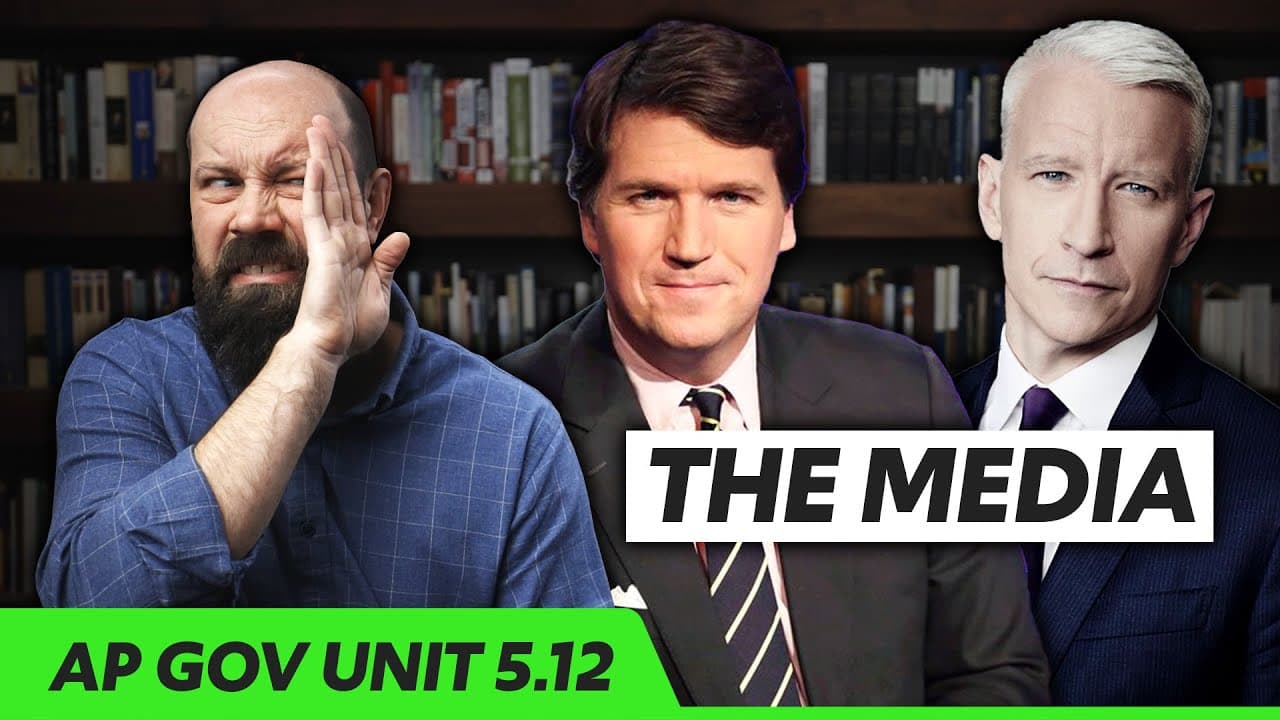
The media serves as a linkage institution by informing people about government actions, shaping political engagement, and acting as a watchdog that holds officials accountable. AP Gov Unit 5 Topic 12 traces news delivery from newspapers and the telegraph to radio, television, the internet, and social media, while examining three major avenues of reporting. Read on to understand how these formats and reporting roles influence citizens’ relationships with government.
Transcript
hey there and welcome back to homeless history now we've been going through unit five of the ap government curriculum and that means it's time to talk about the role of the media as a linkage institution so if you're ready to get them brain callus military then let's get to it so in this video here's what we're trying to do explain the media's role... Read More
Key Insights
- 🔉 The media's role as a linkage institution connects the government to citizens, influencing political engagement.
- 🔉 The media has evolved throughout history, from newspapers to social media, shaping how news is delivered and consumed.
- 🥹 Investigative journalism plays a crucial role in exposing corruption and holding the government accountable.
- 🐎 Election coverage and political commentary are necessary but can lead to the problem of horse race journalism.
Install to Summarize YouTube Videos and Get Transcripts
Explore YouTube Video Summarizer or Get YouTube Transcript Extractor
Questions & Answers
Q: How does the media serve as a linkage institution in AP Gov Unit 5 Topic 12 (5.12)?
A linkage institution is a societal structure that connects people to their government or the political process. By reporting what the government does, traditional and social media influence how citizens engage in politics.
Q: Why is freedom of the press important to the media’s political role?
A free press enables the media to act as a watchdog that holds the government responsible to the people. Without media reporting, citizens would have less information about what their representatives are doing.
Q: What are the four linkage institutions identified in the lesson?
The four linkage institutions are political parties, interest groups, elections, and the media. Each connects people to government or the political process.
Q: How did American news delivery evolve over time?
News moved from newspapers to the telegraph, radio, television, the internet, and social media. The telegraph enabled almost instantaneous transmission by electric wire, while radio became the first truly mass medium by broadcasting from centralized stations into people’s homes.
Q: How did Franklin Roosevelt use radio as a political medium?
During the Great Depression, President Franklin Roosevelt used radio for his fireside chats. He explained his administration’s policies in bite-sized pieces that the average American could understand.
Q: How did television coverage of the Vietnam War affect public trust?
Presidents Johnson and Nixon told the public that events in Vietnam were going well, while television reporters showed the carnage and presented a different account. This contrast created a profound gap in the American public’s trust in government.
Q: How has social media changed news consumption?
Social media has made news consumption more socially engaging and driven, with participation occurring mainly through sharing. Algorithms and news aggregators personalize what people see to hold their attention, which may exclude news they need or information that challenges them.
Q: What are the three major avenues of media reporting discussed in the lesson?
The lesson identifies news events, investigative journalism, and election coverage with political commentary as three major avenues of reporting. Investigative journalism uses longer-form reporting to expose corruption in government and society, as illustrated by Progressive Era muckrakers such as Ida Tarbell, Jacob Riis, Lincoln Steffens, and Upton Sinclair.
Summary & Key Takeaways
-
Media acts as a linkage institution that connects people to their government.
-
The media's reporting of government actions affects citizens' political engagement.
-
Throughout history, news delivery methods have evolved, from newspapers to social media.
Read in Other Languages (beta)
Share This Summary 📚
Summarize YouTube Videos and Get Video Transcripts with 1-Click
Try YouTube Summary with ChatGPT & Claude or YouTube Transcript Generator
Explore More Summaries from Heimler's History 📚

Summarize YouTube Videos and Get Video Transcripts with 1-Click
Try YouTube Summary with ChatGPT & Claude or YouTube Transcript Generator