Will Robots Like Flippy Replace Fast Food Workers?
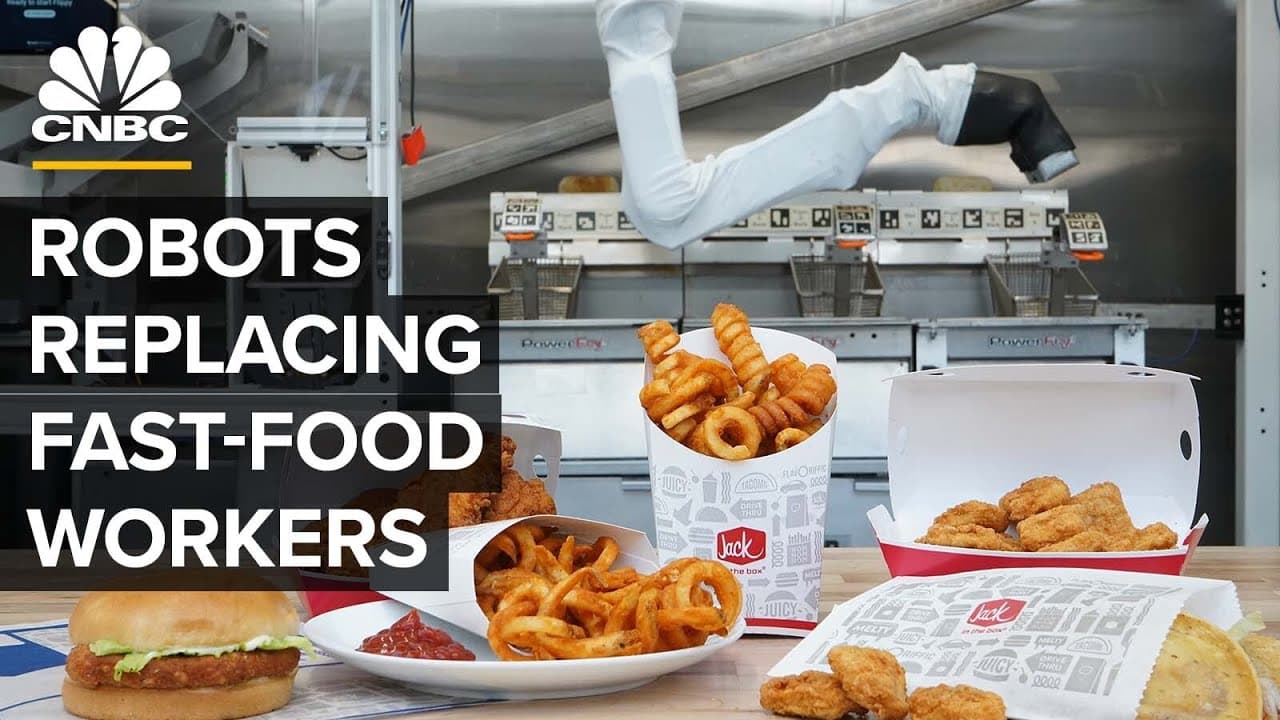
TL;DR
Robots like Flippy automate cooking tasks in fast food restaurants, potentially replacing up to 82% of restaurant jobs. They enhance operational efficiency, allowing human workers to focus more on customer engagement while saving U.S. fast food chains over $12 billion in annual wages.
Transcript
Welcome to White Castle. This is Brittany. How may I help you? This robot named Flippy runs the fry station at a White Castle outside of Chicago. With its mechanical arm and using computer vision technology. Flippy can cook everything from French fries and onion rings to cheese sticks. White Castle said it plans to add 100 Flippys to its kitchens n... Read More
Key Insights
- 😋 Robots like Flippy are becoming increasingly popular in the fast food industry, aiming to automate repetitive tasks and improve efficiency.
- 🥺 The implementation of robots can lead to significant cost savings for restaurants, especially in terms of labor expenses.
- 🤖 While robots can replace certain tasks, human workers are still essential in areas that require creativity, adaptability, and customer interaction.
- 😮 The rise of automation in the industry is a foregone conclusion, with more and more robotics solutions being deployed in everyday restaurants.
- 😋 The fast food industry is facing challenges in finding and retaining workers, making robots a valuable asset to alleviate staffing issues.
- 😀 Automation has the potential to revolutionize the industry, similar to how delivery apps transformed the restaurant space.
- 💗 The industrial robotics market is expected to continue growing, reaching $81 billion by 2028.
- 🥺 Miso Robotics, the company behind Flippy, is currently one of the leading players in the restaurant robotics space.
Install to Summarize YouTube Videos and Get Transcripts
Explore YouTube Video Summarizer or Get YouTube Transcript Extractor
Questions & Answers
Q: How are robots like Flippy improving operations in fast food restaurants?
Robots like Flippy automate repetitive tasks, such as cooking French fries and onion rings, reducing the need for multiple workers and improving efficiency. This allows workers to focus on engaging with customers and providing better service.
Q: Can robots fully replace human workers in the fast food industry?
While robots can replace certain tasks, it is unlikely that they will completely replace human workers. Human interaction and skills are still essential in areas such as customer service and food preparation that require creativity and adaptability.
Q: How are restaurants benefiting financially from implementing robots?
The implementation of robots can lead to significant cost savings for restaurants. Automation could save U.S. fast food restaurants over $12 billion in annual wages, while the cost of robots can be equivalent to the annual salary of one worker.
Q: What challenges do fast food restaurants face in terms of staffing?
Fast food restaurants have been struggling to find and retain workers, especially since the pandemic. The industry is facing a turnover rate of 130%, making it difficult to fill positions. Robots like Flippy help alleviate the shortage of workers and provide consistent productivity.
Key Insights:
- Robots like Flippy are becoming increasingly popular in the fast food industry, aiming to automate repetitive tasks and improve efficiency.
- The implementation of robots can lead to significant cost savings for restaurants, especially in terms of labor expenses.
- While robots can replace certain tasks, human workers are still essential in areas that require creativity, adaptability, and customer interaction.
- The rise of automation in the industry is a foregone conclusion, with more and more robotics solutions being deployed in everyday restaurants.
- The fast food industry is facing challenges in finding and retaining workers, making robots a valuable asset to alleviate staffing issues.
- Automation has the potential to revolutionize the industry, similar to how delivery apps transformed the restaurant space.
- The industrial robotics market is expected to continue growing, reaching $81 billion by 2028.
- Miso Robotics, the company behind Flippy, is currently one of the leading players in the restaurant robotics space.
Category Tag: Automation
Summary & Key Takeaways
-
White Castle plans to add 100 Flippy robots to its kitchens nationwide, reducing the need for multiple workers to operate the fry station.
-
Automation in the restaurant industry aims to relieve workers from boring tasks, improve job satisfaction, and enhance customer engagement.
-
Up to 82% of restaurant positions could be replaced by robots, potentially saving U.S. fast food restaurants over $12 billion in annual wages.
Read in Other Languages (beta)
Share This Summary 📚
Summarize YouTube Videos and Get Video Transcripts with 1-Click
Try YouTube Summary with ChatGPT & Claude or YouTube Transcript Generator
Explore More Summaries from CNBC 📚






Summarize YouTube Videos and Get Video Transcripts with 1-Click
Try YouTube Summary with ChatGPT & Claude or YouTube Transcript Generator