The Atmospheres of Earth and Natural Nukes
TL;DR
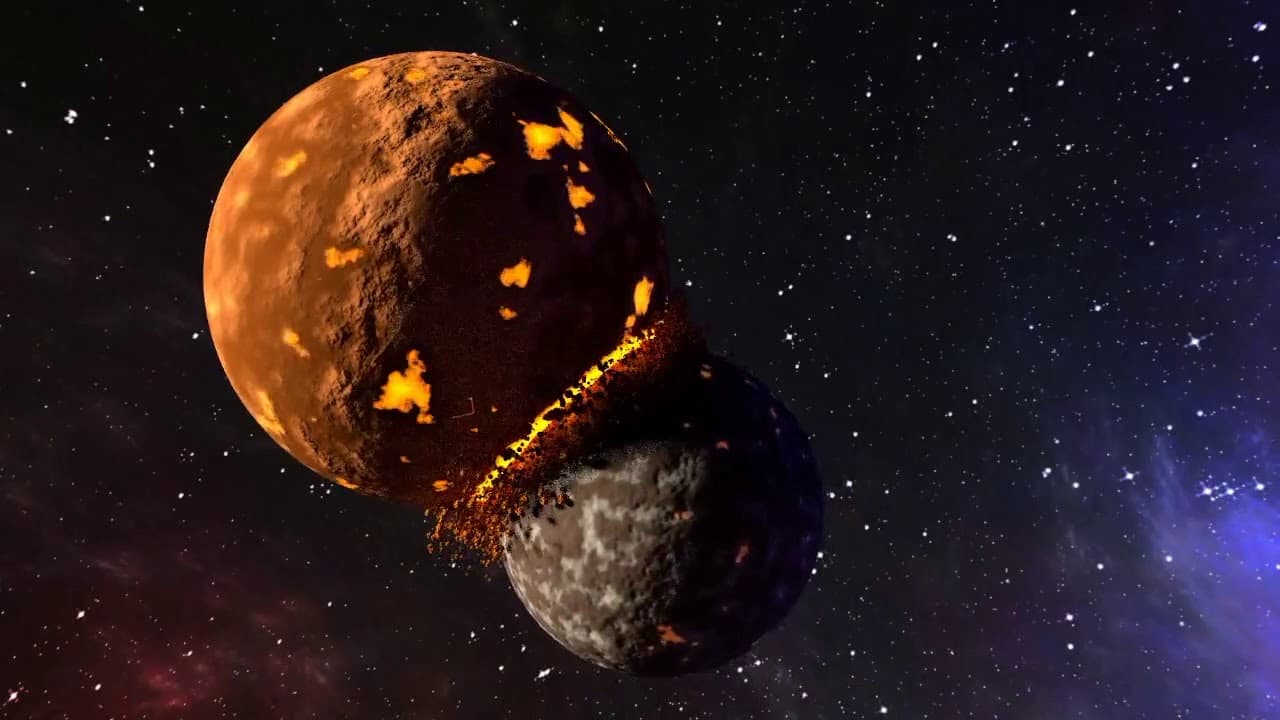
Earth has had three different atmospheres throughout its history, with the current atmosphere being essential for life. The early Earth had a weaker sun, but the temperature remained relatively warm, possibly due to carbon dioxide and geothermal heating. There is evidence of natural nuclear reactors in Earth's past, which may have contributed to its temperature. The moon's origin is still questioned, with a hypothesis suggesting it was formed by a natural nuclear explosion.
Transcript
Despite spending our entire lives bathed in the earth’s atmosphere, only when something’s wrong with it do we pay much attention even though it’s the most basic thing keeping us alive. But, as far as planetary atmospheres go, earth’s is the weirdest and most unlikely atmosphere we’ve yet seen. This is because this is not the first atmosphere earth ... Read More
Key Insights
- 🫢 Earth has had three atmospheres: the eroded first atmosphere, the second atmosphere formed from volcanic activity and the delivery of gases, and the current atmosphere essential for life.
- 😎 The faint young sun paradox raises questions about how life developed on Earth with a weaker sun. Possible explanations include greenhouse gases, geothermal heating, and natural nuclear reactors.
- 🖐️ Evidence of natural nuclear reactors suggests they may have played a role in Earth's past temperatures and the development of life.
- 💯 The moon's origin is still uncertain, with a hypothesis suggesting it was formed by a natural nuclear explosion near Earth's core.
- 🫤 Variations in Earth's oxygen levels have occurred throughout history, with the Great Oxygenation Event leading to the oxygenation of the atmosphere about 2.4 billion years ago.
- 🛟 Understanding Earth's atmospheric history has implications for the development of life on other planets and exoplanets.
- 🪐 Planets with oceans locked in ice shells or rogue planets without a star may not develop complex life due to the absence of photosynthesis and oxygenation of the atmosphere.
Install to Summarize YouTube Videos and Get Transcripts
Explore YouTube Video Summarizer or Get YouTube Transcript Extractor
Questions & Answers
Q: How many atmospheres has Earth had throughout its history?
Earth has had three atmospheres. The first was composed of hydrogen, water vapor, methane, and ammonia, which was eroded into space. The second atmosphere formed from volcanic activity and the delivery of gases by comets and asteroids. The third and current atmosphere is the atmosphere of life and plate tectonics.
Q: How did the early Earth maintain relatively warm temperatures despite a weaker sun?
There are several hypotheses. It's possible that carbon dioxide and methane acted as greenhouse gases, trapping heat. Additionally, geothermal heating from the decay of radioactive isotopes, particularly uranium ore near the surface, could have contributed to the warmth.
Q: Is there evidence of natural nuclear reactors on Earth?
Yes, isotopic evidence of a nuclear chain reaction was found in central west Africa, indicating a sustained reaction occurred when groundwater came into contact with uranium. This suggests the presence of near-surface natural nuclear reactors that may have contributed to Earth's temperatures.
Q: What is the faint young sun paradox?
The faint young sun paradox refers to the mystery of how life arose on Earth with a weaker sun that didn't provide enough energy for liquid water to exist. Possible explanations include greenhouse gases, geothermal heating, and natural nuclear reactors.
Summary & Key Takeaways
-
Earth's original atmosphere, composed of hydrogen, water vapor, methane, and ammonia, was eroded into space and blown away by the solar wind.
-
The second atmosphere formed from volcanic activity and the delivery of gases by comets and asteroids. It is thought to have been primarily nitrogen and CO2, supporting the development of life.
-
The mystery of the faint young sun paradox remains: how did life arise without sufficient liquid water? Possible explanations include greenhouse gases, geothermal heating, and natural nuclear fission reactors.
Read in Other Languages (beta)
Share This Summary 📚
Summarize YouTube Videos and Get Video Transcripts with 1-Click
Try YouTube Summary with ChatGPT & Claude or YouTube Transcript Generator
Explore More Summaries from John Michael Godier 📚


Summarize YouTube Videos and Get Video Transcripts with 1-Click
Try YouTube Summary with ChatGPT & Claude or YouTube Transcript Generator