How can parents repair boundaries and build resilience in kids
TL;DR
Repair after rupture and clear boundaries are essential to healthy parent child dynamics. Validation of feelings paired with firm, non aggressive limits helps kids learn emotional regulation and resilience. The middle path avoids over controlling and over validating, fostering capable, confident children.
Transcript
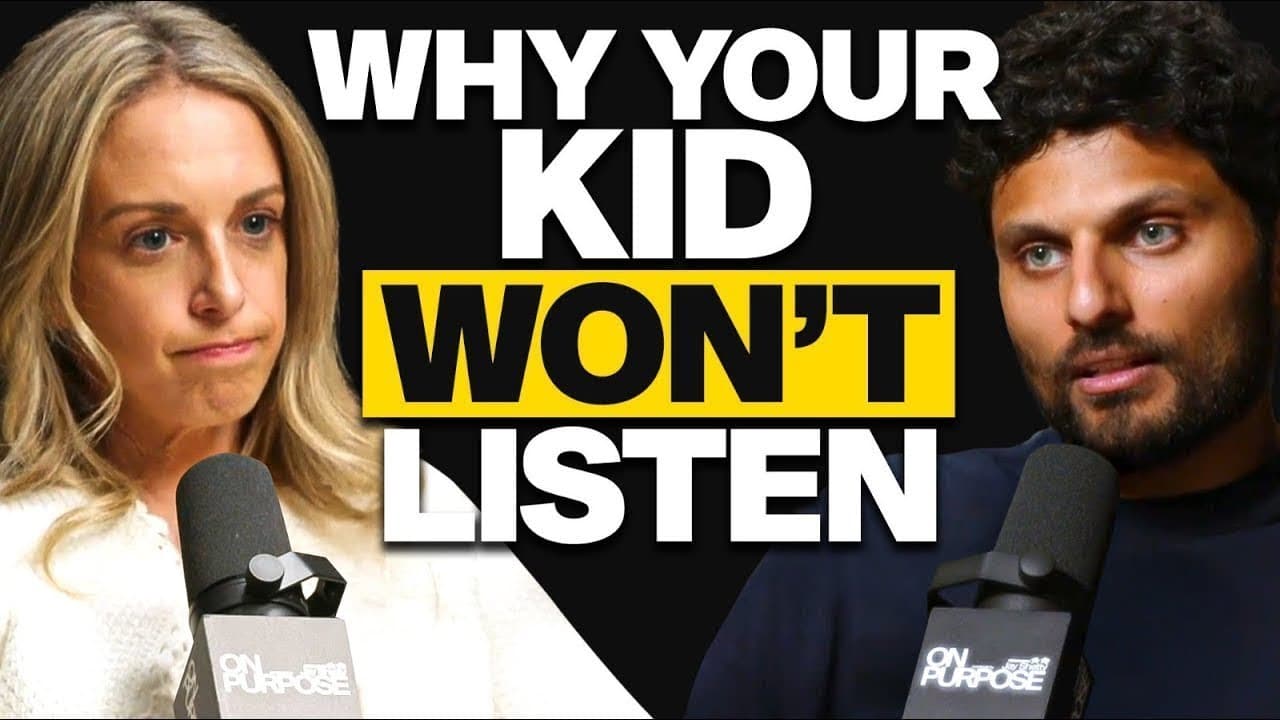
We've gone from not caring about kids emotions to being scared of kids emotions. The more you optimize for happiness in childhood, the more you actually wire for anxiety in adulthood. Dr. Becky Kennedy. Dr. Becky, the go-to voice for modern helping parents break cycles and build connections. What actually makes a good parent? Repair without a doubt... Read More
Key Insights
- Feelings are real and important, and acknowledging them is the first step toward effective parenting.
- Overcorrection in either direction weakens kids; a balanced approach validates emotions while maintaining necessary boundaries.
- Authority without aggression helps children experience guidance and predictability in family life.
- Frustration tolerance is essential for parenting in a distracted modern world, where constant ease can erode resilience.
- Emotion regulation skills must be taught, not assumed; parents are coaches in building these skills.
- Repair after conflict is a critical practice that strengthens trust and models healthy relationship repair for children.
- Discipline and empathy are not opposites; they work together to build capable young people, not merely compliant ones.
- Parenting is a learnable skill that combines connection with consequence, not instinct alone.
- More videos from this channel:
- More from this channel: Jay Shetty Podcast
Install to Summarize YouTube Videos and Get Transcripts
Explore YouTube Video Summarizer or Get YouTube Transcript Extractor
Questions & Answers
Q: How can parents repair after a rupture with their child to strengthen trust
Repair after rupture is a deliberate process where a parent acknowledges what went wrong, reflects on their part, and invites the child to share their perspective. This approach reinforces safety, demonstrates accountability, and rebuilds trust. It helps kids learn that mistakes can be addressed constructively and relationships can recover from conflicts.
Q: What is the right way to set boundaries without turning it into a power struggle
Boundaries should be explained with clarity and warmth, stating the expectation and the reasoning behind it. The key is consistency combined with empathy so children understand why the limit exists and feel respected. This promotes cooperation rather than resistance and teaches internal discipline.
Q: Why is validating feelings important even when setting limits
Validating feelings shows children that their experiences are real and worthy of attention, which reduces defensiveness and opens space for constructive dialogue. Validation is paired with boundaries to teach emotional literacy while guiding behavior, helping kids regulate emotions and accept consequences without feeling dismissed.
Q: How does the concept of authority without aggression work in parenting
Authority without aggression means guiding the family with calm leadership and clear expectations. It involves stating what needs to happen, offering reassurance, and following through with consistent consequences when needed. This approach creates a secure structure where kids learn responsibility and trust in parental guidance.
Q: What role does frustration tolerance play in modern parenting
Frustration tolerance helps parents manage the daily irritations of parenting, reducing reactive responses. By modeling calm, measured reactions to discomfort, parents teach children how to cope with disappointment and stick with challenging tasks, building long term resilience rather than short term compliance.
Q: How can parents teach emotion regulation skills to their children
Parents can teach emotion regulation by labeling emotions, modeling coping strategies, and practicing managing reactions in real time. Structured activities and guided conversations help children identify triggers, consider options, and choose appropriate responses, leading to more self control and better decision making.
Q: What is the risk of letting kids call the shots too often
Letting kids call the shots too often teaches them that their feelings override needs and responsibilities, which can hinder resilience and social functioning. A balanced approach ensures children experience autonomy in appropriate domains while adults provide structure, guidance, and consequences essential for growth.
Q: How can parents balance happiness optimization with emotional development
Focusing solely on happiness can create anxiety later, so parents should prioritize emotional development and skill building. This includes helping children tolerate frustration, express needs, and regulate emotions, while still offering support and moments of joy to foster secure attachment and healthy confidence.
Summary & Key Takeaways
-
Repair after rupture strengthens connection, showing kids that conflicts can be resolved and trust can be restored, which fosters safety and belonging in the family.
-
Boundaries without aggression create a stable framework where kids learn expectations, responsibility, and self control while still feeling seen and understood.
-
Validation of feelings plus practical boundaries teaches kids to manage emotions and develop resilience rather than relying on happiness as a sole goal.
Read in Other Languages (beta)
Share This Summary 📚
Summarize YouTube Videos and Get Video Transcripts with 1-Click
Try YouTube Summary with ChatGPT & Claude or YouTube Transcript Generator
Explore More Summaries from Jay Shetty Podcast 📚





Summarize YouTube Videos and Get Video Transcripts with 1-Click
Try YouTube Summary with ChatGPT & Claude or YouTube Transcript Generator