How to Determine End Tidal O2 and CO2 from Gas Data
TL;DR
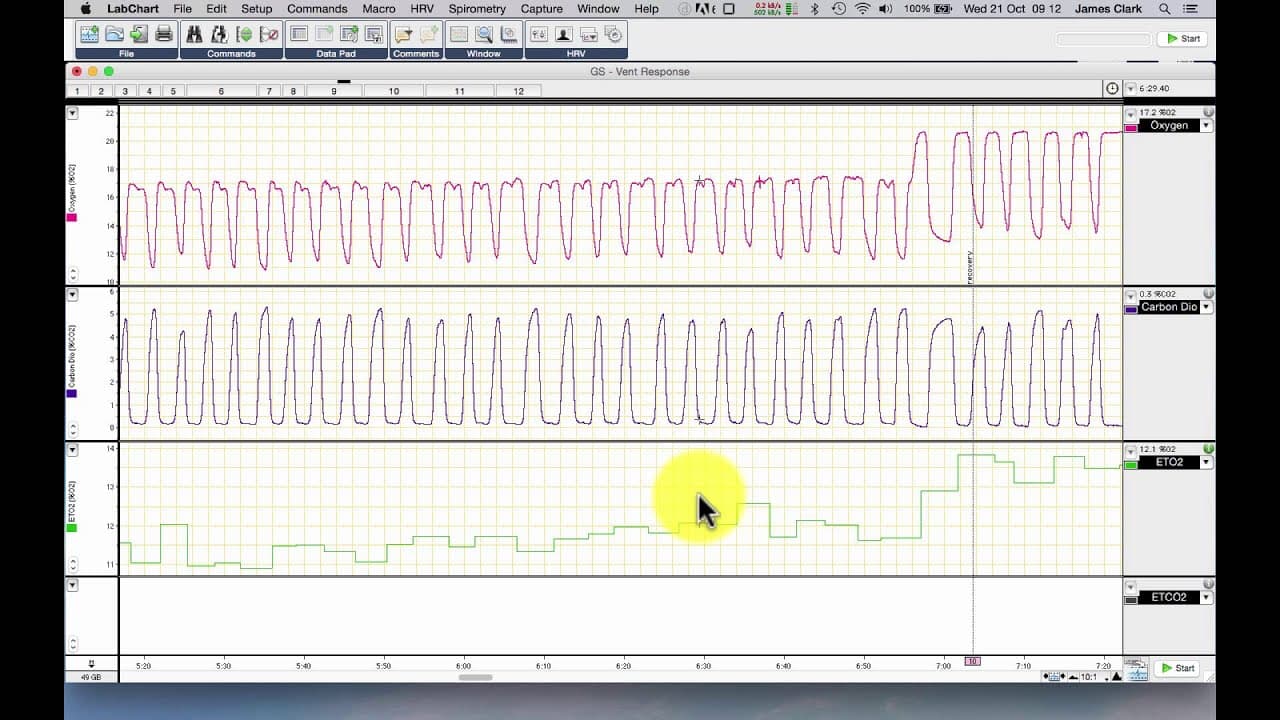
To determine end-tidal oxygen and carbon dioxide, analyze tidal gas data by identifying the minimum value for oxygen and the maximum for carbon dioxide from the respective curves. This involves setting up channels in your measurement software to track these values accurately, which are crucial for assessing respiratory function.
Transcript
hello this is a very quick tutorial looking at some data from a student practical where the students were breathing different concentrations of oxygen and they were looking at spirometry and end-tidal gases you can see on the screen here we have four channels of a quart of data the first beam peripheral oxygen saturation or si O 2 or s po2 it shoul... Read More
Key Insights
- 🫢 End-tidal gases can be crucial indicators of respiratory function and gas exchange efficiency in practical experiments.
- 🫢 Tracking oxygen and carbon dioxide concentrations helps understand the effects of breathing different gas mixtures on the body.
- 🫢 Setting up channels and using cyclic measurements are essential steps in deriving accurate end-tidal gas concentrations.
- ❓ Visual validation of data is vital in confirming the accuracy of software-generated measurements and ensuring reliable analysis.
Install to Summarize YouTube Videos and Get Transcripts
Explore YouTube Video Summarizer or Get YouTube Transcript Extractor
Questions & Answers
Q: How did students measure end-tidal oxygen and carbon dioxide concentrations?
Students measured end-tidal oxygen by selecting the minimum peak deflection from the oxygen channel and end-tidal carbon dioxide by choosing the peak from the CO2 channel.
Q: What is the significance of tracking end-tidal gases in a practical experiment?
Tracking end-tidal gases helps analyze respiratory function, gas exchange efficiency, and effects of different oxygen concentrations on the body's gas levels.
Q: How can software inaccuracies affect data analysis in spirometry experiments?
Software inaccuracies can lead to incorrect measurements, affecting the interpretation of data and ultimately skewing the results of spirometry experiments.
Q: Why is it important to validate end-tidal gas measurements visually despite software calculations?
Visual validation ensures accuracy by confirming that software-derived measurements align with actual data points, minimizing errors and ensuring reliable analysis.
Summary & Key Takeaways
-
Students breathed different oxygen concentrations, measuring spirometry and end-tidal gases.
-
End-tidal oxygen is minimum tidal curve, while end-tidal carbon dioxide is peak from CO2 curves.
-
Data analysis involved setting up channels to derive end-tidal oxygen and CO2 concentrations.
Read in Other Languages (beta)
Share This Summary 📚
Summarize YouTube Videos and Get Video Transcripts with 1-Click
Try YouTube Summary with ChatGPT & Claude or YouTube Transcript Generator
Explore More Summaries from Dory Video 📚



Summarize YouTube Videos and Get Video Transcripts with 1-Click
Try YouTube Summary with ChatGPT & Claude or YouTube Transcript Generator