Where Are the Real Opportunities in AI?
TL;DR
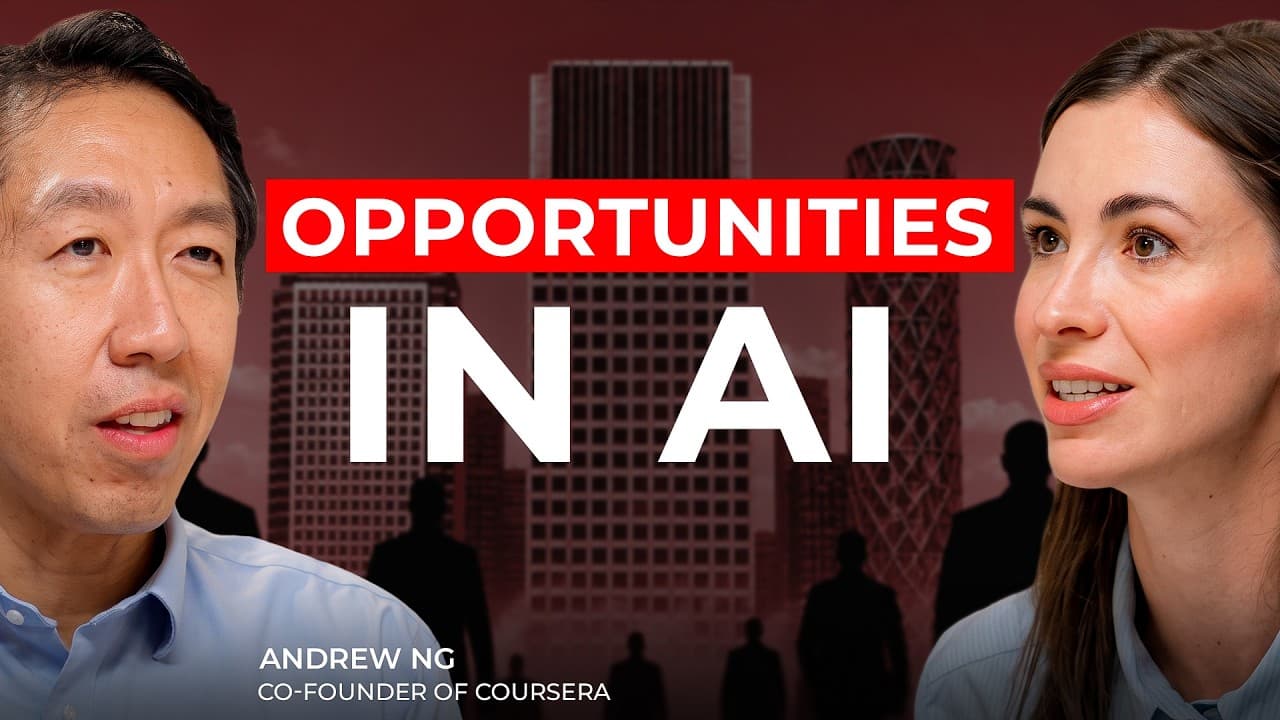
Andrew Ng highlights that fear-mongering around AI is largely misplaced and that AI's potential lies in complementing human work, not replacing it. He emphasizes the importance of learning AI skills to stay relevant, especially in roles like marketing and software engineering. Universities lag in teaching current AI skills, so self-learning is crucial.
Transcript
There's been a lot of misinformation about AI. >> This is Andrew. He co-founded Google Brain and Corsera. His machine learning course has reached millions of learners and he is one of the most influential voices in AI today. >> So, a handful of leading AI companies have been very loud voices of fear monongering around AI to try to get regulations p... Read More
Key Insights
- AI fear-mongering is driven by companies wanting regulations that favor incumbents.
- AI's impact on jobs is more about changing roles rather than eliminating them.
- Universities are slow to adapt to AI advancements, affecting graduates' readiness for the job market.
- AI models are not effective for learning; they often result in poor retention of knowledge.
- Building with AI is easier than ever, and those who embrace it will be more productive.
- Human context and judgment remain crucial, as AI lacks the nuanced understanding that humans have.
- AI offers significant opportunities for building new tools and applications, especially for those who learn to code.
- The fear of AI taking control is exaggerated; it's more about managing and guiding AI development responsibly.
Install to Summarize YouTube Videos and Get Transcripts
Explore YouTube Video Summarizer or Get YouTube Transcript Extractor
Questions & Answers
Q: Why is there fear-mongering around AI?
Fear-mongering around AI is often driven by companies that want regulations to favor existing players. By spreading fear, they aim to create an environment where new entrants face higher barriers, allowing incumbents to maintain their market position. This fear is largely unfounded and misrepresents AI's actual capabilities and risks.
Q: How will AI affect job markets?
AI will change the nature of many jobs rather than eliminate them. While AI can automate certain tasks, it complements human work by making other tasks more valuable. For example, AI might handle 30-40% of a job's tasks, but the remaining tasks become more important, requiring human judgment and creativity.
Q: Why are universities lagging in AI education?
Universities often take years to update curricula, which does not match the rapid pace of AI advancements. This delay means that graduates may not be equipped with the latest AI skills, making self-learning through online platforms like Coursera or Deep Learning.AI crucial for staying competitive in the job market.
Q: Are AI models effective for learning?
AI models are generally not effective for learning because they encourage cognitive offloading, leading to poor retention of information. While they can help complete tasks, they do not facilitate the deep understanding and long-term memory retention necessary for effective learning.
Q: What are the biggest opportunities in AI?
The biggest opportunities in AI lie in building applications and tools that enhance productivity. As the cost of building AI applications has decreased, individuals can experiment and innovate more easily. The challenge now is identifying valuable problems to solve and iterating quickly based on user feedback.
Q: Can AI be controlled effectively?
While AI cannot be controlled perfectly, much like airplanes, it can be managed responsibly. By carefully developing and testing AI systems, we can ensure they operate safely and effectively. The fear of AI gaining uncontrollable autonomy is exaggerated and not supported by current technological capabilities.
Q: How does human context advantage affect AI?
Humans have a significant context advantage over AI, which lacks the nuanced understanding and judgment that comes from years of experience. This advantage means humans can make better decisions and interpret situations more accurately, complementing AI's capabilities and ensuring it is used effectively.
Q: What should individuals focus on to thrive in the AI era?
Individuals should focus on learning AI skills and building with AI to stay relevant in the job market. This includes understanding how to integrate AI into various roles and industries, such as marketing, recruiting, and software engineering. Embracing AI's potential to enhance productivity and creativity is key to thriving in the AI era.
Summary & Key Takeaways
-
Andrew Ng argues that the fear surrounding AI is largely unfounded and driven by companies seeking regulatory advantages. AI is not poised to replace jobs but to change how tasks are performed, making human roles more valuable. Universities are lagging in adapting to AI, so self-directed learning is essential for staying competitive.
-
AI models are not effective learning tools as they lead to cognitive offloading and poor retention. The real opportunity lies in using AI to enhance productivity by building on top of existing models. Human context and judgment remain critical, as AI lacks the nuanced understanding that humans possess.
-
AI offers immense opportunities for innovation, particularly for those who learn to build with it. The cost of building AI applications has decreased, shifting the challenge to deciding what to build. Despite fears, AI is unlikely to gain uncontrollable autonomy, and responsible development is key.
Read in Other Languages (beta)
Share This Summary 📚
Summarize YouTube Videos and Get Video Transcripts with 1-Click
Try YouTube Summary with ChatGPT & Claude or YouTube Transcript Generator
Explore More Summaries from Silicon Valley Girl 📚





Summarize YouTube Videos and Get Video Transcripts with 1-Click
Try YouTube Summary with ChatGPT & Claude or YouTube Transcript Generator