How to Create Viral AI Videos With Sora 2
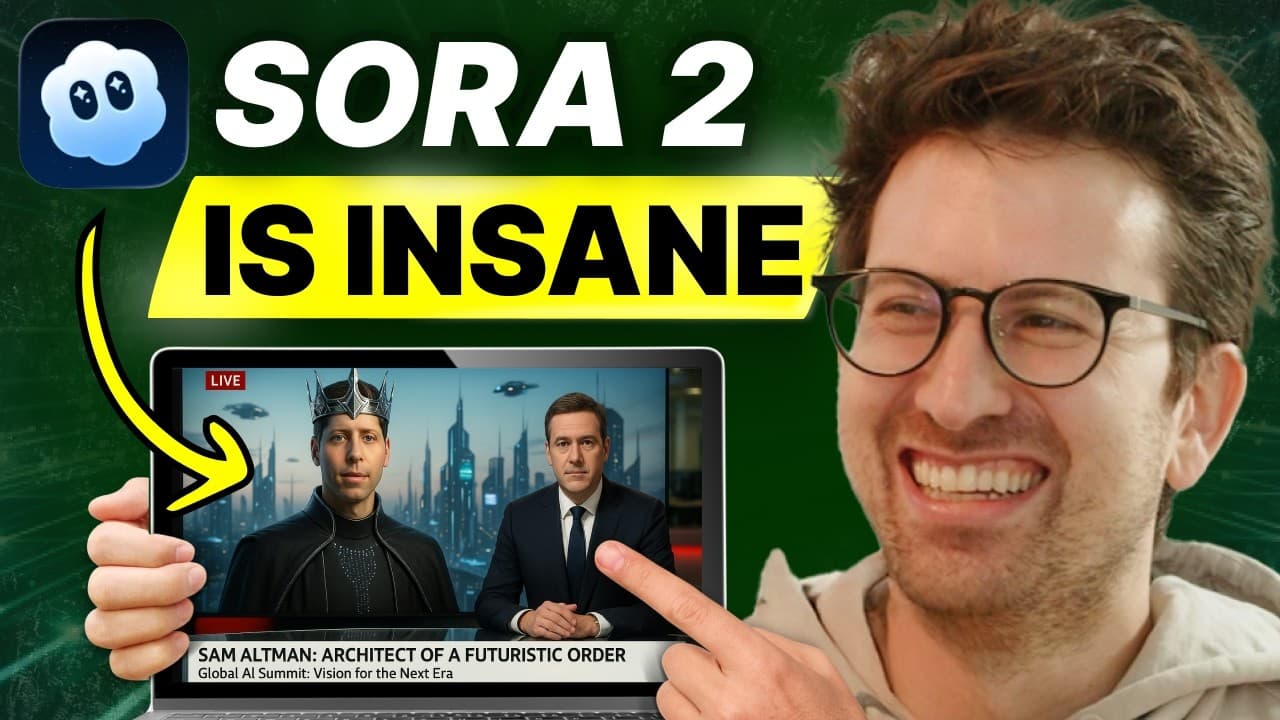
TL;DR
Start by researching audience motivations and proven short-form formats in Perplexity, then use Claude to generate, score, and refine concepts before producing them in Sora 2. Evaluate every idea for hook strength, pacing, emotional curiosity, completion potential, and shareability, then test several strong concepts because the framework improves the odds of success but cannot guarantee virality.
Transcript
In this episode, I go through how you can actually come up with Sora 2 concepts that are going to resonate with people. Because you want to create an internet audience, you know that Sora 2, the AI video piece of it, is a key part of that, but you don't know how. So today I'm going to walk you through my entire workflow for using perplexity, us... Read More
Key Insights
- The three-tool workflow separates research, creative development, and production. Perplexity acts as the research agent, Claude generates and evaluates concepts while writing Sora-ready prompts, and Sora 2 produces the selected videos. Each tool therefore handles a specific stage instead of one model handling everything.
- Audience motivation is the foundation of useful viral-content research. A prompt should describe the product, target viewers, and what those viewers most want, such as finding software ideas or owning a SaaS product that generates revenue. This context helps the research return relevant formats instead of generic suggestions.
- Deep research identifies psychological triggers and repeatable short-form frameworks. The example research highlighted high-arousal emotions, validation seeking, fear of missing out, pattern recognition, contradiction hooks, micro tutorials, and real-number reveals. These findings give the concept-generation model evidence and structures to work from.
- Claude can turn a long research report into 10 specific short-form concepts. The recommended prompt assigns Claude the role of social media strategist, supplies audience and platform research, and defines goals, requirements, and psychological triggers. The resulting ideas can support advertisements or organic posts on LinkedIn, X, and Instagram.
- Concept evaluation is necessary before sending an idea to Sora 2. Claude should rate every concept from one to 10 across opening-hook strength, pattern interruption, pacing, emotional curiosity, algorithm fit, completion potential, and shareability. This scoring process helps prioritize ideas with stronger predicted engagement characteristics.
- Human judgment remains necessary after AI scoring. A highly rated concept may still feel uncomfortable, unsuitable, or embarrassing for the brand. The creator should read Claude's reasoning, change questionable content, and retain the underlying format when its structure is useful but its original execution does not fit.
- Testing several concepts is more reliable than treating one recommendation as guaranteed success. Claude can identify the top three ideas and explain why they may work, but the framework only raises the likelihood of resonance. Actual audience response determines which hooks, formats, and messages deserve further refinement.
- Attention can support startup distribution by creating an audience for consumer mobile apps, SaaS products, and micro SaaS products. The proposed sequence is to create compelling videos, capture attention, and offer products to that audience. The speaker characterizes strong distribution as an advantage for making startup ideas more likely to work.
Install to Summarize YouTube Videos and Get Transcripts
Explore YouTube Video Summarizer or Get YouTube Transcript Extractor
Questions & Answers
Q: How do you create viral AI video concepts with Sora 2?
Begin by using Perplexity deep research to investigate the target audience's motivations, psychological triggers, successful short-form formats, and relevant examples. Paste the resulting research into Claude and request 10 concepts tailored to the brand and platform. Have Claude score those concepts for hook strength, pacing, emotion, completion potential, and shareability. Select several strong candidates, request Sora 2 optimized prompts, generate the videos, and test the results.
Q: What role does Perplexity play in the AI video workflow?
Perplexity serves as the research agent. The research prompt should explain what the startup does, identify its audience, describe what that audience wants, and request scroll-stopping short-form frameworks with examples. In the Idea Browser example, the audience consists mainly of entrepreneurs interested in building software, mobile apps, or SaaS products. The resulting report supplies Claude with audience psychology, engagement triggers, and reusable video formats.
Q: How should Claude be prompted to generate short-form video ideas?
Claude should be assigned the role of a skilled social media content strategist and short-form video expert. Provide the complete research gathered about the audience and platform, then ask for 10 creative concepts for the relevant industry or brand. Include clear goals, requirements, and psychological triggers. This approach produces concrete hooks, scenes, transitions, interfaces, and result displays that can be adapted for advertisements or organic social content.
Q: How do you evaluate whether an AI video concept could perform well?
Rate each concept from one to 10 against explicit engagement criteria. Examine how attention-grabbing the first three seconds are, whether the pacing creates pattern interruptions, and whether the idea provokes emotion or curiosity. Also assess algorithm fit, expected completion rate, shareability, trend compatibility, and suitability for TikTok or Reels. Claude can provide both scores and brief reasoning, allowing the creator to compare concepts before production.
Q: Why should AI-generated concepts be scored before using Sora 2?
Scoring prevents the workflow from stopping at the first batch of plausible ideas. Ten concepts may sound appealing, but structured evaluation reveals which ones have stronger hooks, emotional triggers, pacing, completion potential, and shareability. Claude can rank the ideas, identify the top three, and explain why each may succeed. The creator can then spend production effort on better-supported candidates while still applying personal judgment to the recommendations.
Q: What should you do if Claude recommends a concept that feels wrong for the brand?
Read the model's explanation, then change or reject the concept if it feels uncomfortable, unsuitable, or embarrassing. A high score does not remove the need for human judgment. The useful option may be to preserve the format, such as a contradiction hook or tutorial structure, while replacing the specific claim, example, or presentation. The creator should agree with both the strategic reasoning and the final message before producing it.
Q: What kinds of short-form formats can attract an entrepreneurial audience?
The research example identifies contradiction hooks, micro tutorials, real-number reveals, screen recordings, dashboard refreshes, tool demonstrations, quick transitions, and visible result numbers. Sample themes include showing a specific tactic behind sales, explaining a SaaS mistake in a short period, documenting a first Stripe dollar, or identifying an onboarding problem. These formats connect curiosity, practical value, social proof, and recognizable entrepreneurial goals.
Q: Does this Perplexity, Claude, and Sora 2 workflow guarantee a viral video?
No, the workflow does not guarantee that any individual video will go viral. Its purpose is to improve the likelihood of success by replacing blank-page guessing with audience research, structured concept generation, explicit scoring, optimized prompts, and repeated testing. The recommended approach is to produce several promising concepts, observe which ones resonate with the target audience, and return to Perplexity and Claude to refine later prompts and executions.
Summary & Key Takeaways
-
The workflow assigns a distinct role to each tool. Perplexity researches audience psychology, motivations, viral frameworks, and content formats. Claude converts that research into 10 brand-specific concepts, evaluates their engagement potential, and writes optimized production prompts. Sora 2 then generates the selected short-form videos for practical testing across relevant social platforms.
-
Effective research begins with a precise description of the startup, its audience, and the audience's central desire. For Idea Browser, the target consists mainly of entrepreneurs seeking software, mobile app, or SaaS ideas. Deep research then identifies psychological triggers and reusable formats, including contradiction hooks, micro tutorials, real-number reveals, and pattern-based content.
-
Concept generation is followed by structured evaluation rather than immediate production. Claude rates each proposal from one to 10 for opening-hook strength, pattern interruption, pacing, emotional curiosity, algorithm fit, completion potential, and shareability. The creator reviews the recommendations, rejects ideas that feel unsuitable, preserves useful formats, and tests multiple promising variations.
Read in Other Languages (beta)
Share This Summary 📚
Summarize YouTube Videos and Get Video Transcripts with 1-Click
Try YouTube Summary with ChatGPT & Claude or YouTube Transcript Generator
Explore More Summaries from Greg Isenberg 📚






Summarize YouTube Videos and Get Video Transcripts with 1-Click
Try YouTube Summary with ChatGPT & Claude or YouTube Transcript Generator