How to use a queue data structure in Java
TL;DR
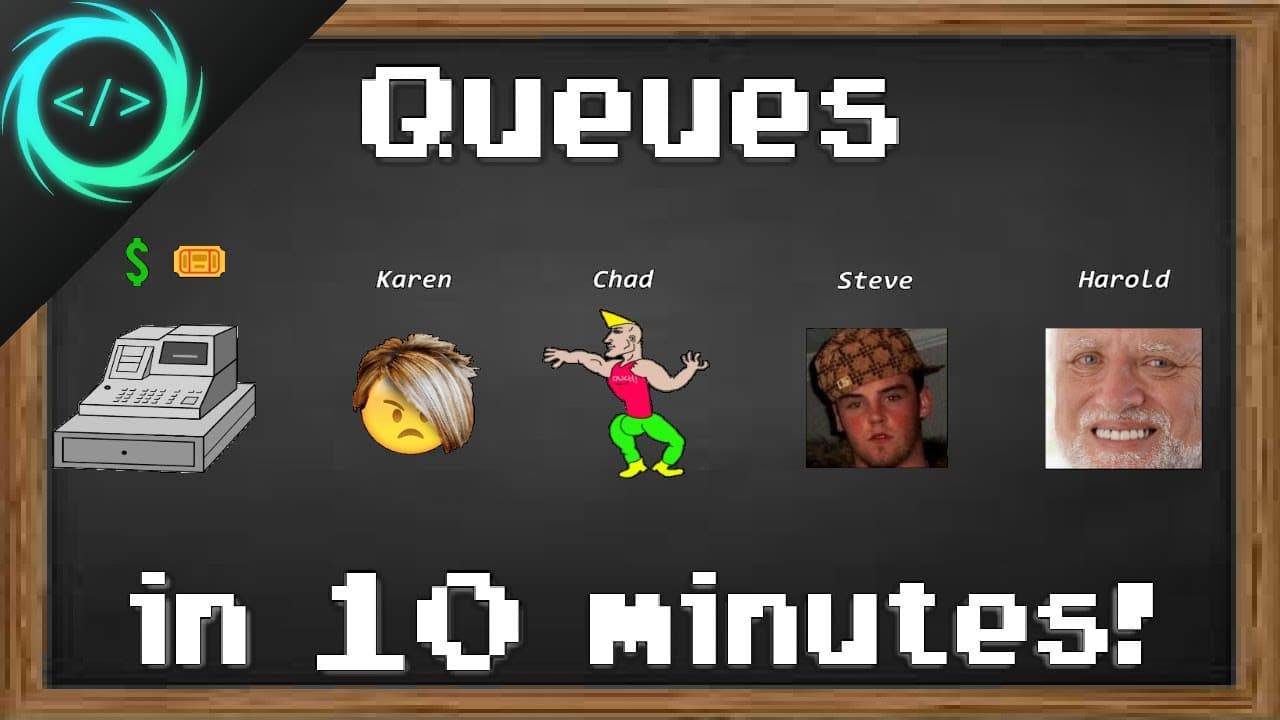
A queue is a FIFO data structure used to hold elements before processing. Enqueue adds to the tail with offer, dequeue removes from the head with poll, and peak examines the head without removing it. This video demonstrates a Java linked list implementation and explains common queue methods.
Transcript
hey what's going on everybody it's you bro hope you're doing well in this video i'm going to explain cues in computer science so sit back relax and enjoy the show if you find this video helpful please remember to like comment and subscribe your support will help keep this channel running whoa hey we're talking about cues today so cues are a fifo da... Read More
Key Insights
- Queue is defined as a first in, first out data structure used to hold elements prior to processing.
- Enqueuing adds to the tail of the queue using the offer method, while dequeuing removes from the head using the poll method.
- Peek examines the head without removing it, allowing you to see the next item to be processed.
- In Java, the queue interface cannot be instantiated directly, so a class like LinkedList implements it.
- The queue interface inherits from the collection class, gaining additional utility methods such as isEmpty, size, and contains.
- Priority queues and linked lists can implement the queue interface, each altering the order of processing to fit their semantics.
- Common real world uses include keyboard input buffers and printer queues where order must be preserved.
- Understanding the difference between methods that throw exceptions (such as element) and those that return special values (offer, poll, peek) is important for robust code.
Install to Summarize YouTube Videos and Get Transcripts
Explore YouTube Video Summarizer or Get YouTube Transcript Extractor
Questions & Answers
Q: How to implement a queue in Java using LinkedList
To implement a queue in Java you create a variable of type Queue and assign it to a new LinkedList. You cannot instantiate the Queue interface directly because it is a template. Instead you use LinkedList which implements the queue interface. Then you use offer to enqueue, poll to dequeue, and peek to inspect the head. Managing this correctly ensures you preserve first in, first out behavior and avoid exceptions by choosing the right methods.
Q: What is the difference between offer and add in a queue
Offer and add both insert elements into a queue, but offer is preferred because it returns a boolean indicating success or failure and does not throw an exception if the queue is full. In many queue implementations, add may throw an exception when space is limited, whereas offer provides a safer, non throwing alternative that aligns with the queue semantics of non blocking insertion.
Q: How does poll differ from remove in a queue
Poll removes the head of the queue and returns it, but if the queue is empty it returns a special value rather than throwing an exception. Remove, on the other hand, also removes the head but will throw an exception if the queue is empty. This distinction helps write stable code that handles empty queues gracefully.
Q: What happens when you use peek on an empty queue
Peeking on a non empty queue returns the element at the head without removing it. If the queue is empty, peek will return a null value or a special value depending on the implementation. Using peek helps you examine the next item to be processed while keeping the queue intact.
Q: Why would you use a queue in a keyboard buffer or printer queue
A queue preserves order for characters or print jobs exactly as they arrive, ensuring first come, first served processing. In a keyboard buffer the characters should appear in the order they were pressed, and printer queues should process pages sequentially. This FIFO behavior is essential for predictable user interactions and correct document output.
Q: Can a queue be implemented with a LinkedList or PriorityQueue in Java
Yes, a queue can be implemented by both LinkedList and PriorityQueue, depending on the desired behavior. LinkedList provides a straightforward FIFO order suitable for typical queues, while PriorityQueue reorders elements by a defined priority, which changes the enqueueing and dequeueing semantics. The video demonstrates LinkedList as a practical example.
Q: What are common queue operations inherited from the Collection class
The queue inherits methods from the Collection class such as isEmpty to check for no elements, size to determine the number of items, and contains to test if a specific object exists in the queue. These utility methods help manage queue state and query content without modifying it.
Q: What is the practical significance of the head and tail in a queue
The head represents the next item to be processed and removed during dequeue, while the tail is where new items are added during enqueue. This head-tail model enforces the FIFO order that defines a queue, ensuring items are processed in their arrival sequence and enabling predictable, orderly handling of tasks.
Summary & Key Takeaways
-
A queue is defined as a first in, first out collection that holds elements before processing. In Java, you generally use a queue interface implemented by classes like linked lists to manage insertion at the tail and removal from the head. The video emphasizes practical method names and behavior.
-
The speaker shows how to enqueue with offer, dequeue with poll, and peek at the head without removing it. It also contrasts methods that throw exceptions with those that return special values, guiding when to use each.
-
The presentation connects queues to real world scenarios like keyboard input buffers and printer queues, illustrating why order matters and how queues integrate with broader structures such as linked lists, priority queues, and breadth-first search algorithms.
Read in Other Languages (beta)
Share This Summary 📚
Summarize YouTube Videos and Get Video Transcripts with 1-Click
Try YouTube Summary with ChatGPT & Claude or YouTube Transcript Generator
Explore More Summaries from Bro Code 📚
Summarize YouTube Videos and Get Video Transcripts with 1-Click
Try YouTube Summary with ChatGPT & Claude or YouTube Transcript Generator