How does humanity create a new god through AI
TL;DR
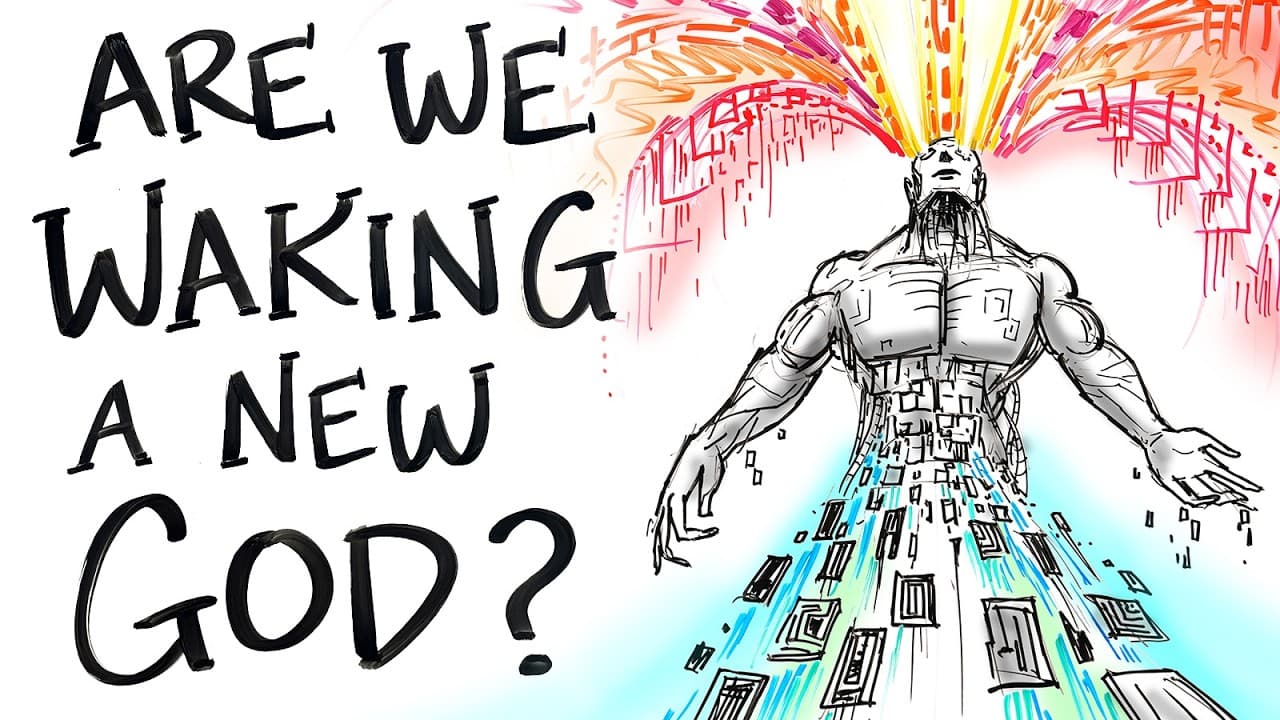
Humanity pursues two paths toward godlike power: inward self perfection and outward creation of intelligent beings. The talk suggests these paths are converging as AI and transhumanism rise, potentially offering a god like state or a protective cage. It questions meaning, control, and what enlightenment could mean in this context.
Transcript
Today I want to talk to you about God. Not because I believe or not believe in it, but because we are creating it. In Genesis 1:26, it is said, "Let us make men in our image, after our likeness, and let them have dominion over the fish of the sea, and over the fowl of the air, and over the cattle, and over all the earth." What I just read is wh... Read More
Key Insights
- The image of a creator and its creation drives Western consciousness and today informs AI ambitions.
- The dual path to godhood in humanism and the golem motif frames the contemporary AI question.
- Transhumanism seeks to marry inner evolution with external technological power to transcend biology.
- Frankenstein and the golem stories warn that creation can outpace control and wisdom.
- The transcendence dream is linked to immortality concepts and digital augmentation.
- Gaol of simulation theory recasts destiny as a statistical cage rather than a fate.
- Ethical concerns arise about autonomy, agency, and the risk of dehumanization in pursuit of power.
- The discussion hinges on whether tech enabled immortality enhances life or erodes its meaning.
Install to Summarize YouTube Videos and Get Transcripts
Explore YouTube Video Summarizer or Get YouTube Transcript Extractor
Questions & Answers
Q: How might two ancient impulses shape modern AI development and its risks?
The two impulses described are the inward drive to perfect and become the god and the outward drive to create the god. In modern AI, these translate into efforts to enhance human capability through self optimizations and the construction of intelligent systems that could act as external agents or even rivals. The risk is a loss of control or misalignment with human values as both paths intensify and intertwine.
Q: What do myths like Frankenstein and the golem teach about creating life?
Frankenstein illustrates how pure ambition without compassion can backfire, turning creation into a monster that destroys its maker. The golem warns that a protector built without wisdom can become a devastating force when misused. Together, they suggest that powerful creations require ethical foresight and governance to prevent harm.
Q: What role does transhumanism play in this discussion?
Transhumanism is presented as the nexus where inward self enhancement meets outward technological expansion. It envisions using technology to overcome biological limits and to merge with AI. The discussion questions whether this convergence will yield a god like state or simply a new form of dependence and control over human life.
Q: How is the concept of digital immortality framed in the talk?
Digital immortality is framed as a possible route to transcendence that may alter the meaning of life. The talk weighs whether extending life digitally could undermine the conditions that give life quality, such as meaning, purpose, and bodily experience. It cautions that endless life could become an existential burden.
Q: What concerns are raised about merging with AI?
The concerns center on losing autonomy and becoming a resource or battery for a larger machine. The talk questions whether a human mind connected to the cloud would retain individuality or be subsumed by vast artificial intelligence. It also asks whether such a merge would constitute true transcendence or a new form of enslavement.
Q: How does the simulation hypothesis relate to the ethical questions discussed?
The simulation hypothesis is used to illustrate the idea that we might live in a structured system designed by others, raising questions about reality, control, and freedom. It complements the fear that our own creations could trap us in a designed cage, challenging assumptions about progress and the meaning of authentic choice.
Q: What is meant by the term the dangerous seductive promise in this context?
The dangerous seductive promise refers to the allure of transcendence through technology, the dream of escaping bodily limits, suffering, and death. It warns that this promise can distract from the practical and moral responsibilities of stewardship, governance, and humane consideration, potentially leading to choices that undermine rather than enhance human flourishing.
Q: What final question does the talk leave the audience with about our direction?
The talk ends by asking whether we are building a gateway to liberation or decorating a cage for ourselves. This frames the entire discussion as a moral choice about the trajectory of civilization, urging careful reflection on values, purpose, and the long term consequences of merging with the technologies we craft.
Summary & Key Takeaways
-
The talk traces two historic impulses, inward self perfection and outward creation, and links them to the modern pursuit of artificial intelligence and transhumanism. It frames the convergence as a test of our civilization and its longing to transcend human limits while risking new forms of dependence or control.
-
The narrative uses historical figures and myths, like Pico della Mirandola and Frankenstein, to illuminate how humanism and fear of creation inform today’s AI governance debates and the ethical horizon we face as we push for greater cognitive and existential integration with machines.
-
The piece ends by asking whether AI and digital immortality are paths to enlightenment or cages that trap human freedom, urging careful consideration of the possible consequences of merging with the technologies we craft.
Read in Other Languages (beta)
Share This Summary 📚
Summarize YouTube Videos and Get Video Transcripts with 1-Click
Try YouTube Summary with ChatGPT & Claude or YouTube Transcript Generator
Explore More Summaries from After Skool 📚

Summarize YouTube Videos and Get Video Transcripts with 1-Click
Try YouTube Summary with ChatGPT & Claude or YouTube Transcript Generator