How to Use Reciprocity and Liking to Persuade
TL;DR
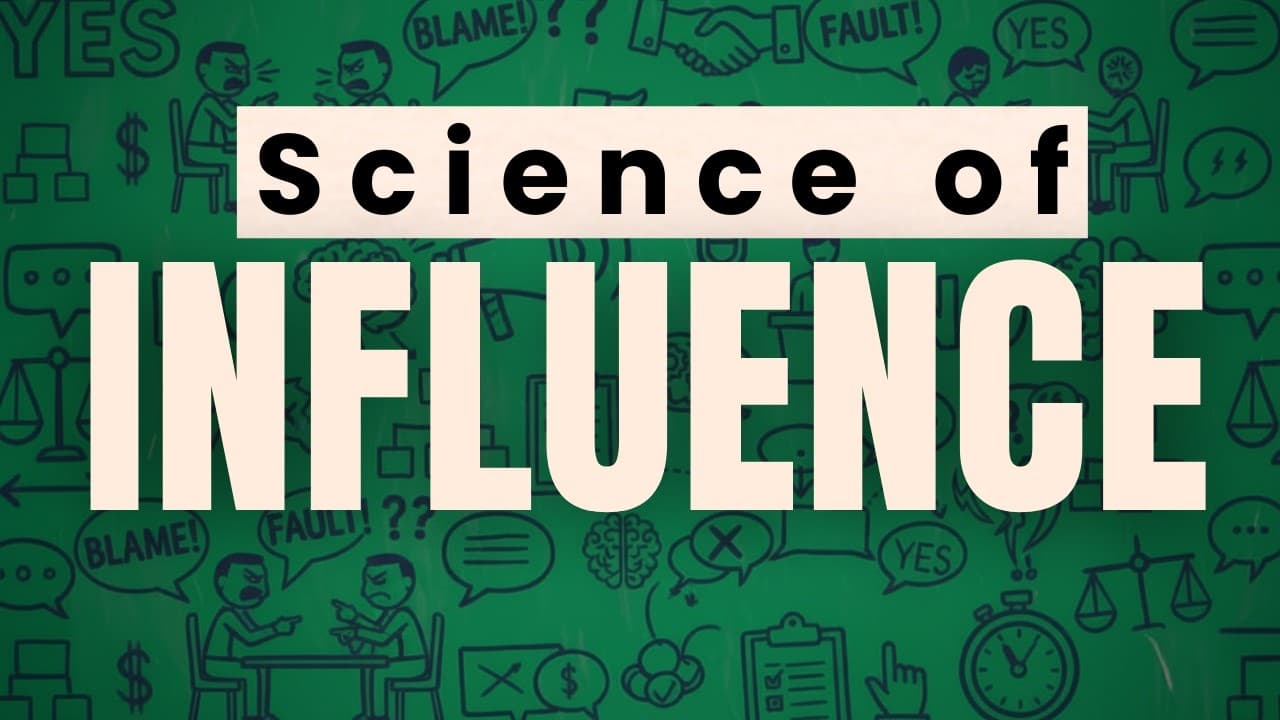
Persuasion becomes more effective when you help others first and build genuine rapport through similarity, compliments, and cooperation. Personalized, unexpected, and meaningful favors can encourage reciprocity, while identifying shared interests before a negotiation can improve the likelihood of agreement. These methods should be applied sincerely, not as tricks designed to create artificial obligation.
Transcript
in the last three years I have probably read over a hundred books among those books there are only a few that I have read twice because I found them interesting today's book summary is about one of those books it is called influence by Robert cialdini it is the number one book in the world when it comes to psychology of persuasion and the author Ro... Read More
Key Insights
- Reciprocity is the social tendency to repay another person after receiving a favor, gift, or meaningful concession. Even a small gesture can encourage a response that is greater than the original gesture because recipients often feel an obligation to give something back.
- Small gifts can produce measurable behavioral changes when they accompany a service. In the restaurant example, one mint increased tips by 3 percent, two mints increased them by 14 percent, and an unexpected additional mint with a compliment increased them by 20 percent.
- Effective gifts are customized, unexpected, and meaningful to the recipient. A pen carrying the recipient's name may remain memorable, while a generic promotional pen bearing only a company's name may be ignored, mixed with other pens, or discarded.
- VIP customers are practical recipients for personalized gifts because their numbers may be manageable and they often bring a business its greatest profit. Airlines, restaurants, and hotels all have examples of valuable customers who can receive more individualized attention.
- Helping someone first is more effective than immediately asking that person for assistance. The recommended approach is to identify the person's pain points, provide a useful solution, and establish a genuine basis for that person to return the favor later.
- Ethical reciprocity depends on sincere assistance rather than concealed manipulation. People may recognize gifts or favors offered merely to pressure them, and recipients are not socially obligated to reward a trick in the same way they might repay genuine support.
- The request-then-retreat strategy works by presenting a large request before moving to a smaller one. The retreat resembles a concession, which can make the other party feel obligated to offer a concession, even when the smaller request was the original goal.
- Liking increases the chance that someone will accept a request or buy from another person. Similarity, sincere compliments, and cooperation strengthen liking, while discussing shared qualities before negotiation can help establish rapport and make agreement more likely.
Install to Summarize YouTube Videos and Get Transcripts
Explore YouTube Video Summarizer or Get YouTube Transcript Extractor
Questions & Answers
Q: How does reciprocity influence people's decisions?
Reciprocity influences decisions by creating a sense that favors, gifts, or concessions should be repaid. Someone who receives lunch, assistance, or a birthday gift may feel motivated to respond similarly later. The effect can arise even from small gestures, but it should be used through genuine help rather than by disguising an attempt to pressure someone into compliance.
Q: How can a small gift increase customer spending or tips?
A small gift can make a customer feel appreciated and encourage a reciprocal response. In the restaurant example, one mint delivered with the bill increased tips by 3 percent, while two mints increased them by 14 percent. When a waitress returned unexpectedly with another mint and complimented the customers, tips increased by 20 percent, highlighting the value of surprise and personal attention.
Q: What makes a gift effective for ethical persuasion?
An effective gift is customized, unexpected, and meaningful to the person receiving it. Personalization shows that the giver considered the individual instead of distributing a generic promotional item. Unexpected delivery attracts attention, while personal relevance gives the gift lasting value. These qualities should express authentic appreciation or assistance, not serve as a concealed method for forcing repayment.
Q: How can businesses personalize gifts for many customers?
A business that cannot customize gifts for thousands of customers can concentrate on a smaller group of VIP clients. Examples include first-class airline customers, loyal restaurant visitors, and hotel guests who repeatedly reserve the most expensive suites. Because these groups are smaller and may generate the greatest profit, individualized gifts can be more practical and economically relevant for them.
Q: How should you ask a successful person for help?
Before asking a successful person for help, determine how you can assist that person first. Study the person's problems or pain points and offer a useful solution where possible. This approach establishes value and activates reciprocity more naturally than sending an unsupported request. The assistance must be genuine, because people can often recognize when an apparent favor is merely a tactic.
Q: What is the request-then-retreat persuasion strategy?
The request-then-retreat strategy begins with a large request and then moves to a smaller request, which may have been the desired outcome from the beginning. The retreat looks like a compromise or favor, so the other party may feel socially obligated to make a concession too. Recognizing this pattern can help someone understand what is happening during a negotiation.
Q: How should you respond when someone thanks you for a favor?
When someone thanks you, acknowledge the appreciation without claiming that your effort was insignificant. A response such as saying the recipient would probably do the same if the roles were reversed keeps the idea of mutual support active. Saying that the favor was no trouble or that you did very little can devalue your contribution and weaken the recipient's motivation to reciprocate later.
Q: How does liking improve persuasion and negotiation?
Liking makes people more likely to approve a request or buy from someone. Three contributing factors are similarity, compliments, and cooperation. In the cited negotiation experiment, 55 percent of participants who began immediately reached an agreement, compared with a 90 percent success rate among participants who first spent time identifying similarities. Genuine common ground can therefore support rapport and agreement.
Summary & Key Takeaways
-
Reciprocity is the tendency to repay favors, gifts, and concessions. Restaurant examples show that even small gifts can affect behavior, especially when they feel unexpected and personal. To use reciprocity effectively, offer something customized, surprising, and meaningful, while ensuring that your assistance reflects genuine interest rather than an attempt to manipulate someone.
-
Helping influential people before requesting their assistance can make cooperation more likely. Instead of asking which successful person can help you, identify whom you can help and investigate that person's pain points. Offering a useful solution establishes goodwill, demonstrates value, and gives the other person a sincere reason to consider returning the favor later.
-
Liking increases the likelihood that someone will accept a request or make a purchase. People tend to like those who resemble them, compliment them, or cooperate with them. Before an important meeting or negotiation, taking time to identify real similarities and offering sincere compliments can create rapport and support agreement.
-
The request-then-retreat strategy uses reciprocity during negotiations. A person begins with a large demand, then moves toward a smaller request that may have been the actual objective. Because the retreat appears to be a concession, the other party may feel pressure to respond with a concession of their own.
-
A favor retains more persuasive significance when it is acknowledged without being dismissed. Saying that the recipient would probably do the same if the roles were reversed reinforces mutual support. Calling the favor insignificant can weaken the recipient's sense that something valuable was provided and might someday be reciprocated.
Read in Other Languages (beta)
Share This Summary 📚
Summarize YouTube Videos and Get Video Transcripts with 1-Click
Try YouTube Summary with ChatGPT & Claude or YouTube Transcript Generator
Explore More Summaries from LITTLE BIT BETTER 📚




Summarize YouTube Videos and Get Video Transcripts with 1-Click
Try YouTube Summary with ChatGPT & Claude or YouTube Transcript Generator