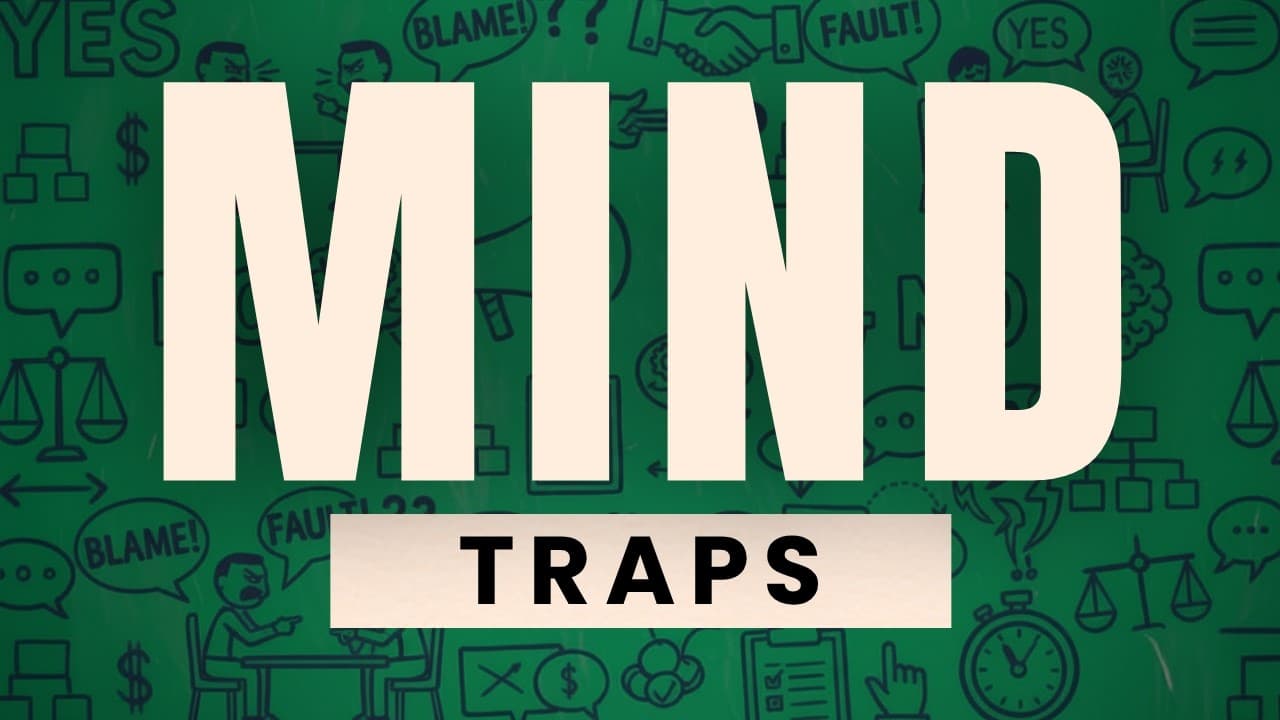
How to Recognize and Avoid Every Psychological Mind Trap in 13 Minutes
TL;DR
You can avoid psychological mind traps by evaluating options independently, checking uncomfortable facts, challenging your beliefs, and choosing according to future value rather than past costs. Practical safeguards include focusing on one priority, getting external feedback, limiting excessive choices, and viewing framed information from multiple perspectives. Read on to recognize specific traps such as the ostrich effect, anchoring, sunk costs, and chauffeur knowledge in everyday decisions.
Transcript
the ostrich effect the ostrich effect is when you ignore negative information or feedback like an ostrich burying its head in the sand like not checking your bank account because you don't want to see how much you've spent to counter this regularly review your situation even if it's uncomfortable inability to close doors the inability to close door... Read More
Key Insights
- The ostrich effect is the tendency to ignore negative information or feedback because facing it feels uncomfortable. Regularly reviewing finances, performance, or other difficult situations prevents avoidance from controlling decisions and makes current problems easier to address directly.
- The inability to close doors is difficulty choosing one opportunity because abandoning alternatives feels costly. Dividing effort among several business ideas can produce weak or average results, while selecting one priority allows greater focus on the work most likely to progress.
- The contrast and anchoring effects are comparison traps that make an option appear better or cheaper because of what appeared first. Evaluating every house, product, price, or offer independently reduces the influence of deliberately unfavorable comparisons and initial numbers.
- The IKEA effect is overvaluing something because personal effort went into creating it. External feedback provides a more objective view of the result, helping distinguish genuine quality or usefulness from the emotional value attached to time and labor.
- The sunk cost fallacy is continuing an activity because of past investment rather than present value. Decisions about meals, businesses, or investments should be based on the best action available today and the potential for future returns, not unrecoverable costs.
- Confirmation bias is the tendency to notice evidence supporting an existing belief while overlooking contradictory information. Actively searching for challenges to your position creates a broader factual basis for decisions and reduces dependence on what you already want to believe.
- The planning fallacy is underestimating how long a task will require. Adding extra time to estimates creates more realistic schedules, improves daily planning, and reduces the stress caused when cleaning, work, or other activities take longer than originally expected.
- Survivorship bias is focusing on visible successes while overlooking failures, risks, sacrifices, and struggles. Before starting a business or similar undertaking, researching both positive and negative experiences creates a more realistic picture than polished success stories presented in the media.
Install to Summarize YouTube Videos and Get Transcripts
Explore YouTube Video Summarizer or Get YouTube Transcript Extractor
Questions & Answers
Q: How can I recognize and avoid psychological mind traps?
Notice when your judgment depends on avoidance, obligation, an initial number, a recent comparison, or money and effort already spent. Review uncomfortable facts regularly, evaluate each option independently, seek external feedback, and base current decisions on potential future returns.
Q: What is the ostrich effect, and how can I counter it?
The ostrich effect is ignoring negative information or feedback because facing it is uncomfortable, such as avoiding your bank account after spending. Counter it by regularly reviewing your situation even when you would rather not see the results.
Q: Why can pursuing several opportunities at once prevent progress?
The inability to close doors is difficulty choosing because you fear missing other opportunities. Working on three business ideas at once can produce no results or average results, so the suggested response is to focus on one thing.
Q: How do anchoring and contrast distort decisions?
Anchoring occurs when a first impression or initial number shapes later thinking, such as judging a $50 shirt as cheap after seeing one for $200. Contrast occurs when recent exposure changes your judgment, such as a poor house making the next house look amazing; evaluate each offer independently.
Q: How can I identify chauffeur knowledge or false expertise?
Chauffeur knowledge describes someone who appears knowledgeable and confident but lacks genuine expertise. Ask increasingly detailed questions, because someone repeating memorized phrases will be unable to provide deeper insights.
Q: What is the IKEA effect, and how can I avoid overvaluing my work?
The IKEA effect is valuing something more because you put effort into creating it, like furniture you assembled yourself. Get external feedback to see the real value of your efforts and make a more objective decision.
Q: What is the sunk cost fallacy in business and investment decisions?
The sunk cost fallacy is continuing something because you already invested heavily in it rather than because it remains the best choice. Consider the best action starting today, and base business or investment decisions on potential future returns instead of past costs.
Q: Why do too many choices make decisions harder?
The paradox of choice occurs when numerous options make choosing more difficult, such as selecting from a menu with 50 dishes. Limit the options you consider or offer; when selling three products, identifying the best seller can simplify the decision.
Summary & Key Takeaways
-
Psychological traps distort judgment by making irrelevant details, initial impressions, recent comparisons, presentation styles, and memorable events seem more important than objective evidence. The contrast, anchoring, framing, specificity, availability, halo, decoy, and unity effects can be reduced by evaluating facts, people, and options independently from their surrounding context.
-
Several biases interfere with personal progress and accurate self-assessment. Avoidance hides uncomfortable information, fear of missing out divides attention, and sunk costs preserve poor commitments. Planning errors underestimate required time, while overconfidence exaggerates limited knowledge. Regular reviews, focused priorities, expert input, external feedback, and extra scheduling time improve decisions.
-
Social and emotional pressures can shape choices without conscious awareness. Reciprocity creates obligation, consistency reinforces public commitments, group behavior encourages imitation, and threatened freedom produces resistance. Negativity, loss aversion, action bias, and excessive choice further complicate judgment. Recognizing the source of an impulse makes deliberate, fact-based action more likely.
Read in Other Languages (beta)
Share This Summary 📚
Summarize YouTube Videos and Get Video Transcripts with 1-Click
Try YouTube Summary with ChatGPT & Claude or YouTube Transcript Generator
Explore More Summaries from LITTLE BIT BETTER 📚
Summarize YouTube Videos and Get Video Transcripts with 1-Click
Try YouTube Summary with ChatGPT & Claude or YouTube Transcript Generator