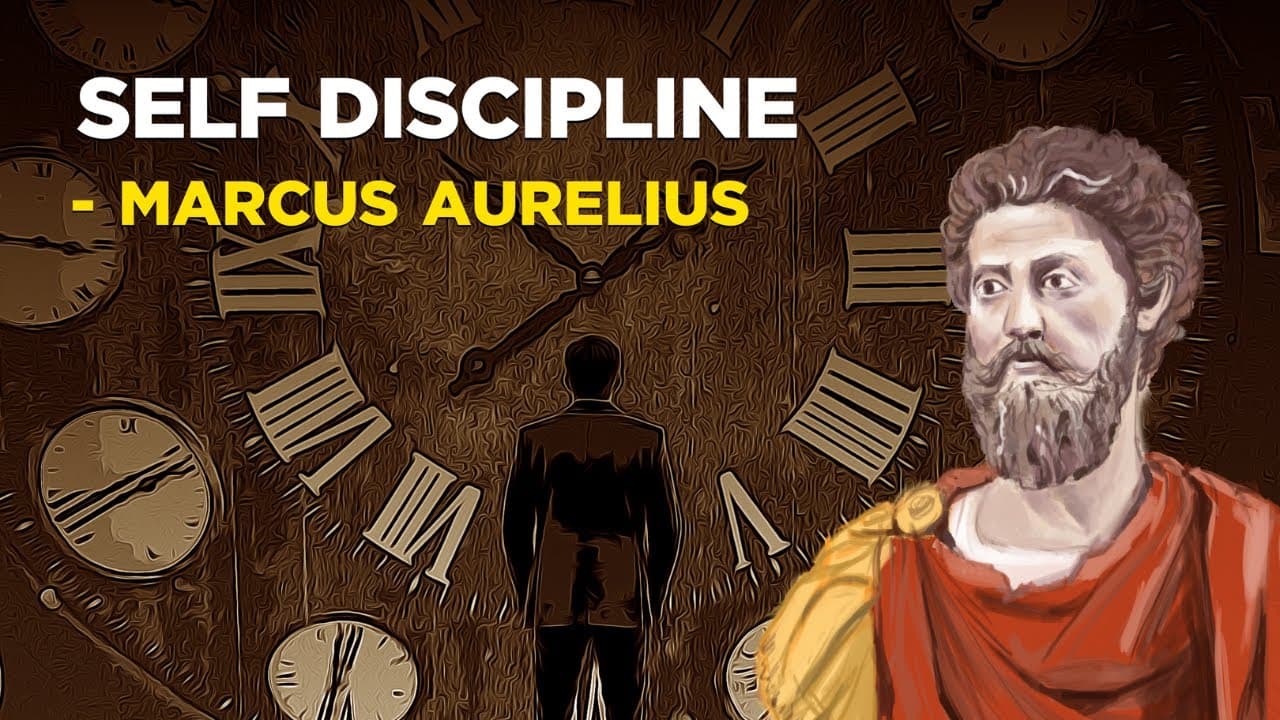
How To Build Self Discipline - Marcus Aurelius (Stoicism)
TL;DR
Build self-discipline by defining a compelling purpose, turning your goal into manageable actions, and showing up every day whether you feel motivated or not. The 10 insights drawn from Marcus Aurelius also include relying on yourself, practicing voluntary hardship, and treating setbacks as temporary rather than letting a bad day become a bad week. Read on for practical ways to strengthen consistency, endurance, and personal responsibility.
Transcript
if you want to build self-discipline you'd do well to listen to the words of Marcus Aurelius he was the emperor of Rome from 161 to 180 A.D and is considered as the last of the five good Emperors during his rule Aurelius found the time to construct a series of autobiographical writings now known as the meditations in these writings the Roman Empero... Read More
Key Insights
- 🤳 Having a clear purpose drives self-discipline, as understanding your goals and how your tasks align with them provides the motivation to complete them.
- 🤳 Commitment to both long-term goals and the small actions necessary for their achievement is essential for self-discipline.
- 🤳 Consistency is crucial for building mental endurance and forming habits that support self-discipline.
- 🛟 Practicing voluntary hardship by intentionally making life uncomfortable prepares you for real-life challenges.
- ✊ Applying the dichotomy of control helps maintain tranquility by focusing on what is within your power.
- 🖐️ Playing the victim hinders self-discipline, and assuming responsibility is crucial for progress.
- 🤳 Delayed gratification involves resisting temptations for greater rewards in the future, contributing to self-discipline.
- 🙈 Ignoring naysayers and seeking wise role models help strengthen self-discipline.
Install to Summarize YouTube Videos and Get Transcripts
Explore YouTube Video Summarizer or Get YouTube Transcript Extractor
Questions & Answers
Q: How can you build self-discipline according to Marcus Aurelius?
Start by identifying a compelling purpose, then create a practical plan and commit to its smaller actions. Show up every day regardless of your physical, mental, or emotional state, and use voluntary hardship to become more comfortable with difficulty.
Q: Why does self-discipline start with finding your purpose?
A clear purpose gives you a strong reason to complete a task even when you feel tired or unmotivated. Understanding your goals and how each task supports them creates the internal drive to keep moving forward.
Q: How can you turn a goal into a practical plan of action?
Set a deadline and divide the goal into mini-milestones that can be completed in manageable chunks and time blocks. This creates a sense of control and helps prevent overwhelm from turning into procrastination and stagnation.
Q: What does it mean to count on yourself when developing self-discipline?
It means committing not only to the final goal but also to every small action required to reach it. Self-discipline is taking the necessary action whether or not your physical, mental, or emotional state makes you feel ready.
Q: Why is showing up every day essential for self-discipline?
Daily practice builds focus and mental endurance while helping consistency become automatic. The transcript describes self-discipline as the habit of doing something repeatedly until results begin to appear.
Q: How should you respond after failing to follow through once?
Treat one failure as a temporary setback rather than proof of weak character. Missing one exercise session does not have to become a bad week or year; what develops strength and discipline is your ability to continue.
Q: What is voluntary hardship, and how does it build self-discipline?
Voluntary hardship means routinely choosing manageable discomfort so you become more resilient when genuine hardship arrives. Examples include skipping a meal, taking a cold shower, sleeping on the floor, or avoiding social media for a few days.
Q: What are simple ways to begin practicing your purpose?
Begin the activity instead of waiting for more motivation, research, or advice. If you want to be a writer, write every day; if you want to be an artist, draw and create every day.
Summary & Key Takeaways
-
Self-discipline starts with finding your purpose and understanding how your tasks align with your goals.
-
Commitment to both your goals and the smaller actions necessary to achieve them is essential for self-discipline.
-
Consistency and showing up every day to put in the work is crucial for building mental endurance and habit formation.
Read in Other Languages (beta)
Share This Summary 📚
Summarize YouTube Videos and Get Video Transcripts with 1-Click
Try YouTube Summary with ChatGPT & Claude or YouTube Transcript Generator
Explore More Summaries from Philosophies for Life 📚




Summarize YouTube Videos and Get Video Transcripts with 1-Click
Try YouTube Summary with ChatGPT & Claude or YouTube Transcript Generator