How to Build a Profitable MicroSaaS Business
TL;DR
A microSaaS is a niche software product, often just a feature of a feature, built by a solo founder or tiny team and focused on profitability. Successful ones can earn $10K to $50K a month in profit with 80 to 90% margins. Growth comes from building an audience first, solving its sharpest pain points, and reinvesting recurring revenue back into that audience.
Transcript
Today we're going to go over the most comprehensive micro SASS 101, how to build one, what that looks like, examples. I'm going to give away some startup ideas. I'm going to talk about growth flywheels. I'm going to talk about user journeys. I'm going to talk about the playbook. This is something that people charge tens of thousands, if not more, o... Read More
Key Insights
- A microSaaS differs from full SaaS by targeting a niche audience with a niche product, often a feature of a feature, while Salesforce-style SaaS targets nearly everyone. It focuses on profitability and can be built by a solo founder or tiny team.
- MicroSaaS businesses typically run at 80 to 90% margins, cost little to build, and let founders keep 100% of the equity. A marketplace offering liquidity for exits of these businesses is beginning to emerge.
- Bank Statement Converter is a solo-founder business at $40,000 a month in MRR that converts PDF bank statements from thousands of banks into clean Excel files. It works because of a good domain, a clear pain point, and simplicity.
- Clean Voice reaches about $20K a month in MRR by automatically editing podcasts in about 10 minutes. It removes background noise, filler words, long silences, and mouse sounds, and is used by 15,000 podcasters.
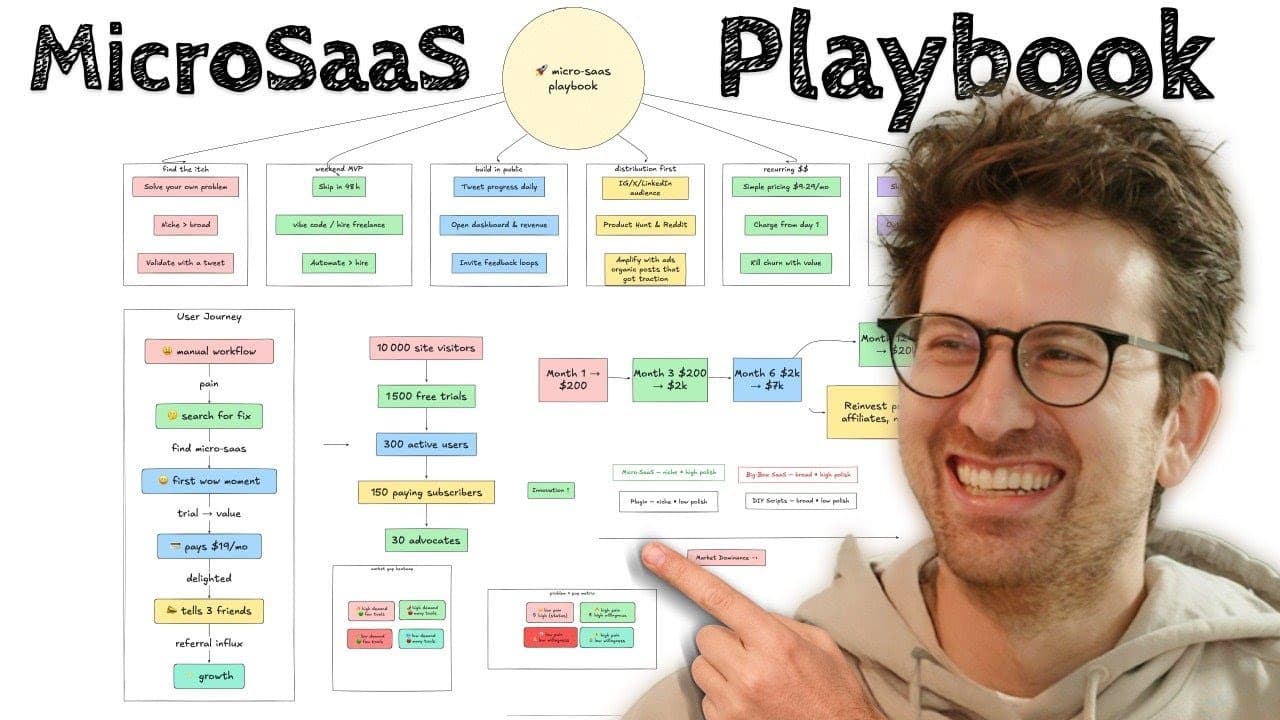
- The microSaaS growth flywheel starts with an audience or community, learns its acute pains, builds a product, generates word of mouth and recurring revenue, then reinvests that revenue into the audience through IRL events and promoted posts.
- The typical microSaaS user journey begins with a painful manual workflow. Users search Google, ChatGPT, or Perplexity for a fix, find the product, reach a wow moment, convert after a trial, and refer friends.
- A good, descriptive domain name matters because users discover microSaaS products through search. Long descriptive domains such as bank statement converter are often still available, contrary to the belief that all .com names are taken.
- Affiliate programs for microSaaS commonly give about 20% of revenue to affiliates as an incentive. Platforms such as Rewardful can help manage these affiliate programs.
Install to Summarize YouTube Videos and Get Transcripts
Explore YouTube Video Summarizer or Get YouTube Transcript Extractor
Questions & Answers
Q: What is a microSaaS and how is it different from SaaS?
A microSaaS is software focused on a niche audience with a niche product, often described as a feature of a feature. Unlike full SaaS companies such as Salesforce that target basically everyone, a microSaaS serves a narrow market, can be built by a solo founder or tiny team, and focuses on profitability rather than massive scale.
Q: Why should you build a microSaaS business?
A microSaaS does not cost much money to build and typically runs at 80 to 90% margins. It does not require 120-hour work weeks, founders can keep 100% of the equity for themselves and their team, and a marketplace providing liquidity for exits is beginning to form. Successful ones can generate $10K to $50K a month in profit.
Q: What are examples of successful microSaaS businesses?
Bank Statement Converter makes $40,000 a month in MRR as a solo-founder business converting PDF bank statements into Excel. A financial net worth projection tool earns 24K MRR at roughly $109 per year. Clean Voice earns about 20K MRR by automatically editing podcasts, removing noise, filler words, silences, and mouse sounds for 15,000 podcasters.
Q: How does the microSaaS growth flywheel work?
The flywheel starts by building an audience or community, for example an X account. From that audience you learn its acute pains, then build a product to solve them. The product generates word of mouth and recurring revenue, which you reinvest into the audience through IRL events and paid promotion of posts that already performed well, restarting the cycle.
Q: What does a typical microSaaS user journey look like?
Users start with a painful manual workflow and search Google, ChatGPT, or Perplexity for a fix. They find the microSaaS, use it and have a wow moment, often through a free trial of a few days, then pay around $19 a month. Delighted users tell friends or share it for incentives like free credits, creating referrals, growth, and better SEO.
Q: What conversion numbers can a microSaaS funnel expect?
An example funnel uses 10,000 site visitors a month. About 1,500 of them start free trials, leading to roughly 300 active users and about 150 paying subscribers at $19 a month, plus around 30 advocates. Many founders focus on paying subscribers, but the top of the funnel, driven by audience and community, matters most.
Q: Why is a good domain name important for a microSaaS?
People often discover microSaaS products by searching Google, ChatGPT, or Perplexity for a fix to their problem, so a clear, descriptive domain helps them find it. Not all .com domains are taken, and long descriptive names such as bank statement converter are surprisingly often still available for founders to register.
Q: How should microSaaS founders use affiliates and reinvest revenue?
Revenue may start at $0 to $100 a month but can compound to thousands if reinvested into ads, affiliates, and new features. Founders commonly give about 20% of revenue to affiliates as an incentive and can manage programs with platforms such as Rewardful. Compounding assumes competition does not intensify heavily and that founders keep reinvesting.
Summary & Key Takeaways
-
A microSaaS is a niche-focused software product, often a single feature of a larger tool, built by a solo founder or small team. It prioritizes profitability, with successful businesses earning $10K to $50K monthly profit at 80 to 90% margins, while founders retain full equity and avoid extreme workloads.
-
Real examples include Bank Statement Converter at $40,000 MRR, a net worth projection tool at 24K MRR priced around $109 per year, and Clean Voice at 20K MRR serving 15,000 podcasters. Each succeeds through a clear pain point, strong branding, and a simple product that does one thing well.
-
Growth follows a flywheel: build an audience or community, learn its pains, build the product, earn word of mouth and recurring revenue, then reinvest into ads, affiliates, events, and features. An example funnel turns 10,000 monthly visitors into 1,500 trials, 150 paying subscribers at $19 per month, and 30 advocates.
Read in Other Languages (beta)
Share This Summary 📚
Summarize YouTube Videos and Get Video Transcripts with 1-Click
Try YouTube Summary with ChatGPT & Claude or YouTube Transcript Generator
Explore More Summaries from Greg Isenberg 📚





Summarize YouTube Videos and Get Video Transcripts with 1-Click
Try YouTube Summary with ChatGPT & Claude or YouTube Transcript Generator