How to Build Confidence Without External Approval
TL;DR
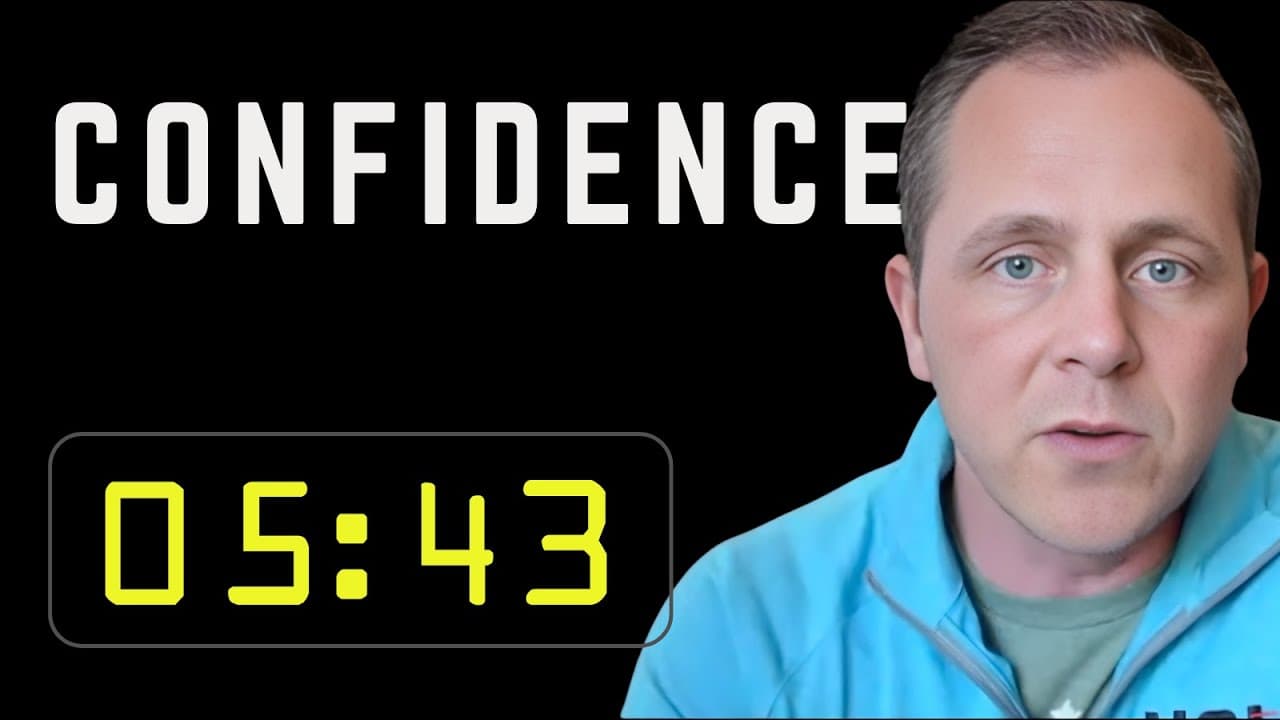
Confidence is a buildable skill based on expecting that outcomes will be positive or manageable, not on feeling amazing or guaranteeing success. Develop it by forgiving yourself, intentionally adopting capable roles, regulating your body before performing, acting before you feel ready, and replacing dependence on social approval with internal permission and authority.
Transcript
real self-confidence. This is the kind that moves entire rooms of people. It is the kind of confidence that makes people desire to follow your lead before you even open your mouth. This is mammalian confidence. Keep this in your brain. Confidence is not a trait. It's a skill. It is programmable. It is buildable. It is transferable across every area... Read More
Key Insights
- Confidence is a programmable and buildable skill, not a fixed personality trait. It can transfer across areas of life and become habitual when a person repeatedly acts from the expectation that future outcomes will be positive or manageable.
- Confidence is a generalized expectation of positive or manageable outcomes. It does not require perfect or guaranteed results. It means trusting that whatever happens can be handled, allowing that expectation to function as an internal compass for decisions and behavior.
- Self-forgiveness is access to confident performance because a person cannot perform freely while secretly punishing themselves. Releasing shame from the past helps the body feel safe with itself, which the speaker presents as a necessary condition for real confidence.
- A deliberately chosen role can unlock behaviors that feel inaccessible under an ordinary personal identity. The firefighter example shows how identifying with a role grants permission, permission supports composure, and composure produces the power needed to act.
- External validation is emotional subcontracting because it places self-belief, self-esteem, and identity under the control of other people's reactions. If positive online comments can create confidence, the same dependency leaves the door open for negative comments to weaken it.
- Confidence develops through action before readiness, not after a confident feeling appears. Moving without social permission or supporting evidence teaches a person to act as though they belong and reduces their dependence on outside approval.
- Confidence is expressed through safety and composure rather than volume, charisma, dominance, posture, or eye contact. A regulated body that communicates nothing needs to be proved creates a deeper quality the speaker identifies as authority.
- Confidence is a habit that must be engineered rather than a reactive tactic. The proposed practice combines fast self-forgiveness, intentional roles, freedom from social permission, regulation before performance, and full internal authority over one's actions and identity.
Install to Summarize YouTube Videos and Get Transcripts
Explore YouTube Video Summarizer or Get YouTube Transcript Extractor
Questions & Answers
Q: What is real self-confidence?
Real self-confidence is a generalized expectation that outcomes will be positive or manageable. It does not mean feeling amazing at all times, standing above other people, or expecting perfect results. It means believing that whatever occurs can be handled. The speaker describes this expectation as an internal compass that becomes more natural when a person consistently lives and acts as though it is true.
Q: How can confidence become a habit?
Confidence becomes a habit by repeatedly choosing confident action instead of waiting for a confident feeling. A person decides who to become in the present, acts from that identity, and allows repetition to establish a new baseline. The process includes forgiving oneself, choosing roles intentionally, regulating before performing, and relying on internal permission rather than evidence or approval from other people.
Q: Why is self-forgiveness important for confidence?
Self-forgiveness matters because hidden shame and self-punishment interfere with both performance and belief in oneself. The speaker argues that confidence can live only in a body that feels safe with itself. Radical forgiveness therefore serves as access rather than weakness. By forgiving the past quickly and without exceptions, a person stops using old mistakes as reasons to withhold present authority or action.
Q: How do intentional roles help build confidence?
Intentional roles give people permission to access behaviors they may not associate with their everyday identity. A firefighter entering a burning building acts from the identity of being a firefighter, not merely as an ordinary individual. According to the speaker's sequence, the role provides permission, permission produces composure, and composure produces power. Confidence can therefore begin by stepping into an appropriate role before the feeling arrives.
Q: Why does external validation weaken confidence?
External validation weakens confidence by outsourcing self-belief, self-esteem, and parts of identity to other people's reactions or to social consensus. When positive comments are allowed to determine personal worth, negative comments gain access through the same opening. The alternative is to stop waiting for others to provide permission and to establish confidence through internal authority, deliberate behavior, and trust in manageable outcomes.
Q: Should you wait until you feel ready to act confidently?
You should not wait for readiness, social permission, or evidence before taking confident action. The speaker argues that confidence comes because a person moves without already feeling it. Acting as though you belong helps create the habit, while waiting reinforces the internal message that more improvement or approval is required. The necessary permission is internal and begins with deciding that you are built for the task.
Q: Is confidence the same as charisma or dominance?
Confidence is not defined by charisma, dominance, loudness, posture, or strong eye contact. The speaker defines its deeper foundation as safety and composure. When a person's body communicates that nothing needs to be proved, others may respond to that calm presence. This composure can develop into authority, which is especially important for persuasion, leadership, influence, and moving groups of people.
Q: How can confidence be engineered before performing?
Confidence can be engineered by regulating yourself before performance, forgiving yourself quickly, selecting a useful role, and refusing to wait for social permission or evidence. Treat confidence as a continuing habit rather than a temporary tactic. Full authority must come from within because no one else can grant it. The resulting goal is composed action based on manageable expectations, without trying to prove personal worth.
Summary & Key Takeaways
-
Confidence is defined as a generalized expectation that outcomes will be positive or manageable. The goal is not to guarantee perfection, but to trust that you can handle whatever happens. Repeatedly living from this expectation can turn confidence from a conscious decision into a habitual baseline that shapes behavior across different areas of life.
-
Radical self-forgiveness creates the internal safety required for confident action. Continuing to punish yourself for the past undermines performance and self-belief. Instead of waiting to feel confident, intentionally adopt a relevant role. A chosen identity grants permission to access composure, capability, and behaviors that may otherwise remain unavailable.
-
External validation makes self-belief vulnerable to other people's reactions, because accepting positive feedback as the foundation of confidence also gives negative feedback influence. Stable confidence is engineered internally through regulation, deliberate roles, action without readiness, and self-authority. Its clearest expression is calm composure and the sense that nothing needs to be proved.
Read in Other Languages (beta)
Share This Summary 📚
Summarize YouTube Videos and Get Video Transcripts with 1-Click
Try YouTube Summary with ChatGPT & Claude or YouTube Transcript Generator
Explore More Summaries from Chase Hughes 📚





Summarize YouTube Videos and Get Video Transcripts with 1-Click
Try YouTube Summary with ChatGPT & Claude or YouTube Transcript Generator