Why Do We Justify Cheating and Stealing Sometimes?

TL;DR
Cheating often occurs because people can justify small dishonest acts without compromising their self-image. Factors like social norms, distance from money, and reminders of moral codes influence our decision to cheat. Understanding these psychological mechanisms can help individuals and organizations reduce unethical behavior.
Transcript
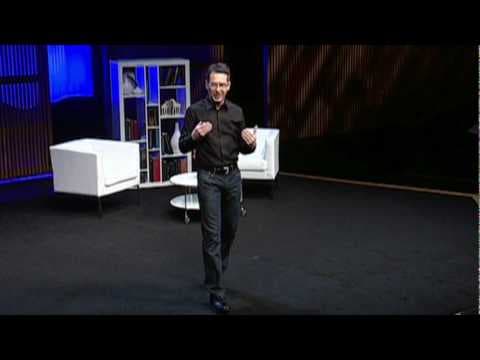
I want to talk to you today a little bit about predictable irrationality. And my interest in irrational behavior started many years ago in the hospital. I was burned very badly. And if you spend a lot of time in hospital, you'll see a lot of types of irrationalities. And the one that particularly bothered me in the burn department was the process b... Read More
Key Insights
- 🤔 Nurses in the burn department believed that quickly ripping off bandages caused less pain, but experiments showed that slower removal with less intensity actually caused less pain for patients.
- 🧠 People tend to cheat a little bit rather than not cheat at all, and their cheating behavior is not solely driven by economic incentives or fear of getting caught.
- 😇 Reminders of morality and ethical codes can decrease cheating behavior.
- 💰 Distance from the concept of money (e.g. stocks, derivatives) can increase cheating behavior.
- 👥 Social environment plays a role in influencing cheating behavior, with people more likely to cheat if others around them are cheating, especially if they are in the same group.
- 📊 Behavioral economics encourages testing intuitions in various aspects of life, including personal, business, and policy decisions.
- 😕 People often hold strong beliefs in their intuitions and find it difficult to accept when their intuitions are proven wrong through experimentation.
- 🔬 Systematic experimentation of intuitions can lead to better outcomes and improve decision-making processes.
- 🎙️ More videos with Dan Ariely:
Install to Summarize YouTube Videos and Get Transcripts
Explore YouTube Video Summarizer or Get YouTube Transcript Extractor
Questions & Answers
Q: Why did the nurses insist on quickly ripping the bandages off the speaker's body, causing intense pain?
The nurses believed that their approach of quick bandage removal was the right one, based on their model of the patient and the perception of the word "patient" not involving interference or suggestions.
Q: How did the speaker conduct experiments to understand predictable irrational behaviors related to cheating?
The speaker conducted an experiment where participants were given a math problem sheet and offered monetary rewards for each correct answer. He observed that when given the opportunity to cheat, participants cheated by small amounts, regardless of the potential reward or the probability of getting caught.
Q: What was the impact of recalling The Ten Commandments on cheating behavior?
When participants were asked to recall The Ten Commandments before being tempted to cheat, they refrained from cheating completely. The study showed that reminding individuals of moral codes can significantly reduce cheating.
Q: How did the distance from cheating influence participants' behavior?
When participants were given tokens instead of actual money as rewards, they cheated more. The study revealed that when there is a greater distance from the act of cheating to actual money, individuals tend to cheat more.
Q: How did the presence of cheating within a group influence others' behavior?
The presence of cheating within a group had a significant impact on participants' behavior. If a member of their in-group cheated, it led to an increase in cheating among others. However, if a member from an out-group cheated, it led to a decrease in cheating among others.
Answer: The speaker concludes that many of our intuitions are wrong, and it is important to test and experiment with our assumptions and beliefs. He highlights the need for systematic experimentation to make better decisions, improve policies, and challenge our own intuitions. By doing so, we can avoid predictable mistakes caused by irrational behavior.
Summary & Key Takeaways
-
The speaker shares a personal experience in the hospital and questions the irrational behavior displayed by the nurses when removing his bandages.
-
He conducts experiments to understand why people make predictable mistakes, such as cheating, and finds that it is due to a combination of factors including personal fudge factor, social influence, and distance from the consequences.
-
The speaker concludes that testing our intuitions and conducting more experiments can help us make better decisions in various aspects of life.
Read in Other Languages (beta)
Share This Summary 📚
Summarize YouTube Videos and Get Video Transcripts with 1-Click
Try YouTube Summary with ChatGPT & Claude or YouTube Transcript Generator
Explore More Summaries from TED 📚



Summarize YouTube Videos and Get Video Transcripts with 1-Click
Try YouTube Summary with ChatGPT & Claude or YouTube Transcript Generator