What Causes Mass Psychosis in Populations?
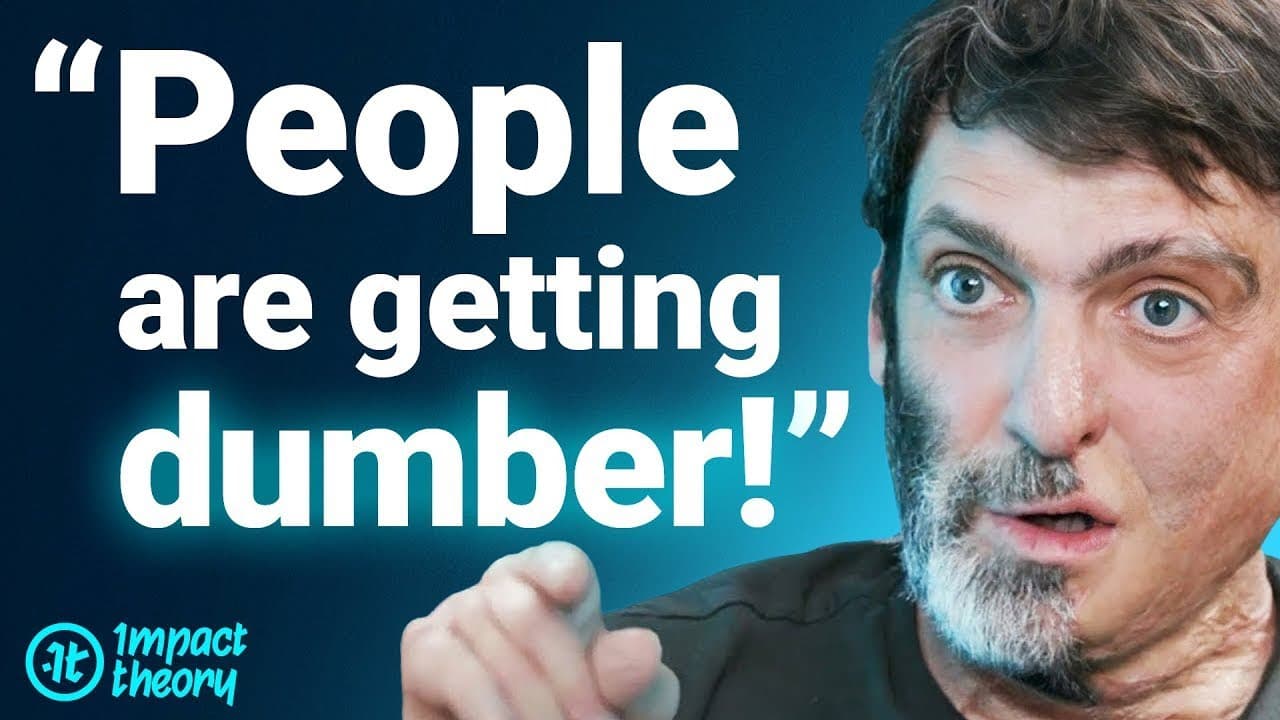
TL;DR
Mass psychosis arises when widespread stress leads individuals to seek answers in complex narratives that often include a villain. Emotional biases, confirmation bias, and social validation contribute to the entrenchment of misbeliefs, while ostracism intensifies the desire for acceptance within these flawed narratives. Understanding these dynamics helps explain the connections between personal beliefs and collective delusions.
Transcript
global conflict is on the rise because people are losing their minds if you are eating a daily Buffet of information that's been highly processed by social media and the News you are going to break your own brain just like how highly processed food destroys your body a junk food diet of triggering slanted information is going to destroy your abilit... Read More
Key Insights
- 🦹 Misbeliefs thrive in times of stress, as people are more likely to seek answers and latch onto complex stories with villains.
- 🤔 Emotions play a crucial role in decision-making, often overriding rationality and leading to biased thinking.
- 💁 Social support and identity become integral factors in the formation and persistence of misbeliefs.
- 🫷 Ostracism and the desire for belonging can push individuals towards extreme beliefs and reject contradictory evidence.
- 🤔 Awareness of cognitive biases, intellectual humility, and critical thinking are essential in avoiding the pitfalls of misbeliefs.
- 🫷 Misbeliefs can be weaponized, using advanced technology and algorithms to push individuals further into a distorted reality.
- 🎙️ More videos with Dan Ariely:
Install to Summarize YouTube Videos and Get Transcripts
Explore YouTube Video Summarizer or Get YouTube Transcript Extractor
Questions & Answers
Q: Why do people prefer complex stories with villains when experiencing stress?
Stress creates a need for answers, and complex stories with villains offer a resolution to the stress by providing someone to blame. Additionally, perceiving oneself as understanding a complex story boosts feelings of superiority.
Q: How does confirmation bias contribute to misbeliefs?
Confirmation bias leads people to seek information that supports their existing beliefs while ignoring or dismissing contradictory evidence. This bias reinforces misbeliefs by only considering information that aligns with preconceived notions.
Q: What role does social influence play in the development of misbeliefs?
Ostracism can increase vulnerability to misbeliefs as people seek supportive communities online. In these communities, extreme and outrageous statements signal identity and position within the group. The social component further solidifies misbeliefs and discourages dissenting views.
Q: How does cognitive dissonance contribute to the persistence of misbeliefs?
Cognitive dissonance arises when there is a conflict between beliefs and actions. People try to align their beliefs with their actions even if it means distorting facts or refusing to change their beliefs. Cognitive dissonance can keep individuals committed to their misbeliefs despite evidence to the contrary.
Summary & Key Takeaways
-
Global conflict is increasing due to the prevalence of misbeliefs influenced by stress and processed information from social media and the news.
-
Stress creates a need for answers, leading people to seek complex stories with villains to resolve their stress and feel superior.
-
Confirmation bias, motivated reasoning, and overconfidence further contribute to the formation and reinforcement of misbeliefs.
-
The social component, including the impact of ostracism and the desire for an identity, seals the deal and solidifies misbeliefs.
Read in Other Languages (beta)
Share This Summary 📚
Summarize YouTube Videos and Get Video Transcripts with 1-Click
Try YouTube Summary with ChatGPT & Claude or YouTube Transcript Generator
Explore More Summaries from Full Episodes of Impact Theory 📚


Summarize YouTube Videos and Get Video Transcripts with 1-Click
Try YouTube Summary with ChatGPT & Claude or YouTube Transcript Generator