What Is QBism and How Does It Change Our View of Reality?
TL;DR
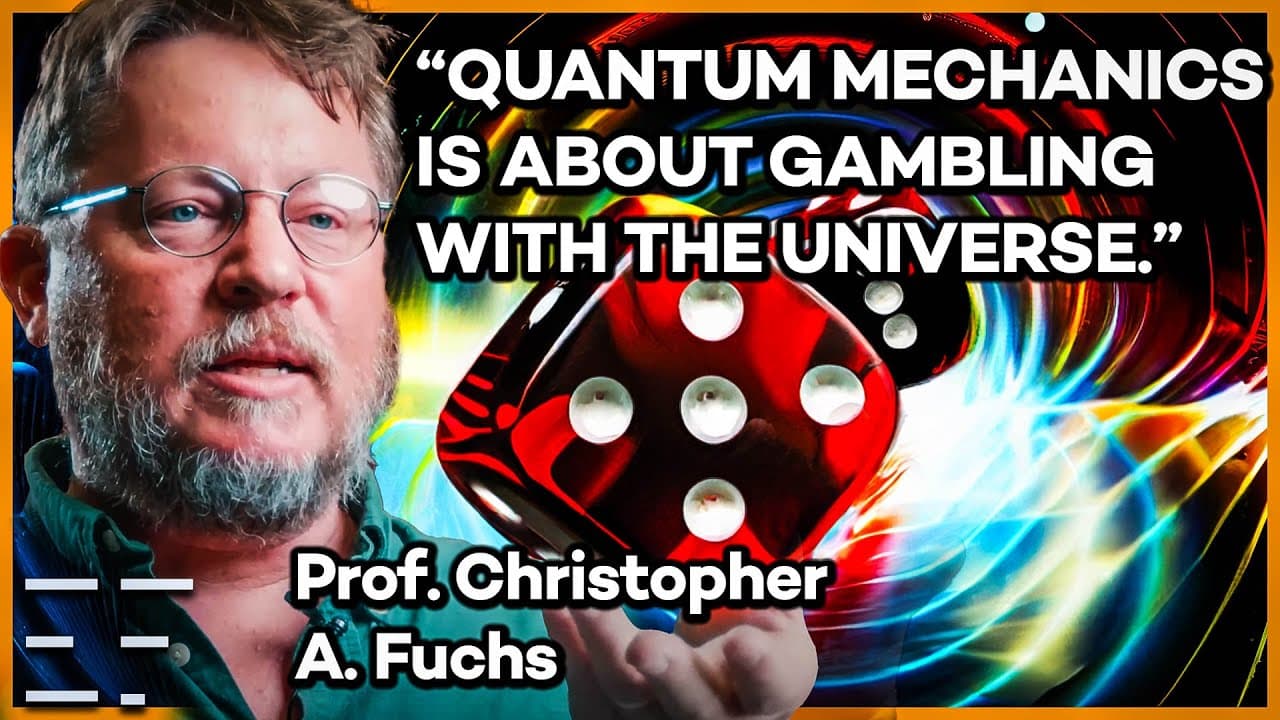
QBism, or Quantum Bayesianism, posits that reality is not strictly mind or matter, but rather a neutral entity shaped by human experience. This interpretation of quantum mechanics asserts that human consciousness plays a crucial role in defining the universe, suggesting that genuine novelty emerges from our interactions, ultimately challenging traditional scientific paradigms.
Transcript
foreign quantum theory makes life worth living it shows us that life is worth living it's a property of the world that makes our lives not epiphenomenal not illusions everything in the universe is genuinely distinct from everything else nothing is repeated and it's the human effort that finds pattern when if you analyze everything to its greatest d... Read More
Key Insights
- 😐 Cubism sees reality as a neutral entity influenced by human experience, challenging traditional mind-matter distinctions.
- 🥶 Quantum theory, according to Cubism, gives significance to human consciousness and free will, shaping meaningful interactions with the world.
- 🫚 The philosophical roots of Cubism explore the ontology of experience, redefining the observer-observed relationship.
- ❓ Cubism's emphasis on novelty and genuine contributions to the universe highlights human agency and the importance of conscious awareness.
- 🛟 Quantum definiti theorem serves as a pragmatic tool within Cubism, inspiring mathematical insights and contributing to quantum cryptography.
- 😌 The concept of "neutromonism" in Cubism suggests that the essence of reality lies between mind and matter, influenced by human perception.
- 🥶 The relationship between experience, consciousness, and free will in Cubism challenges deterministic views of the universe.
Install to Summarize YouTube Videos and Get Transcripts
Explore YouTube Video Summarizer or Get YouTube Transcript Extractor
Questions & Answers
Q: What is the essence of cubism in quantum mechanics?
Cubism views reality as a neutral entity shaped by experience, not limited to being solely mind or matter. It emphasizes the role of human consciousness in interpreting and interacting with the world.
Q: How does quantum theory impact human consciousness and free will according to cubism?
Cubism suggests that quantum theory, with its elements of uncertainty and probabilities, gives significance to human actions and decisions, offering an avenue for genuine novelty and meaningful contributions to the world.
Q: How does Cubism redefine the relationship between observer and observed in quantum mechanics?
In Cubism, the observer is an essential component, with the act of observation influencing the nature of reality. This perspective challenges the idea of an objective physical world, emphasizing how human experience shapes our understanding of the universe.
Q: What role does experience play in the ontology of Cubism?
Experience is central to the ontology of Cubism, with the raw sensations and qualia we perceive defining our reality. The neutral nature of reality in Cubism allows for different perspectives and interpretations based on individual experiences.
Summary & Key Takeaways
-
Cubism in quantum mechanics sees reality as neither mind nor matter, but a neutral entity shaped by experience.
-
Quantum theory's implications on human consciousness and free will give life meaning and purpose.
-
The philosophical roots of Cubism delve into the nature of existence, challenging traditional scientific paradigms.
Read in Other Languages (beta)
Share This Summary 📚
Summarize YouTube Videos and Get Video Transcripts with 1-Click
Try YouTube Summary with ChatGPT & Claude or YouTube Transcript Generator
Explore More Summaries from Essentia Foundation 📚

Summarize YouTube Videos and Get Video Transcripts with 1-Click
Try YouTube Summary with ChatGPT & Claude or YouTube Transcript Generator