What Is the Predictive Mind and How Does Meditation Affect It?
TL;DR
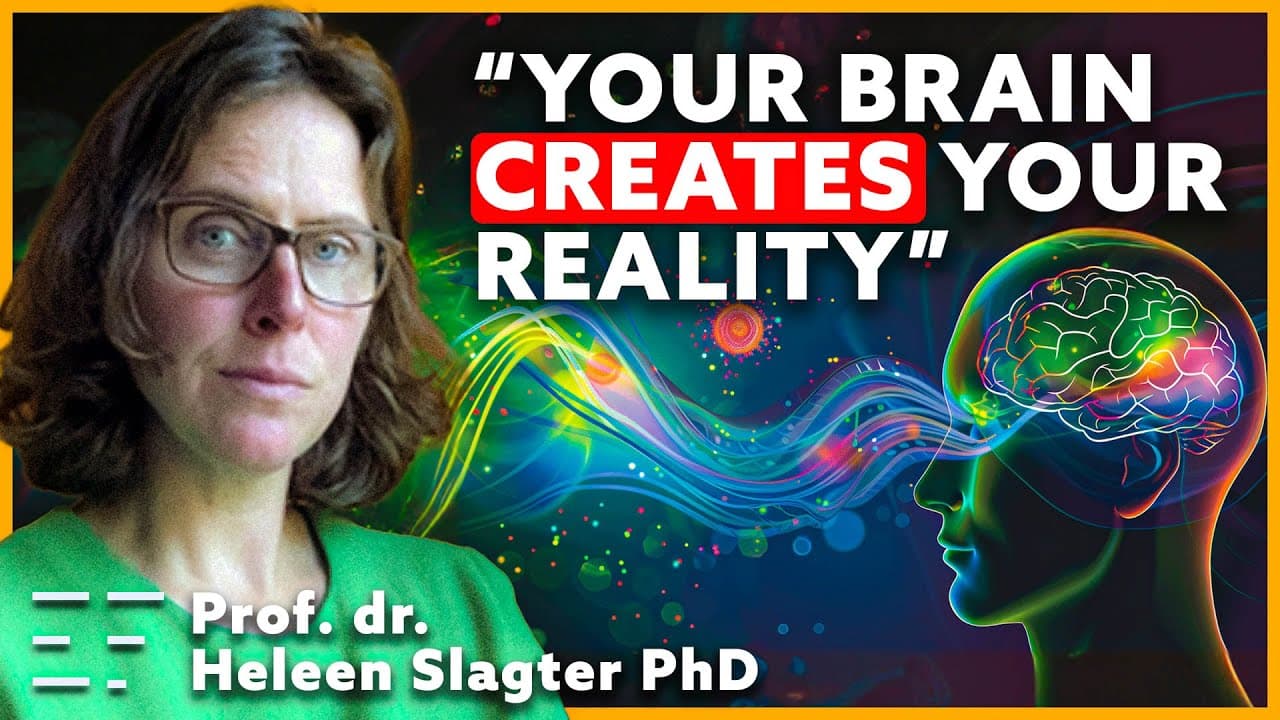
The predictive mind is a concept suggesting that the brain continuously anticipates future events based on past experiences. Meditation practices like focused attention, open monitoring, and non-dual awareness help disengage the brain from this predictive processing, allowing practitioners to experience unusual states of awareness, including pure consciousness and a diminished sense of self.
Transcript
and with that i would like to move on to our third speaker that is professor helene slatter hey lane is a professor of cognitive neuroscience at the free university in amsterdam and she is the pi of the cognition and plasticity lab there she is well known for her work on attention and conscious perception and their neural correlates and she's pione... Read More
Key Insights
- 🧠 The theory of the predictive brain suggests that our brains continuously predict the future based on past experience, shaping our perceptions and experiences.
- 🤗 Different styles of meditation, such as focused attention, open monitoring, and non-dual awareness, gradually disengage the brain from predictive processing, bringing practitioners more into the present moment.
- 🥺 Meditation can lead to unusual states of awareness, including pure awareness and the dissolution of the sense of self.
Install to Summarize YouTube Videos and Get Transcripts
Explore YouTube Video Summarizer or Get YouTube Transcript Extractor
Questions & Answers
Q: How does the theory of the predictive brain account for the experiences of individuals who are blind from birth?
While blind individuals may not have visual input, they can still interact with the world through other senses, allowing them to construct models of the world based on their experiences.
Q: Can the theory of the predictive brain explain phenomena like premonitions or memories of past lives?
The theory can potentially account for these phenomena by suggesting that our experiences are constructed internally based on predictions and past experiences. However, further research is needed to explore these specific phenomena in depth.
Q: How does mindfulness meditation relate to the concepts of placebo and nocebo effects?
Mindfulness meditation can be seen as a form of placebo effect, as it can change how individuals feel based on their expectations and beliefs. Similarly, nocebo effects, where negative side effects are experienced even with a placebo, can also be attributed to strong negative expectations.
Summary & Key Takeaways
-
Professor Helene Slatter presents a new theory of meditation that explains how it can lead to unusual experiences reported by meditators, such as states of pure awareness.
-
The theory is grounded in the concept of the predictive brain, which suggests that the brain continuously anticipates the future based on past experience.
-
Focused attention meditation, open monitoring meditation, and non-dual awareness meditation are three styles of deconstructive meditation that gradually bring practitioners more into the present moment.
Read in Other Languages (beta)
Share This Summary 📚
Summarize YouTube Videos and Get Video Transcripts with 1-Click
Try YouTube Summary with ChatGPT & Claude or YouTube Transcript Generator
Explore More Summaries from Essentia Foundation 📚
Summarize YouTube Videos and Get Video Transcripts with 1-Click
Try YouTube Summary with ChatGPT & Claude or YouTube Transcript Generator