How to Build and Market a Profitable AI SaaS
TL;DR
A profitable AI SaaS starts with an urgent problem in an industry you understand, then pairs a proven technology stack with early customer acquisition. The recommended foundation includes Next.js, Tailwind CSS, shadcn/ui, Node.js or Python with FastAPI, and PostgreSQL, while at least half of your working time should go toward distribution. Read on for specific guidance on tools, models, validation, deployment, and marketing.
Transcript
Building an AI SAS is one of the best ways to make money in 2026. And in this video, I'm going to show you everything you need to know to build one. From selecting the idea to AI tools to backend deployment, tech stack, payments, testing, authentication, and much much more. So, if you are serious about making money with AI, make sure to watch until... Read More
Key Insights
- A viable AI SaaS idea is a painkiller rather than a vitamin. It should resolve a real and pressing problem for customers, because strong development work cannot compensate for selecting an idea that people do not genuinely need.
- Industry expertise is an advantage when choosing a market. Founders should pursue problems they understand and can evaluate, while avoiding mainstream concepts such as dating bots, AI trading bots, and prediction-market arbitrage agents that attract excessive attention.
- Useful product ideas can be discovered through observable customer problems. Reddit discussions can reveal complaints about existing software, Y Combinator funding can indicate active business categories, and conversations on X can show what people currently discuss or struggle with.
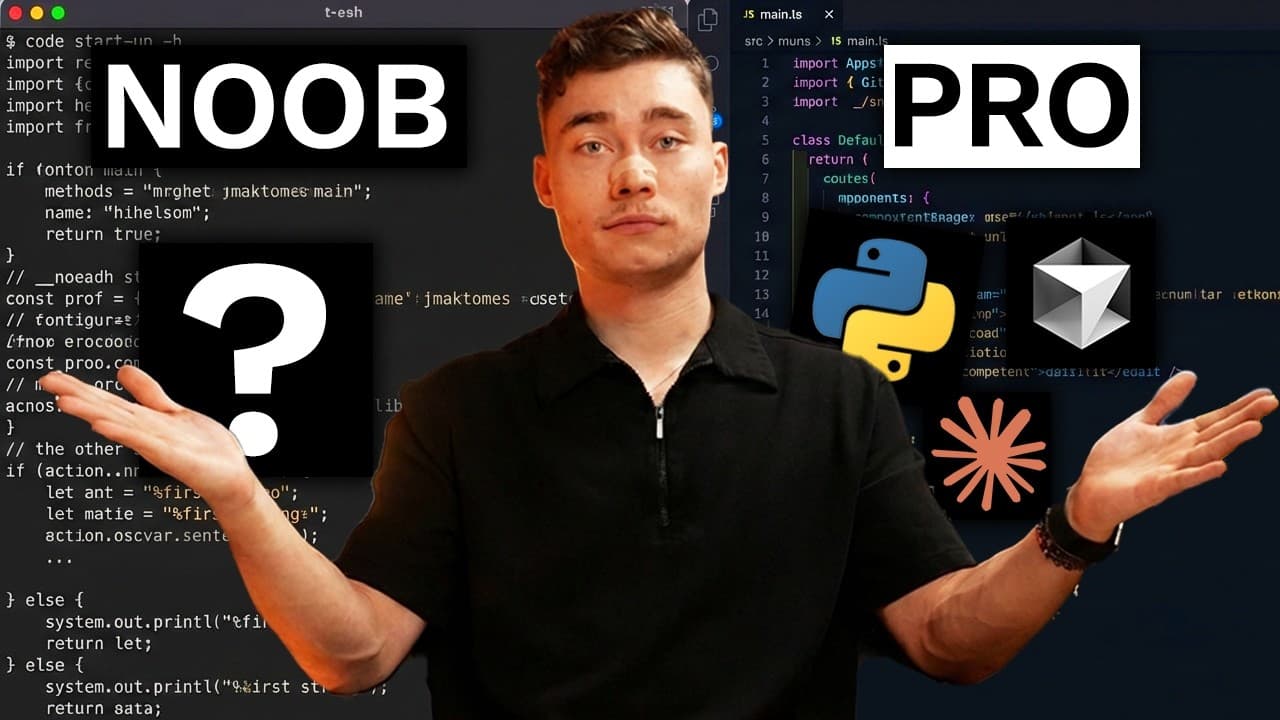
- A focused AI toolset is more useful than an unnecessarily complicated one. The transcript recommends Claude Code or OpenCode for autonomous coding, Cursor or VS Code as the editor, Codex for debugging, Agent Zero for manual tasks, Perplexity for research, and CodeRabbit or Bugbot for bug prevention.
- A mainstream technology stack makes AI-assisted development easier because popular technologies have substantial representation in model training data. The suggested foundation combines Next.js, Tailwind CSS, shadcn/ui, Node.js or Python with FastAPI, PostgreSQL, and Redis only when faster cached access is needed.
- GitHub is essential for storing code, connecting deployments, and supporting CI/CD workflows. A serious SaaS project should maintain separate main and development branches, plus a development or staging environment, instead of pushing every change directly into production.
- Distribution should begin before the MVP is completely finished. A waitlist can collect names, email addresses, and phone numbers, while a presale can generate revenue when buyers receive a persuasive reason to commit early, such as a discount, bonus, or personalized onboarding.
- Customer acquisition deserves at least half of the time available for the business. The recommended strategy is to master one channel where the target customer spends time, take direct actions such as publishing or outreach, and lead with useful content instead of product features.
Install to Summarize YouTube Videos and Get Transcripts
Explore YouTube Video Summarizer or Get YouTube Transcript Extractor
Questions & Answers
Q: How do you choose a profitable AI SaaS idea?
Build a painkiller that solves a real, pressing problem rather than a vitamin people do not truly need. Focus on an industry where you have expertise, and investigate software complaints on Reddit, funded Y Combinator companies, and discussions on X. Avoid crowded ideas such as dating bots, AI trading bots, and prediction-market arbitrage agents.
Q: What technology stack should you use to build an AI SaaS?
The recommended frontend stack is Next.js, Tailwind CSS, and shadcn/ui, with Node.js or Python using FastAPI for the backend. Use PostgreSQL as the SQL database and add Redis when faster cached access is needed. Popular, proven technologies are preferred because AI models have more training data about them.
Q: Which AI tools are useful for building an AI SaaS?
Claude Code or OpenCode can handle autonomous coding, while Cursor or VS Code provides the editing environment and Codex is recommended for debugging. Agent Zero can perform manual tasks such as file conversion and data analysis, Perplexity supports research, and Fireflies transcribes customer meetings. CodeRabbit or Bugbot can help prevent bugs in CI/CD.
Q: Which AI models are recommended for development and inference?
Opus 4.5 is recommended for general development, while GPT-5.2 Codex is recommended for debugging. Gemini 3 Flash is suggested for inexpensive inference, Gemini 3 Pro for frontend work, and GLM 4.7 when an open-source model is needed for uses such as fine-tuning or working with a large dataset. The broader advice is to master a small set of models rather than juggling 10.
Q: Why is GitHub important for an AI SaaS project?
GitHub stores the code and simplifies deployment because deployment platforms integrate with it. The recommended workflow uses separate main and development branches, plus a development or staging environment, so every change is not pushed directly into production. GitHub workflows can also support CI/CD and automated development tools.
Q: How can you validate and market an AI SaaS before launch?
Start distribution before the MVP is complete by creating a waitlist or offering a presale. A waitlist can collect names, email addresses, and phone numbers, while a presale can generate revenue when early buyers receive a discount, bonus, or personalized onboarding. This tests whether prospective customers will commit before the full launch.
Q: How much time should an AI SaaS founder spend on distribution?
Dedicate at least half of the available working time to distribution. If you have four hours per day, spend at least two hours publishing content, making calls, sending direct messages, or taking other concrete customer-acquisition actions. The first 60 minutes of the day should also prioritize distribution.
Q: How should you choose a customer-acquisition channel for an AI SaaS?
Choose one channel where the target customer already spends time and focus on mastering it. Publish genuinely useful material and incorporate the product naturally instead of making every piece of content about its features. Consistent action on one suitable channel is the recommended distribution approach.
Summary & Key Takeaways
-
A strong AI SaaS idea addresses an urgent pain instead of offering a merely desirable benefit. Founders should work within industries they understand, investigate complaints about existing software on Reddit, study companies funded by Y Combinator, and monitor conversations on X while avoiding crowded concepts such as dating bots, trading bots, and arbitrage agents.
-
The recommended development approach favors popular, proven technologies that AI coding tools understand well. The suggested stack includes Next.js, Tailwind CSS, shadcn/ui, Node.js or Python with FastAPI, PostgreSQL, and optional Redis caching. OpenRouter provides access to multiple models, while Venice AI is presented as a more privacy-focused inference option.
-
Distribution should begin before the product is complete through a waitlist or presale supported by a compelling discount, bonus, or personalized onboarding. At least half of available working time should go toward direct customer acquisition. Founders should master one channel, publish genuinely useful material, and incorporate the product naturally instead of focusing content on features.
Read in Other Languages (beta)
Share This Summary 📚
Summarize YouTube Videos and Get Video Transcripts with 1-Click
Try YouTube Summary with ChatGPT & Claude or YouTube Transcript Generator
Explore More Summaries from David Ondrej 📚



Summarize YouTube Videos and Get Video Transcripts with 1-Click
Try YouTube Summary with ChatGPT & Claude or YouTube Transcript Generator