Stylish Academic Writing | Helen Sword | Office of Faculty Development & Diversity
TL;DR
Stylish academic writing communicates complex ideas effectively instead of using jargon to impress other academics. Helen Sword reached this conclusion after surveying more than 70 people across disciplines, whose responses consistently favored writing that illuminates ideas through clarity, stories, and concrete examples. Read on to see why conventional academic prose often fails and what engaging scholarly writers do differently.
Transcript
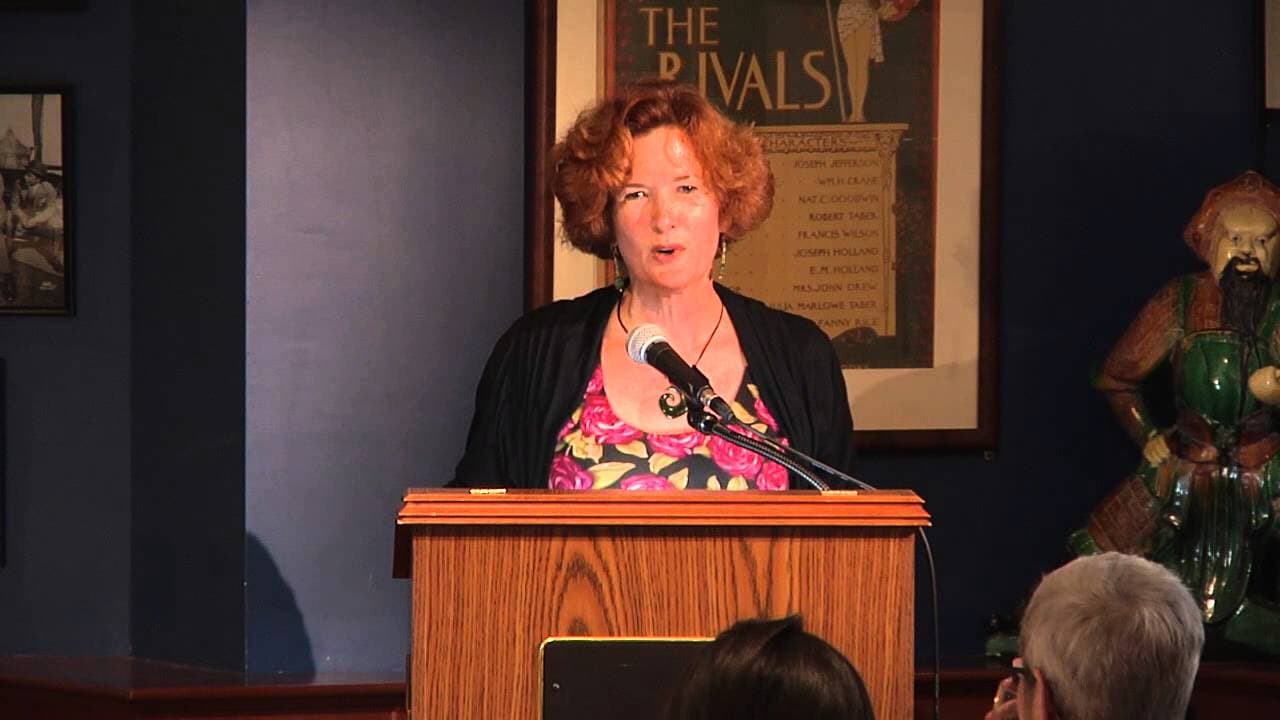
HELEN SWORD: Well, thank you, Amy and Judy, for organizing this. And thank you, Steve and Elizabeth, for taking part. Judy mentioned sort of a formative moment as a graduate student. And I'll start with one of mine. When I was doing my PhD at Princeton in comparative literature, I remember a moment at the end of my first year when somebody in my de... Read More
Key Insights
- 💡 Stylish academic writers prioritize effective communication and take complex ideas and make them clear and accessible to readers.
- ✍️ Academic writing should focus on communication, craft, and creativity to engage readers and improve comprehension.
- 😒 The use of concrete language and examples is crucial in effectively communicating abstract ideas.
- ✍️ Academics have choices in their writing style and should embrace their ability to make decisions rather than feeling restricted by conventions.
- 😀 Courage is necessary to be a stylish academic writer, as it may require pushing against conventional norms and facing potential pushback from editors or peers.
- ✍️ Academic writing should strive to balance specialization and interdisciplinarity, drawing on ideas from various fields to advance knowledge.
- ✍️ Engaging and readable academic writing is possible, as demonstrated by a number of exemplary writers across disciplines who prioritize communication and craft.
Install to Summarize YouTube Videos and Get Transcripts
Explore YouTube Video Summarizer or Get YouTube Transcript Extractor
Questions & Answers
Q: What is stylish academic writing according to Helen Sword?
Stylish academic writing communicates complex ideas in ways that illuminate them for readers. Sword says it can also be understood as engaging or effective academic writing, especially writing that emphasizes communication, stories, and illustrative examples.
Q: Why should academic writing prioritize communication over impressive language?
Sword argues that academic writing should communicate effectively with colleagues and people outside the academy. Language designed mainly to display erudition can obscure ideas and prevent research from reaching even highly educated readers.
Q: How did Helen Sword learn to associate academic writing with impressing other academics?
During her PhD at Princeton, Sword heard a graduate student describe writing about “the slippage of the signifier” in his qualifying exams. Although she initially did not understand the phrase, she later made sure she knew it and used it in her own exam because it sounded impressive.
Q: What showed Helen Sword that her own academic writing was still difficult for general readers?
Sword believed her books of literary criticism were well written and had avoided the worst disciplinary jargon. Yet when her mother looked through the first chapter of one book, she remarked on how many big words Sword knew.
Q: Why did Helen Sword investigate writing in higher education research journals?
After moving into faculty development and higher education research, Sword needed accessible readings for faculty who wanted to become more research-informed teachers. She found useful books, but many articles in leading international journals seemed wooden, dry, jargon-heavy, and unsuitable for the program.
Q: How did Sword's colleagues respond to the journal articles she shared?
Colleagues from law, population health, music, and engineering said they did not want to read the articles and could not understand them. They also felt some articles took 20 pages to communicate something that could have been said in five.
Q: What did Sword's survey reveal about preferences across academic disciplines?
Sword received responses from more than 70 people around the world and across disciplines. Despite their disciplinary differences, respondents consistently valued writers who communicate complex ideas in ways that illuminate those ideas for readers.
Q: What techniques make academic writing more engaging and effective?
Survey respondents valued authors who tell stories and use plenty of examples to illustrate their ideas. These preferences appeared among respondents in the sciences, humanities, and social sciences, suggesting that communication and concrete illustration matter across disciplines.
Summary
In this video, Helen Sword discusses the importance of effective academic writing and the need for academics to communicate their ideas clearly and engagingly. She shares her own experiences as a writer and researcher, as well as the results of her empirical research on academic writing across different disciplines. She highlights the key characteristics of stylish academic writing and offers practical tips for enhancing writing skills.
Questions & Answers
Q: How did Helen Sword's perception of academic writing change during her graduate studies?
Helen Sword's perception of academic writing changed during her graduate studies when she realized that being an academic writer was primarily about impressing other academics with erudition rather than communicating effectively.
Q: What prompted Helen Sword to start researching academic writing more broadly?
Helen Sword started researching academic writing more broadly when she shifted into working in faculty development and higher education research. She found that many articles in top international higher education research journals were not effectively communicating the research findings and were filled with jargon and complex language.
Q: What did Helen Sword discover through her empirical research on academic writing?
Through her empirical research on academic writing, Helen Sword discovered that despite disciplinary differences, there was a consensus among academics from various disciplines that they valued clear communication and engaging writing. She identified 10 characteristics of stylish academic writing based on the recommendations of researchers and analyzed their application in published articles.
Q: What was the average score on the 10-point scale for the stylish academic writers Helen Sword analyzed?
The average score on the 10-point scale for the stylish academic writers analyzed by Helen Sword was approximately 9.1. This indicates that these writers consistently exhibited the characteristics of stylish academic writing.
Q: What was the average score on the 10-point scale for the articles from higher education research journals that Helen Sword analyzed?
The average score on the 10-point scale for the articles from higher education research journals analyzed by Helen Sword was 1.1. This suggests that the majority of the articles did not exhibit the characteristics of stylish academic writing and failed to effectively communicate complex ideas.
Q: Why do many authors of journal articles not focus on communicating effectively and engaging readers?
The reason many authors of journal articles do not focus on communicating effectively and engaging readers is often due to convention and fear. There is a perception that adhering to certain writing styles and using complex language is necessary for publication.
Q: What were the three characteristics of stylish writing that Helen Sword identified?
The three characteristics of stylish writing that Helen Sword identified were communication, craft, and creativity. Stylish academic writers focus on effectively communicating complex ideas, crafting well-written sentences, and being creative in their approach to writing and research.
Q: What is the importance of concreteness in academic writing?
Concreteness is an important technique in academic writing as it helps to make abstract ideas more accessible and understandable. By using concrete language and examples, writers can engage readers and bring their ideas to life.
Q: Why does Helen Sword emphasize the importance of choice in academic writing?
Helen Sword emphasizes the importance of choice in academic writing to challenge the misconception that certain conventions must be followed. She encourages writers to recognize the choices they have in terms of style and to explore different approaches that align with their research goals and personal preferences.
Q: What does Helen Sword believe it takes to be a stylish academic writer?
Helen Sword believes that it takes courage to be a stylish academic writer, as it requires pushing the boundaries and challenging conventions. She encourages academics, particularly early career researchers, to be courageous in their writing and to strive for engaging and effective communication.
Takeaways
Helen Sword's research highlights the need for academics to prioritize effective communication in their writing. Stylish academic writing involves clear communication, well-crafted sentences, and an engaging approach to presenting complex ideas. Writers should focus on concreteness, making abstract ideas more accessible, and embrace their choices in writing style rather than conforming to conventions. Developing a pleasure in the craft of writing and having the courage to defy established norms can lead to more impactful and engaging academic writing.
Summary & Key Takeaways
-
The speaker shares personal experiences in academia, highlighting the importance of effective communication in academic writing.
-
They discuss their research findings, which show that a significant number of academic articles lack engaging and readable writing styles.
-
The speaker presents characteristics of stylish academic writing, such as engaging titles, well-crafted sentences, and the use of concrete examples.
Read in Other Languages (beta)
Share This Summary 📚
Summarize YouTube Videos and Get Video Transcripts with 1-Click
Try YouTube Summary with ChatGPT & Claude or YouTube Transcript Generator
Explore More Summaries from Harvard University 📚

Summarize YouTube Videos and Get Video Transcripts with 1-Click
Try YouTube Summary with ChatGPT & Claude or YouTube Transcript Generator