First-ever image of black hole captured by team of Harvard scientists and astronomers
TL;DR
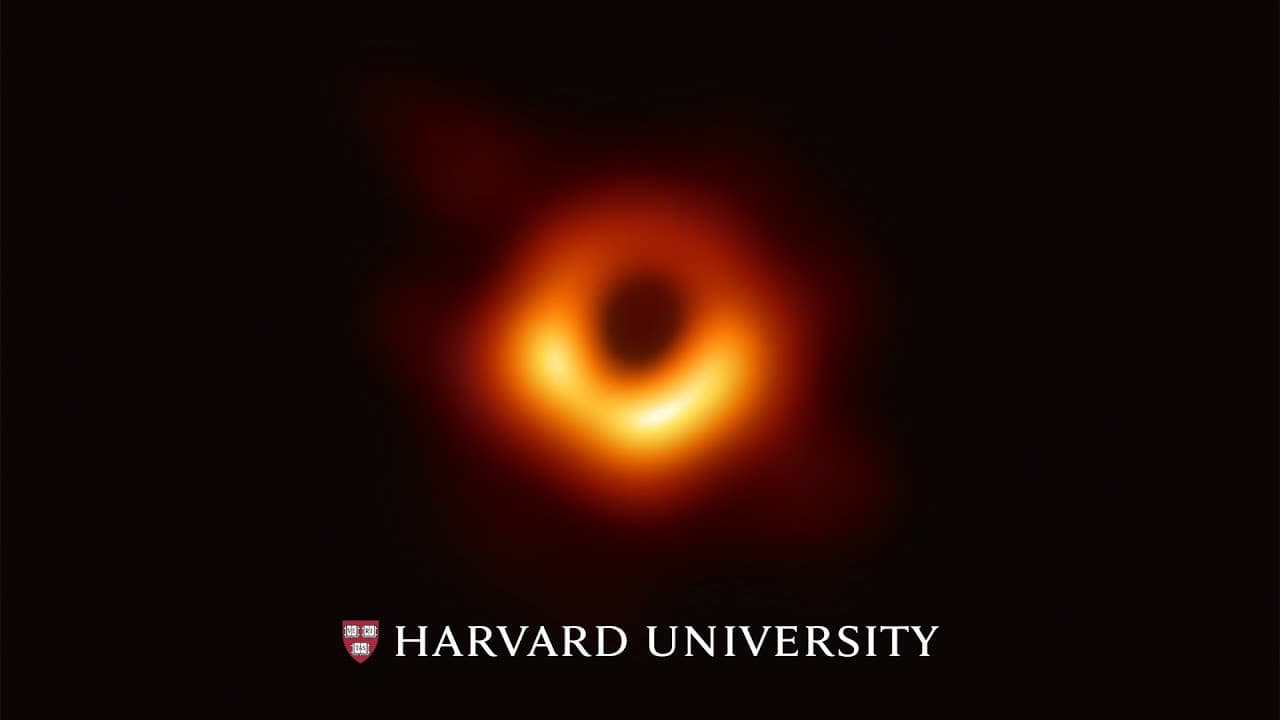
The first image of a black hole was captured by combining a worldwide array of telescopes into a virtual Earth-sized telescope. The Event Horizon Telescope recorded petabytes of high-frequency data, brought the recordings to a central location, and synchronized them afterward with a supercomputer. The resulting ring’s shape and size connect directly to Einstein’s field equations, so read on to understand how glowing matter made the invisible black hole observable.
Transcript
The Event Horizon Telescope is a project that we've been working on for many many years to take the first picture of a black hole and we've done it. It seems impossible: how do you take a picture of something that's shrouded by nature's ultimate cloaking device? What happens is the black hole's gravity is so intense that all the gas and dust that's... Read More
Key Insights
- 🖤 The Event Horizon Telescope project aimed to capture the first image of a black hole, a goal that has been pursued for many years.
- 🖤 The intense gravity of a black hole causes surrounding gas and dust to form an ultra luminous environment, creating a three-dimensional flashlight around the black hole.
- 🖤 Central black holes in galaxies can outshine all the starlight in the entire galaxy.
- 🙂 The shape and size of the ring formed by light lensing around the black hole confirm Einstein's field equations.
- 🔭 The array of telescopes in the project acted together to create an earth-sized telescope, enabling high-frequency observations of the black hole.
- 🖤 The image of a black hole provides new insights and constraints that were previously impossible to make.
- 🪡 The technological advancements in recent years have made it possible to capture and analyze the data needed to create the image.
Install to Summarize YouTube Videos and Get Transcripts
Explore YouTube Video Summarizer or Get YouTube Transcript Extractor
Questions & Answers
Q: How was the first-ever image of a black hole captured?
The Event Horizon Telescope combined telescopes spread across the globe so they acted like an Earth-sized telescope. The array made high-frequency observations, recorded petabytes of data, and brought the recordings together at a central location for comparison and timing with a supercomputer.
Q: How can scientists photograph a black hole if the black hole itself is hidden?
Gas and dust attracted by the black hole are compressed into increasingly smaller volumes and heated to hundreds of billions of degrees. This ultra-luminous material creates a three-dimensional source of light around the warped geometry, allowing scientists to observe the light lensed around the black hole.
Q: What is the bright ring in the black hole image?
Light surrounding the black hole is bent by its warped geometry and lensed onto what the speaker calls the last photon orbit. This process forms the visible ring around the black hole.
Q: What does the ring reveal about Einstein’s field equations?
The ring’s shape and size follow directly from Einstein’s field equations. Seeing that ring therefore connects an image of the black hole to a theory whose prediction had existed for about a hundred years.
Q: Why does gas around a black hole become so hot and bright?
The black hole’s intense gravity draws gas and dust into progressively smaller volumes. Friction heats that material to hundreds of billions of degrees, making the environment around the black hole ultra luminous.
Q: Can a central black hole outshine its entire galaxy?
The transcript says central black holes in galaxies can outshine the combined starlight of every star in the galaxy. The brightness comes from the extremely hot gas and dust surrounding the black hole.
Q: Why did the Event Horizon Telescope need telescopes around the world?
The telescopes worked together to synthesize an Earth-sized telescope capable of resolving the black hole. Reaching the black hole also required observations at higher frequencies than had previously been achieved.
Q: Why is the first black hole image scientifically important?
The image shows something that had been predicted for about a hundred years and immediately connects it with a theory. It also lets scientists make constraints that had never previously been possible and visually presents what the speaker describes as a one-way exit from our universe.
Summary
The Event Horizon Telescope project has successfully captured the first image of a black hole, a feat that seemed impossible. The black hole's intense gravity causes all the surrounding gas and dust to heat up and emit ultra-luminous light, creating a visible ring around the black hole. To achieve this image, a global array of telescopes were synchronized to act as an earth-sized telescope, and data had to be recorded and processed using advanced technology. This iconic image reveals something unknown and slightly terrifying, showing that there are real "monsters" in the universe. This achievement is not only significant for the team, but also for all of humanity.
Questions & Answers
Q: How long has the Event Horizon Telescope project been working on capturing the first image of a black hole?
The project has been in the works for many years.
Q: How do you take a picture of something that is shrouded by nature's ultimate cloaking device?
Despite the difficulties, the project succeeded by utilizing the intense gravity of the black hole. The gas and dust attracted to the black hole are compressed into smaller volumes and heat up to extreme temperatures. This heats up the surrounding gas to hundreds of billions of degrees, creating ultra-luminous light that acts as a three-dimensional flashlight, allowing the black hole's geometry to be observed.
Q: How does the ultra-luminous light around the black hole enable the imaging process?
The ultra-luminous light, generated by the gas and dust heated by the black hole's gravity, forms a ring as it is lensed around the black hole and onto the last photon orbit. This ring's shape and size are derived from Einstein's field equations, which can be used to make constraints and extract valuable information.
Q: Can you explain the technical aspects of capturing the image?
Capturing the image of the black hole required an array of telescopes spread over the entire globe, working together to create the effect of an earth-sized telescope. Higher frequencies than ever before were used to observe the black hole, and petabytes of data had to be recorded. This data was then brought together to a central location for comparison and processing. The complex computations and analysis were performed using advanced supercomputers.
Q: How does the ability to capture this image impact scientific understanding?
The image allows scientists to connect it immediately to theoretical predictions that have been made for about a hundred years. It also enables constraints to be made that were not possible before. This breakthrough in imaging a black hole opens up new avenues of research and understanding in the field of astrophysics.
Q: How does capturing an image of a black hole differ from other iconic images?
An iconic image is one that reveals something unknown and slightly unnerving. In the case of the black hole image, it visually represents a one-way exit from our universe, creating a sense of fear and awe. This departs from traditional thoughts of monsters being under our bed or in caves, making us realize that there are true "monsters" in the vastness of the universe.
Q: Why is capturing the black hole image significant?
The success of capturing the black hole image is not only a remarkable achievement for the team involved but also for all of humanity. It represents a new frontier in our understanding of the cosmos and provides an awe-inspiring visual confirmation of the existence of black holes and the extreme forces of nature.
Takeaways
The Event Horizon Telescope project has fulfilled its long-standing goal of capturing the first-ever image of a black hole. This monumental achievement required years of planning, the coordination of telescopes around the world, advanced data recording and processing, and the utilization of cutting-edge technology. The resulting image not only validates century-old theories but also provides new insights and constraints that were previously unimaginable. The visual representation of a black hole acts as a reminder of the vastness and mystery of the universe, solidifying our understanding that true "monsters" exist beyond what we can easily comprehend. This accomplishment is not only a triumph for the project team, but also a significant milestone for scientific advancement and humanity as a whole.
Summary & Key Takeaways
-
The Event Horizon Telescope is a global array of telescopes that synthesized an earth-sized telescope, aiming to capture the first-ever image of a black hole.
-
The intense gravity of a black hole attracts gas and dust, heating them up to hundreds of billions of degrees and creating an ultra luminous environment.
-
By observing the lensing of light around the black hole onto the last photon orbit, the shape and size of a ring form, confirming Einstein's field equations.
Read in Other Languages (beta)
Share This Summary 📚
Summarize YouTube Videos and Get Video Transcripts with 1-Click
Try YouTube Summary with ChatGPT & Claude or YouTube Transcript Generator
Explore More Summaries from Harvard University 📚





Summarize YouTube Videos and Get Video Transcripts with 1-Click
Try YouTube Summary with ChatGPT & Claude or YouTube Transcript Generator