How is AI Transforming Scientific Research?
TL;DR
AI is reshaping scientific discovery by enabling groundbreaking advancements such as AlphaFold and GNoME, which tackle complex biological problems and enhance drug development. The discussion highlights the necessity of interdisciplinary collaboration among scientists in the AI era, emphasizing that human intuition and creativity remain vital in formulating research questions and interpreting results.
Transcript
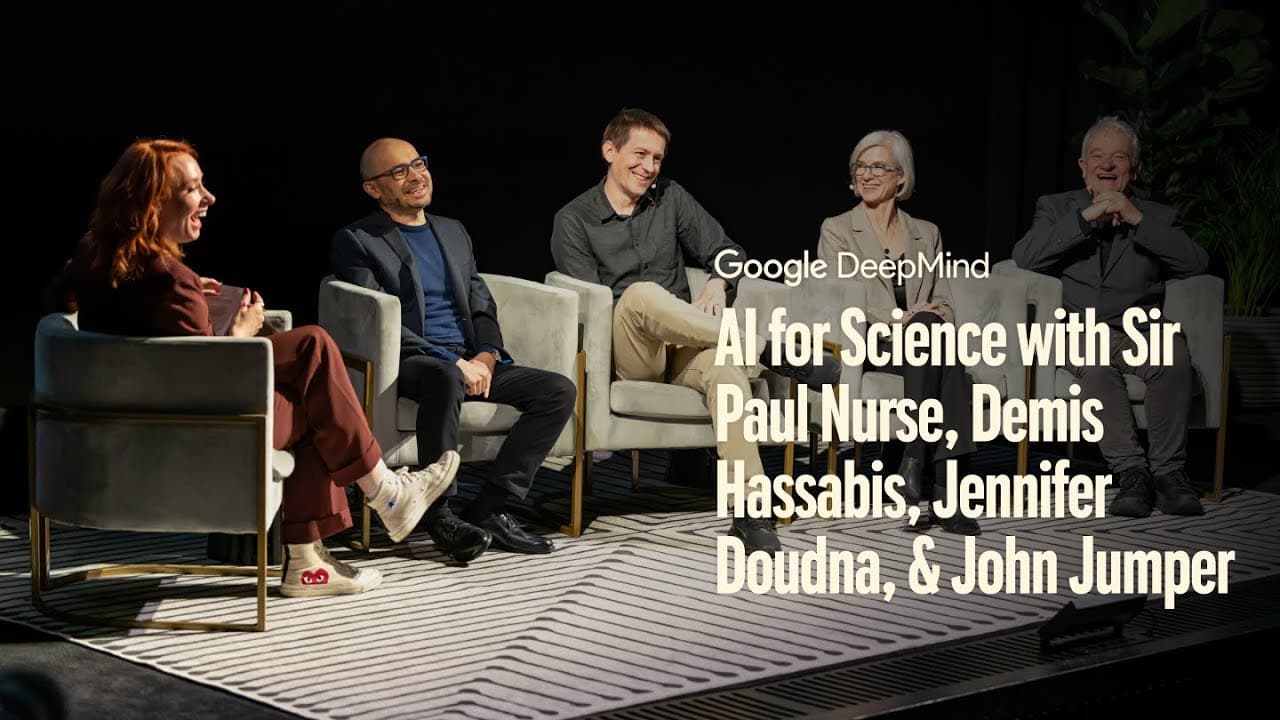
HANNAH FRY: Hello, and welcome to the Google DeepMind Podcast with me, Professor Hannah Fry. Now, those of you who are watching will notice that we are not in the studio today, and that is because we are backstage at the AI for Science Forum, a very special event that has been co-hosted between the Royal Society and Google DeepMind. And as part of ... Read More
Key Insights
- 🔇 Demis Hassabis and other speakers believe that AI tools, like AlphaFold, have the potential to revolutionize scientific discovery and address critical issues such as disease treatment.
- 👨🔬 The application of AI in understanding complex biological systems was emphasized, with examples of successful projects showing tangible results in research.
- ⌛ The digitization and transparency of data collected by AI systems can enhance real-time analysis and enable more efficient scientific inquiries.
- 🌐 The discussion underlined the importance of fostering interdisciplinary collaborations across different scientific fields to address global challenges effectively.
- ▶️ There is a growing recognition of the role that classical computing can still play in simulating complex biological systems, challenging the assumption that quantum computing is the only way forward.
- 😑 The laureates expressed a profound belief in the significance of mentoring the next generation of scientists to ensure a diverse and innovative scientific community.
- 👨🔬 Ethical considerations regarding AI and the potential impact of technological advancements on society were highlighted as essential topics for ongoing research and engagement.
- 🎙️ More videos with Demis Hassabis / Jennifer Doudna:
Install to Summarize YouTube Videos and Get Transcripts
Explore YouTube Video Summarizer or Get YouTube Transcript Extractor
Questions & Answers
Q: What are the notable applications of AlphaFold mentioned in the podcast?
AlphaFold's applications include determining the structure of the nuclear pore complex, which plays a vital role in cellular function, and aiding the development of molecular syringes for targeted drug delivery. Additionally, it's been instrumental in creating plastic-eating enzymes, showcasing AI’s transformative power in biology.
Q: How does Demis Hassabis suggest using neuroscience techniques in AI?
Hassabis advocates for applying neuroscience methodologies to understand artificial neural networks better, akin to leveraging techniques like fMRI in human brain research. This approach may yield insights into AI systems' operations, enhancing transparency and interpretability of their functionalities.
Q: What concerns do the laureates express regarding public trust in science and AI?
The laureates emphasize the necessity of engaging the public in discussions about AI technologies. They believe that fostering open communication can dispel fears and misconceptions, ensuring society understands and embraces scientific advancements, which is crucial for future innovations.
Q: How does Demis Hassabis view the potential for future AI breakthroughs?
Hassabis foresees the need for additional breakthroughs beyond current models like transformers to achieve Artificial General Intelligence (AGI). He believes that while today's systems show promise, further innovation will be necessary to unlock AGI's full potential.
Q: What advice did each laureate offer for aspiring scientists?
The laureates stressed the importance of collaboration, creativity, and following one’s passion as essential elements for success in scientific research. They highlight that innovative teamwork can lead to significant advancements and joyful experiences in science.
Summary & Key Takeaways
-
The conversation at the AI for Science Forum featured discussions between Demis Hassabis and several Nobel laureates on the advances of AI in scientific research.
-
Key projects highlighted included AlphaFold and GNoME, demonstrating AI's potential to solve complex biological problems and enhance drug discovery.
-
Emphasis was placed on the importance of interdisciplinary collaboration and the role of scientists in the age of AI, promoting a shift from isolated research to team-based efforts.
Read in Other Languages (beta)
Share This Summary 📚
Summarize YouTube Videos and Get Video Transcripts with 1-Click
Try YouTube Summary with ChatGPT & Claude or YouTube Transcript Generator
Explore More Summaries from Google DeepMind 📚

Summarize YouTube Videos and Get Video Transcripts with 1-Click
Try YouTube Summary with ChatGPT & Claude or YouTube Transcript Generator