How to Build a DIY Mass Spectrometer for Analyzing Samples?
TL;DR
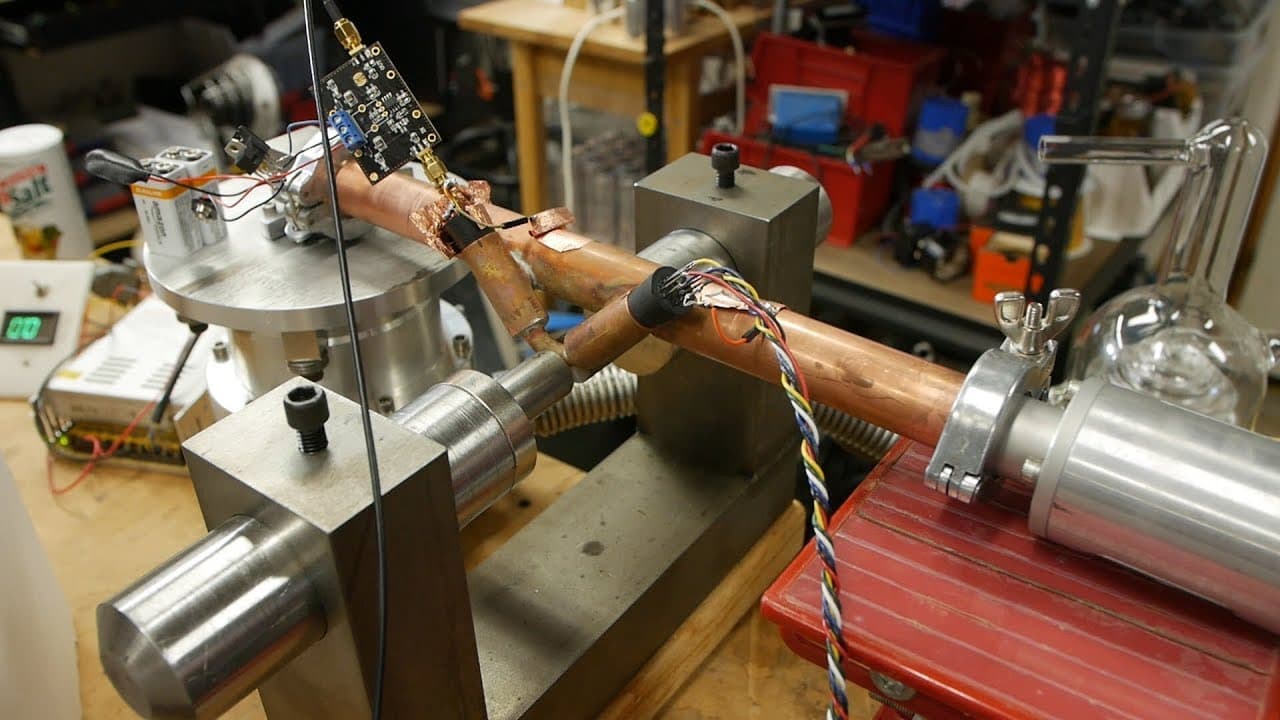
To build a DIY mass spectrometer, construct a vacuum system using a copper tube, a tungsten filament for ionization, and a detector for measuring component masses. Ensure high vacuum levels for accurate results and be cautious of sample limitations and possible measurement artifacts that can affect peak symmetry and height.
Transcript
today and Applied Science we're going to talk about mass spectrometers I'm gonna show you how I built this copper tube mass spectrometer and then we're gonna use it to verify the contents of this dietary salt substitute so this project gets its start in one of my favorite places is the youtube comment section no really actually it's your comments t... Read More
Key Insights
- 🥺 DIY approach to building a mass spectrometer inspired by scientific literature can lead to unique challenges and discoveries.
- 💆 The principle of ionization and mass analysis in a mass spectrometer allows instant chemical identification based on individual component masses.
- ✋ Maintaining high vacuum levels is critical for accurate ionization and measurement of sample components in a mass spectrometer.
- 💆 Sample limitations, such as quick evaporation, can pose challenges in obtaining consistent and reliable results in mass spectrometry.
- 🙊 Discrepancies in peak heights and symmetry can indicate potential measurement artifacts or system issues in the mass spectrometer calibration.
- 💆 Experimenting with accelerating voltages and system configurations can help uncover insights into the performance and limitations of a DIY mass spectrometer.
- 💆 Future advancements in mass spectrometry techniques, such as laser-based ionization, offer exciting possibilities for enhanced analytical capabilities.
Install to Summarize YouTube Videos and Get Transcripts
Explore YouTube Video Summarizer or Get YouTube Transcript Extractor
Questions & Answers
Q: What inspired the content creator to build a copper tube mass spectrometer?
The inspiration came from a 1970 Scientific American article, based on an academic paper from 1963, challenging the creator to replicate the experiment at home.
Q: Why is maintaining high vacuum levels crucial in mass spectrometry?
High vacuum levels are essential to prevent interference from unwanted gas molecules, ensuring accurate ionization and measurement of sample components.
Q: What challenges did the content creator face during the construction and testing of the mass spectrometer?
Challenges included sample limitations due to quick evaporation, discrepancies in peak heights indicating potential measurement artifacts, and difficulties in maintaining accurate accelerating voltages for optimal results.
Q: How does the asymmetry of the peak results hint at potential measurement artifacts in the mass spectrometer?
The similarity in shape between the larger and smaller peaks suggests an issue with the system, possibly reflecting or mirroring signals rather than accurately representing distinct isotopes of the analyzed compound.
Summary & Key Takeaways
-
Inspired by a 1970 Scientific American article, the content creator built a copper tube mass spectrometer to analyze a dietary salt substitute.
-
The mass spectrometer works by ionizing the sample, allowing the analysis of component masses to identify chemicals instantly.
-
Challenges included maintaining vacuum levels, sample limitations, and discrepancies in peak results hinting at potential measurement artifacts.
Read in Other Languages (beta)
Share This Summary 📚
Summarize YouTube Videos and Get Video Transcripts with 1-Click
Try YouTube Summary with ChatGPT & Claude or YouTube Transcript Generator
Explore More Summaries from Applied Science 📚

Summarize YouTube Videos and Get Video Transcripts with 1-Click
Try YouTube Summary with ChatGPT & Claude or YouTube Transcript Generator