Why Minimalism Matters More in the AI Age
TL;DR
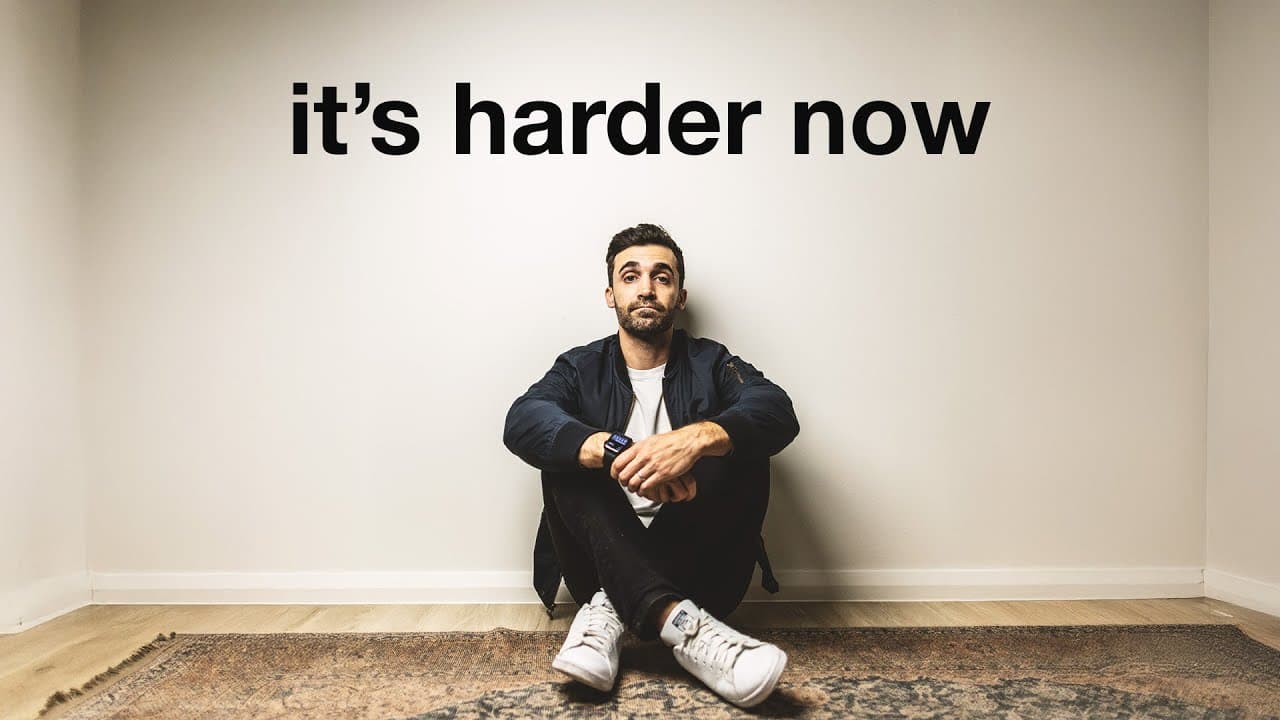
Minimalism stays relevant because companies, advertising, and now AI micro-target your identity, insecurities, and aspirations to make you buy more and feel like you're never enough. Calling yourself a minimalist reinforces a story that you have enough and are enough. A simplicity filter, asking whether a choice makes life simpler or more complicated, guides big decisions.
Transcript
This video is sponsored by Squarespace. More on them in a little bit. So, I've been a minimalist for over 14 years, and I really don't think it's ever been as difficult as it is now. Back when I first found out about it, it felt like swimming against a strong current. Today, it feels like standing in front of a fire hose. Companies have fine-tuned ... Read More
Key Insights
- Minimalism is harder now than 14 years ago because companies have fine-tuned levers to manipulate behavior, and AI makes that influence faster, smarter, and more invisible, creating a world where it is difficult to live simply or feel content.
- The label minimalist is surprisingly helpful because it reinforces a story about who you are, meaning less shopping, less screen time, and more appreciation of what you already have, which lowers susceptibility to messages saying you are not enough.
- Advertisers use the power of identity by micro-targeting people based on who they believe you are, tailoring messaging to values, insecurities, and aspirations, and selling identities like the early adopter, concerned parent, or insecure alpha male rather than just products.
- The hardest area to keep simple is not physical possessions but activities and work, since Matt built up nearly a dozen employees, a packed schedule, and more projects than he could finish before deciding to scale back.
- The simplicity filter is one question asked before any big decision: will this make my life simpler or more complicated? It applies to business, finances, and relationships, especially in gray areas when torn about a major move.
- Choosing the stock market over real estate investing kept life simpler because buying property is a known time suck, and investing the same money likely gives a similar or better long-term return without the stress of ownership.
- Going back to being a solo creator did not look successful from the outside, but simplifying work made Matt feel more successful and led him to review every tool line by line, cutting most of them.
- Becoming a dad reframed minimalism as prioritizing family, so lower work output, fewer gym hours, and less creative time became a sign of making the right choice rather than a sacrifice to resent.
Install to Summarize YouTube Videos and Get Transcripts
Explore YouTube Video Summarizer or Get YouTube Transcript Extractor
Questions & Answers
Q: Why is minimalism harder to practice today than in the past?
Matt says minimalism used to feel like swimming against a strong current, but today it feels like standing in front of a fire hose. Companies have fine-tuned the levers to manipulate you into behaviors that suit their best interest, from social media to advertising, influencing not just what you buy but your lifestyle, personality, values, and self-worth. With AI, that influence is getting faster, smarter, and more invisible, creating a world that makes it incredibly difficult to live simply or feel content with what you have.
Q: Why is the minimalist label itself helpful?
Matt explains that calling himself a minimalist is not just virtue signaling; it reinforces a story about who he is and who he wants to be. For him, being a minimalist means aiming to spend less time shopping, less time on screens, less time thinking about what he does not have, and more time appreciating what he does have. It is a reminder that he has enough and is enough, which makes him much less susceptible to messages trying to convince him otherwise.
Q: How do advertisers use identity to sell products?
Matt says advertisers no longer just broadcast general ads; they micro-target you based on who they believe you are and who you believe you are. They tailor messaging like a chameleon, adapting to your values, insecurities, and aspirations, speaking to the early adopter, the concerned parent, or the insecure alpha male. They are not just selling products but selling identities you feel you need to live up to. Ironically, this is the same power of identity that minimalism uses to help change behavior.
Q: What is the simplicity filter and how does Matt use it?
The simplicity filter is one question Matt asks before any big decision: will this make my life simpler or more complicated? He uses it for business, finances, and relationships, anytime he feels torn about a major move. Examples include whether to invest in real estate, hire a full-time video editor, or partner with another creator. These decisions can be exciting and high-reward, but carry hidden costs in time, energy, money, or pressure, and the filter helps him gut check the trade-offs.
Q: Why did Matt choose the stock market over real estate investing?
On paper, real estate sounded like a fun side project: buy a fixer upper, rent it out, build equity, and maybe make some money. But when Matt asked whether it would make his life simpler or more complicated, the answer was obvious. Having bought a home before, he knew how much of a time suck it is. So he and his wife put the money they would have used on a property into the stock market, which will probably give a similar or better long-term return without the stress of property ownership.
Q: Why did Matt go back to being a solo creator?
A few years ago Matt realized he had made his work far more complicated than he ever wanted, with nearly a dozen employees, a packed schedule, and more projects than he could finish. He asked what his work would look like if it were more simple, which led him to completely rethink his structure and return to being a solo creator. It might not have looked like a successful move from the outside, but it made him feel a lot more successful, and he went line by line through every tool, cutting most.
Q: How did becoming a father change Matt's view of minimalism?
Becoming a dad was a massive adjustment, and early on Matt felt resentment because he had less time for work, the gym, one-on-one time with Natalie, creative projects, and stillness. After interviewing Ryan Holiday, he realized he had instinctively prioritized family over everything else and should be proud rather than resentful. His lower output at work and fewer hours elsewhere became a direct sign he was making the right choice, letting him create space for morning walks, daycare pickups, and early bedtimes.
Q: What did Ryan Holiday say about being a productive parent?
Matt interviewed Ryan Holiday when his daughter Frankie was around nine months old, calling Ryan the most productive dad he knows, having written a dozen bestselling books while being a present father. Ryan joked that one way to be productive is to completely neglect your children, the way it was historically often done. But he said he is less proud of how productive he is and more proud that he spends a lot of time with his kids, taking them to school, making lunches, picking them up, and rarely missing dinners.
Summary & Key Takeaways
-
Matt has been a minimalist for over 14 years and argues it is harder than ever because companies, social media, advertising, and now AI manipulate behavior faster and more invisibly, changing lifestyle, values, and self-worth. This makes minimalism more relevant, as a tool to feel content and to remember that you have enough and are enough.
-
The minimalist label reinforces an identity of spending less time shopping, on screens, and comparing, and more time appreciating what you have. Advertisers exploit that same power of identity by micro-targeting insecurities and aspirations, selling identities. Minimalism helps close the gap between what Matt values and how he actually lives day to day.
-
Matt struggled most with complexity in what he does, not what he owns, so he returned to solo creating and adopted a simplicity filter: does this make life simpler or more complicated. Becoming a father reframed reduced output as proof of prioritizing family, inspired partly by Ryan Holiday valuing time with kids.
Read in Other Languages (beta)
Share This Summary 📚
Summarize YouTube Videos and Get Video Transcripts with 1-Click
Try YouTube Summary with ChatGPT & Claude or YouTube Transcript Generator
Explore More Summaries from Matt D'Avella 📚





Summarize YouTube Videos and Get Video Transcripts with 1-Click
Try YouTube Summary with ChatGPT & Claude or YouTube Transcript Generator