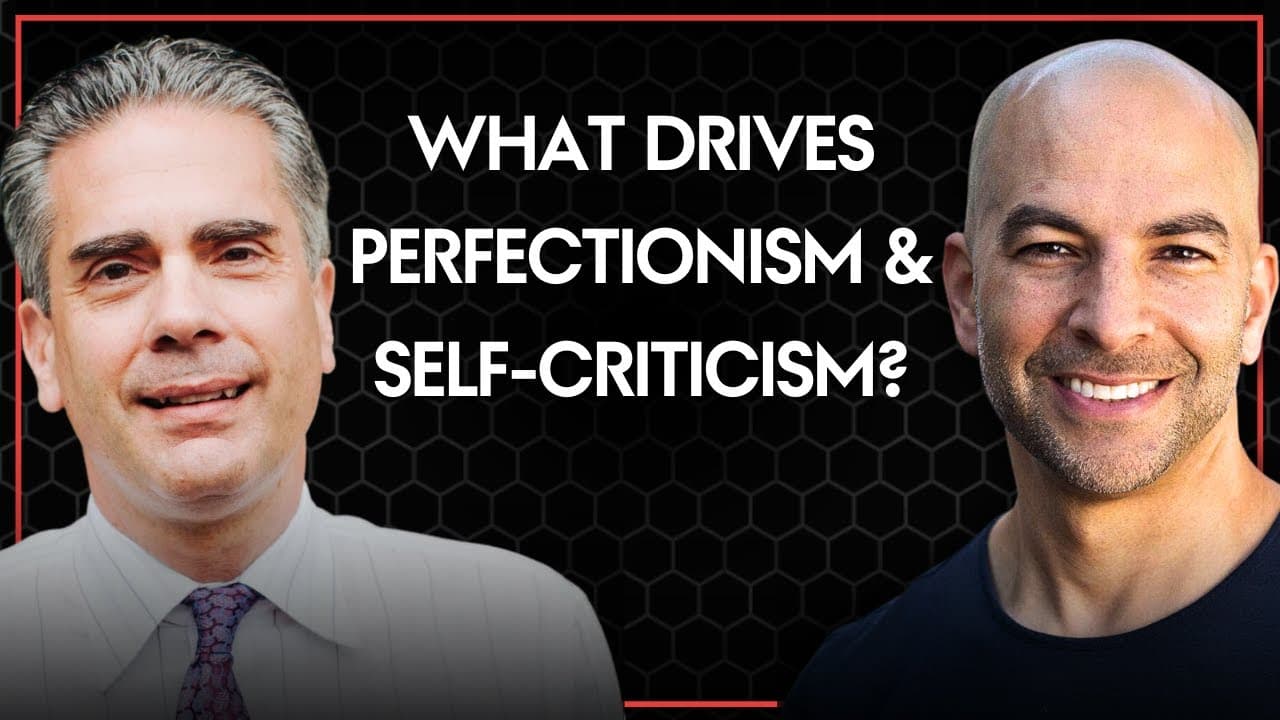
Why Perfectionism Fuels Harsh Self-Criticism
TL;DR
Perfectionism can arise when self-management becomes a harsh internal persecutor that demands flawlessness and uses criticism as supposed motivation. Because perfection is impossible, this strategy can produce misery, shame, reduced confidence, damaged motivation, and outwardly successful behavior that conceals poor emotional health. Change begins by noticing contradictions, investigating the critical voice with curiosity, and recognizing that punishment is keeping the person down rather than moving them forward.
Transcript
I think there you know this there's this Continuum from what we just talked about which is people that are even out from the outside it's obvious that they're not taking care of themselves and again the patterns here are many it could be just a straight up across the board I don't sleep well I don't exercise I don't eat well I drink to excess and y... Read More
Key Insights
- Self-care exists on a continuum from broad neglect to intermittent maladaptive behavior and rigid overmanagement. A person can sleep, eat, and exercise with exceptional consistency while still acting from fear, shame, or compulsion rather than from a healthy relationship with the self.
- The Freudian ego represents the self-aware person who understands internal hopes, fears, desires, achievements, and limitations. Healthy control comes from this reflective position, which recognizes competing impulses without allowing either immediate gratification or severe self-management to dominate the person.
- The id represents the part that wants immediate gratification, while the superego represents the part that imposes restraint and standards. Problems emerge when the superego gains supremacy and turns ordinary self-management into constant surveillance, criticism, and demands for unattainable perfection.
- An internal persecutor can persist after an external critic is gone. Messages such as being worthless or incapable may be absorbed so deeply that the person continues delivering them internally, even when the individual who originally voiced those judgments has been absent for years.
- Perfectionism through self-criticism is a form of self-punishment that can masquerade as motivation. The person may believe relentless berating produces progress, but the pattern can instead suppress role performance, destroy confidence, deepen shame, and keep the person below their actual capabilities.
- Behavioral contradictions can reveal hidden self-criticism. A person who loves music but avoids it during long drives may be preserving uninterrupted time for self-attack, showing how curiosity about an apparently minor inconsistency can uncover a powerful and previously unrecognized psychological pattern.
- Outward success does not establish inward well-being. A person may appear disciplined, productive, and fully in control while privately experiencing depression, shame, fear of failure, and an incessant critical voice, just as a home's exterior does not reveal the relationships and conditions inside it.
- Change begins with curious inquiry rather than accepting the critical voice as necessary discipline. Identifying what the person does, why an enjoyable alternative is avoided, and whether punishment actually improves performance can expose the pattern and make healthier self-management possible.
Install to Summarize YouTube Videos and Get Transcripts
Explore YouTube Video Summarizer or Get YouTube Transcript Extractor
Questions & Answers
Q: What drives perfectionism and harsh self-criticism?
Perfectionism can be driven by fear of failure, fear of not being good enough, shame, and an attempt to control uncertain outcomes. The person adopts the belief that relentless criticism will prevent mistakes and guarantee success. Over time, self-management becomes overmanagement, and the internal voice continually searches for what is wrong, inadequate, or likely to fail. Because nothing is perfect, the person remains trapped in dissatisfaction and punishment.
Q: How can healthy self-management become harmful overmanagement?
Healthy self-management becomes harmful when useful discipline stops serving a balanced life and begins demanding flawless control. Eating, exercise, sleep, academics, or work may all look well managed from the outside, yet the person is internally driven by fear and constant criticism. The managing part no longer balances desires and needs. It dominates them, monitors every possible mistake, and treats anything less than perfection as evidence of personal failure.
Q: What do the id, ego, and superego mean in this discussion?
The id describes the part of a person that seeks immediate gratification and wants relief or pleasure now. The superego is the managing part that applies restraint, rules, and standards. The ego, in the older Freudian sense used here, is the self-aware whole person who understands internal hopes, fears, desires, and limitations. Emotional health requires keeping these forces balanced rather than letting indulgence or harsh management gain supremacy.
Q: Why does self-criticism fail as a source of motivation?
Self-criticism fails because repeated attacks can destroy the confidence and motivation needed for meaningful action. A person may sincerely believe that berating themselves is what keeps them moving, yet the punishment can produce shame, depression, avoidance, and lower performance. In the example discussed, performance improved substantially only after the person stopped using extended periods of private criticism as a supposed method for forcing progress.
Q: How can someone recognize a hidden critical inner voice?
Recognition often begins by noticing thoughts that have become so routine they seem normal. A person might spend a morning shower reviewing yesterday's failures or warning themselves about everything they must not get wrong today. Another clue is behavior that contradicts known preferences, such as avoiding beloved music during a long commute. Curious examination of these patterns can reveal that time and attention are being reserved for self-punishment.
Q: How can behavioral contradictions expose self-punishment?
A behavioral contradiction creates a useful point of inquiry because it suggests that an unseen motive may be operating. The discussion describes a music enthusiast who chose a distant job and did not listen to music during the long drive. Asking why uncovered that the silence provided more time for self-criticism. The contradiction between loving music and deliberately avoiding it helped make an unconscious punishment pattern visible.
Q: Can a person appear successful while struggling emotionally?
A person can appear highly successful, disciplined, and healthy while privately feeling depressed, ashamed, afraid, and chronically inadequate. Perfectly managed eating, exercise, sleep, academics, or work do not reveal the emotional motive behind them. External appearances provide limited information about internal conditions. The discussion compares this to a beautiful home whose exterior cannot show whether the people and relationships inside are healthy or happy.
Q: How can someone begin changing perfectionistic self-talk?
Change begins by becoming aware of the voice and approaching it with curiosity. The person can examine when the criticism occurs, what it says, what fear it is trying to control, and whether it truly improves performance. Contradictions between enjoyment and behavior can offer clues. Once self-attack is recognized as punishment rather than necessary motivation, the person can stop treating the voice as an unquestionable guide and pursue more balanced self-management.
Summary & Key Takeaways
-
Self-care exists on a continuum that includes obvious neglect, intermittent maladaptive soothing, and rigid overmanagement. The last pattern can appear exceptionally healthy because eating, exercise, and sleep are tightly controlled. However, its outward discipline may be driven by fear, shame, and a demand for perfection rather than genuine emotional health.
-
Paul Conti uses the Freudian concepts of id, ego, and superego to describe internal balance. Immediate desires and self-management both need regulation by a self-aware whole person. When the managing part gains supremacy, it can become an internal persecutor that constantly searches for mistakes, inadequacy, and reasons for punishment.
-
A critical inner voice may be mistaken for discipline even when it reduces motivation, confidence, happiness, and performance. Curiosity helps reveal the pattern by examining behavior that does not make sense, such as avoiding an enjoyable activity to create more time for self-attack. Awareness creates an opportunity to stop the punishment.
Read in Other Languages (beta)
Share This Summary 📚
Summarize YouTube Videos and Get Video Transcripts with 1-Click
Try YouTube Summary with ChatGPT & Claude or YouTube Transcript Generator
Explore More Summaries from Peter Attia MD 📚




Summarize YouTube Videos and Get Video Transcripts with 1-Click
Try YouTube Summary with ChatGPT & Claude or YouTube Transcript Generator