How to Sell Digital Products Without an Audience
TL;DR
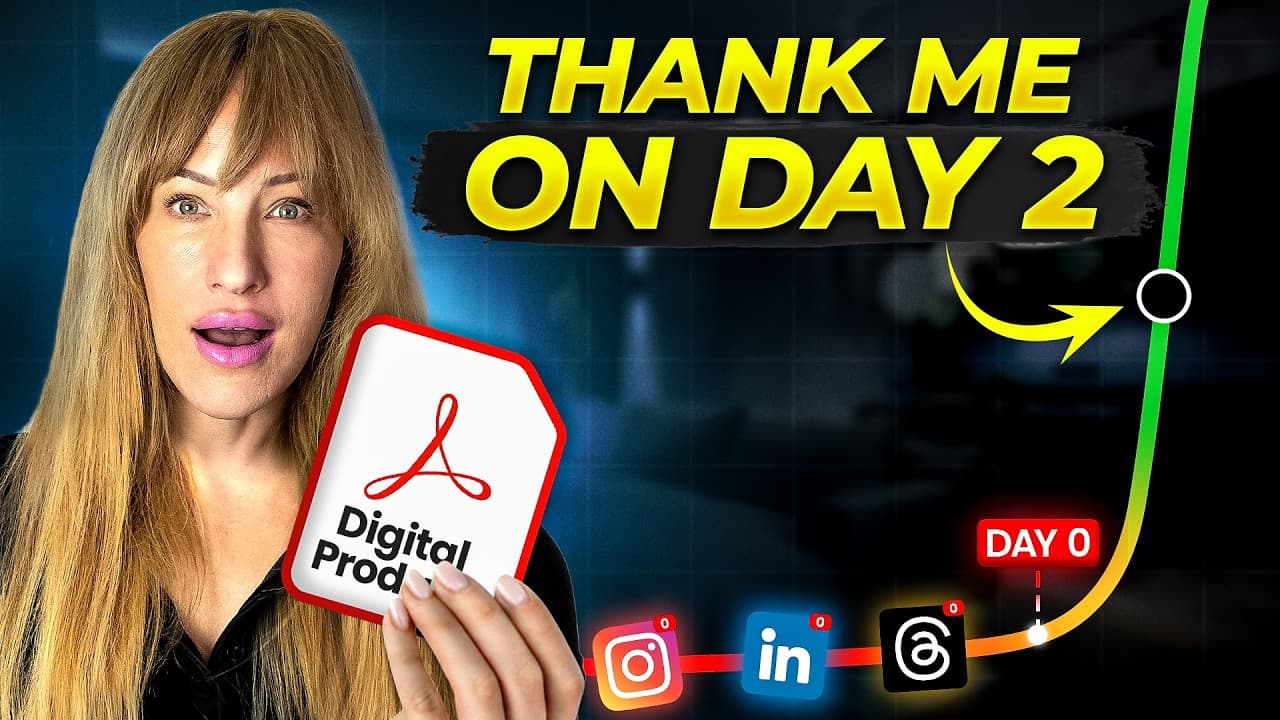
Solve one narrow, urgent problem for a specific audience, then package the solution as a low-ticket digital product priced from $7 to $47. Validate demand through recurring niche questions, marketplace purchases, and popular discussions, then publish consistent, targeted content on text-based platforms to build trust and convert buyers without needing a large following.
Transcript
Here's the complete blueprint on how you can sell digital products from day one without having a huge social media following or burning yourself out in the process. The truth is most of us do social media completely wrong because we've been sold this narrative of post more to grow your audience, right? Video is king, blah blah blah. And we're told ... Read More
Key Insights
- Social media is presented as a problem-solving channel, not merely an audience-building system. Content becomes more commercially useful when it addresses the pain points of a specific group instead of chasing broad visibility, follower counts, views, likes, or viral reach.
- A narrowly defined problem is easier to turn into a clear digital product. The recommended approach is to solve one small, immediate difficulty rather than covering an entire subject, condition, or transformation that would require a much larger and less digestible offer.
- Recurring niche questions are evidence of problems people actively want to solve. A ChatGPT agent can be used to examine Reddit discussions, while TikTok Creator Insights and comments can reveal repeated concerns, popular topics, and content that already attracts attention.
- Marketplace purchases provide a practical form of product validation. Research tools such as Profittree can be used to examine what people are buying on Etsy, with existing purchases indicating that customers are willing to pay for a related solution.
- Low-ticket digital products are defined as offers priced from $7 to $47 that solve a specific problem. Their limited scope and lower financial risk make them easier entry points for customers who want a quick result before purchasing a larger transformation.
- A product ladder can convert an initial purchase into a longer customer relationship. The example progression begins with a $27 offer, followed by $97 and $297 products, and eventually a $2,000 coaching program after the customer has experienced results and developed trust.
- Text-based platforms have fewer production requirements than video platforms. LinkedIn, Threads, and Substack allow creators to communicate useful solutions without camera confidence, editing ability, lighting equipment, audio equipment, or the skill of capturing attention within the opening seconds of a video.
- Consistency builds trust, authority, and a reputation for showing up. The described workflow uses AI to create a week of sales-oriented content in 60 minutes and BlackTwist to schedule Threads posts, reducing the daily workload associated with manual content creation.
Install to Summarize YouTube Videos and Get Transcripts
Explore YouTube Video Summarizer or Get YouTube Transcript Extractor
Questions & Answers
Q: How can I sell digital products without a large audience?
Start by identifying one specific problem experienced by a clearly defined audience, then create a small digital product that provides an achievable result. Publish targeted content about that pain point instead of pursuing broad visibility, likes, or follower growth. The strategy argues that relevant solutions, consistent communication, and a low-risk first purchase can generate sales without a large following.
Q: How should I choose a problem for a digital product?
Choose one narrow problem that people experience now and that your existing expertise or knowledge can help solve. Avoid addressing an entire topic or listing many unrelated difficulties. If the best opportunity is unclear, examine recurring Reddit questions, successful niche content, audience comments, and marketplace purchases. Repeated questions and paid demand can reveal a suitable problem.
Q: How can I validate demand before creating a digital product?
Validation can combine discussion research with evidence of purchases. Use a ChatGPT agent to examine Reddit for recurring niche questions, review TikTok Creator Insights for popular discussions and strong content, and read audience comments for repeated concerns. Tools such as Profittree can also show what people are actively buying on Etsy, indicating whether customers pay for comparable solutions.
Q: Why should a digital product solve only one small problem?
A small problem produces an offer that is easier to understand, buy, and complete. The customer can see the intended result without interpreting a broad promise, while the creator can build a focused solution around a single pain point. The reset planner example addresses day-to-day overwhelm and task completion rather than attempting to address every difficulty associated with ADHD.
Q: What price should a low-ticket digital product have?
The transcript defines low-ticket digital products as offers priced from $7 to $47. These products should solve a very specific problem and provide a quick, attainable result. Their lower financial risk makes them easier for cautious customers to try. A successful first purchase can establish trust before the creator offers higher-priced products or coaching services.
Q: How does a low-ticket product lead to higher-priced sales?
A low-ticket offer acts as an entry point into the creator's ecosystem. The example starts with a $27 product that helps the buyer obtain a result. That experience can create enough trust for the buyer to consider a $97 product, then a $297 offer, and eventually a $2,000 coaching program. Each purchase represents a larger next step.
Q: Why use text-based platforms to market digital products?
Text-based platforms remove several barriers associated with video production. Creating video may require camera confidence, attention-grabbing openings, editing ability, lighting, audio equipment, and other creative skills. LinkedIn, Threads, and Substack let a creator begin communicating useful solutions with fewer production demands. The transcript also describes these platforms as less saturated than familiar video platforms.
Q: How can AI reduce the workload of social media marketing?
AI can help produce and schedule consistent, sales-oriented content without requiring hours of daily creation. The described workflow creates an entire week of content in 60 minutes, then schedules Threads posts with BlackTwist. AI can also assist with sales copy and research recurring Reddit questions. The purpose is to maintain consistency while reducing the burnout associated with constant manual posting.
Summary & Key Takeaways
-
The proposed strategy replaces audience growth as the primary goal with targeted problem-solving. Creators should identify one narrow pain point affecting a defined audience, develop a small digital solution, and publish content that addresses the same concern. Relevance and specificity can produce engagement and sales without requiring a large social media following.
-
Demand should be researched before product creation. Recurring Reddit questions reveal problems people repeatedly seek help with, Etsy research indicates whether buyers already pay for related solutions, and TikTok Creator Insights exposes popular discussions and audience comments. Together, these sources can support a decision about whether a narrowly defined product idea has demand.
-
A low-ticket product priced from $7 to $47 gives cautious customers an accessible way to test a creator's expertise and obtain a quick result. After receiving value, customers may trust the creator enough to consider $97 or $297 products and, eventually, a $2,000 coaching program. Trust is earned through incremental results.
Read in Other Languages (beta)
Share This Summary 📚
Summarize YouTube Videos and Get Video Transcripts with 1-Click
Try YouTube Summary with ChatGPT & Claude or YouTube Transcript Generator
Explore More Summaries from Luna Vega 📚

Summarize YouTube Videos and Get Video Transcripts with 1-Click
Try YouTube Summary with ChatGPT & Claude or YouTube Transcript Generator