What Really Happened to Afghanistan War Profits?
TL;DR
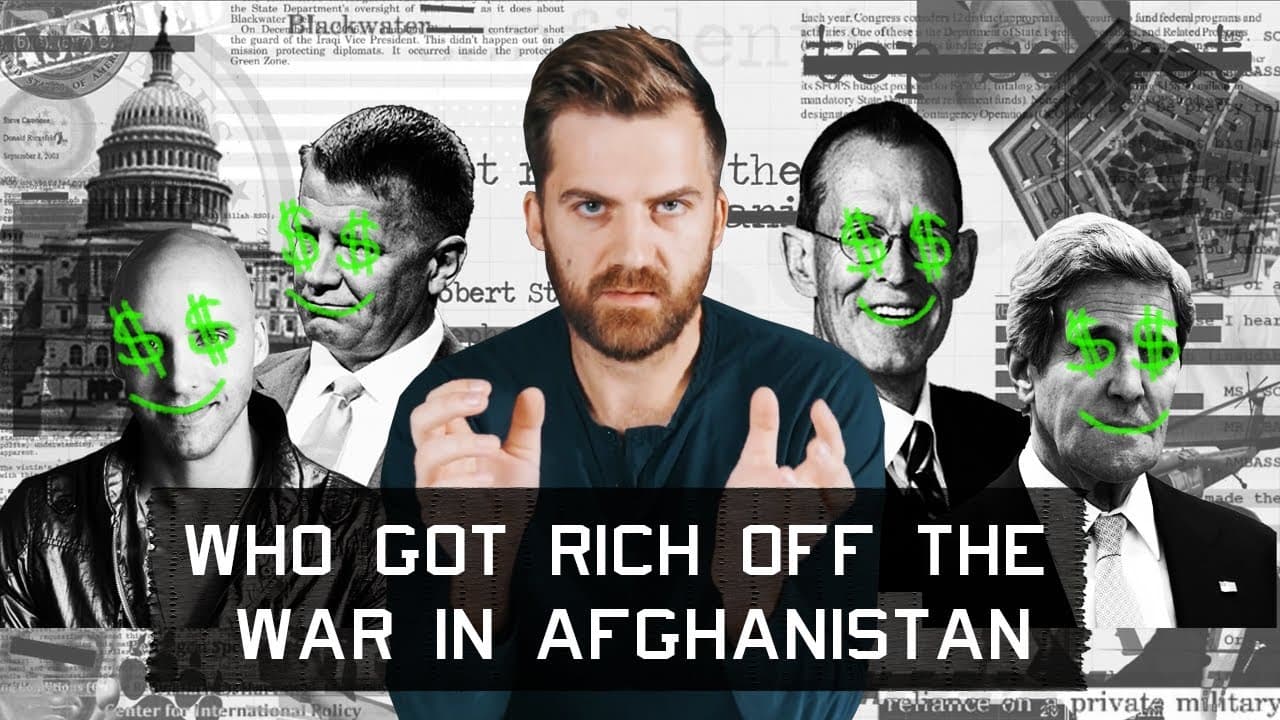
The video argues private contractors and defense giants got rich from the Afghanistan war through inflated contracts and lax oversight. It spotlights Lockheed Martin, Supreme Group, and Eric Prince to show how war spending fueled a private sector windfall while governance struggled to curb it.
Transcript
- I've been deep in these documents, each of which is a piece of evidence that helps me piece together a very important question, which is who got rich off this 20 year bore that we fought in Afghanistan? (bombs exploding) (guns hosts) (people screaming) But first, let me tell you what happened on August 15th, 2021. The Taliban had entered Kabul af... Read More
Key Insights
- The video shows that Lockheed Martin received a large share of Pentagon contracts during the war, illustrating how a single company can disproportionately benefit from sustained conflict.
- The key to the profits is the reliance on government contracts, which can be large, ongoing, and less transparent in wartime conditions.
- Private security firms like Blackwater, led by Eric Prince, secured early and later expansive contracts to train and protect troops, expanding profits after 9/11.
- Supreme Group’s food contracts to feed troops in Afghanistan grew revenue dramatically, with some contracts criticized for high prices and potential fake subcontracts.
- Senate hearings reveal disputes over overpayments and mismanagement, highlighting how funds were steered toward contractors rather than directly to services, often with little accountability.
- The transcript frames war spending as a driver of private sector profits, with millions and sometimes billions flowing to contractors through the complex procurement process.
- The narrative emphasizes the immediacy of wartime procurement, where emergency needs could bypass competitive bidding and oversight, increasing the risk of inflated prices.
- Eric Prince’s Blackwater is presented as an example of privatization of security, likening it to outsourcing essential functions of the national security apparatus.
- More videos from this channel:
- More from this channel: Johnny Harris
Install to Summarize YouTube Videos and Get Transcripts
Explore YouTube Video Summarizer or Get YouTube Transcript Extractor
Questions & Answers
Q: What is the main claim about profits from the Afghanistan war?
The main claim is that the Afghanistan war created a large windfall for private contractors and defense companies, often through emergency funding and contracts that could bypass normal bidding and oversight. This led to substantial profits for executives and firms like Lockheed Martin and Supreme Group, making war a source of private wealth.
Q: Who is highlighted as a major beneficiary in the video?
The video highlights several beneficiaries, notably Lockheed Martin with its CEO compensation rising dramatically during the war, Supreme Group which supplied food to troops and earned billions, and Eric Prince of Blackwater who built a large security operation and profited from military related contracts and services.
Q: What role does bidding play in the profits described?
Bidding plays a crucial role in the profits described. The video explains that wartime emergencies can bypass standard bidding processes, allowing contracts to be awarded quickly to private companies at potentially inflated prices, which in turn amplifies profits for those contractors and their executives.
Q: How did Lockheed Martin profit during the war according to the video?
According to the video, Lockheed Martin profited as its contracts with the Pentagon grew, and the CEO’s compensation climbed from about 2 million to tens of millions during the war years, showing how a single defense contractor could substantially increase executive pay while the conflict persisted.
Q: What example is given for food supply contracts in Afghanistan?
Supreme Group is given as the example for food supply contracts, delivering meals to U.S. troops and expanding its business by 50 fold over six years, ultimately receiving about 5.5 billion in Pentagon payments for food and related services.
Q: What issues were raised in the Senate hearings?
The Senate hearings raised concerns about overpayments and mismanagement, including statements that the government paid excessive transportation costs and that some contracts may have been awarded without proper oversight, leading to questions about accountability for billions in war related spending.
Q: What is stated about private security companies?
Private security companies are described as soldiers for hire, with Eric Prince founding Blackwater to provide security services for the U.S. military, illustrating how privatization of functions once handled by the military itself can create new profit centers during wartime.
Q: How does the video portray the culture around war contracts?
The video portrays a culture where private contractors can benefit from the war through large contracts and expedited procurement, sometimes with little scrutiny, creating a perceived incentive structure that rewards profit over strict accountability, especially during emergency wartime spending.
Summary & Key Takeaways
-
The video explains how private contractors and defense companies benefited financially from the Afghanistan war, often via bidding gaps and emergency funding.
-
It highlights key players like Lockheed Martin and Supreme Group, detailing how their contracts grew alongside the conflict.
-
The piece discusses accountability gaps and Senate hearings that attempted to address the alleged misuses of war-related funds.
Read in Other Languages (beta)
Share This Summary 📚
Summarize YouTube Videos and Get Video Transcripts with 1-Click
Try YouTube Summary with ChatGPT & Claude or YouTube Transcript Generator
Explore More Summaries from Johnny Harris 📚




Summarize YouTube Videos and Get Video Transcripts with 1-Click
Try YouTube Summary with ChatGPT & Claude or YouTube Transcript Generator