What did Cora Rue plant to scare four masters away?
TL;DR
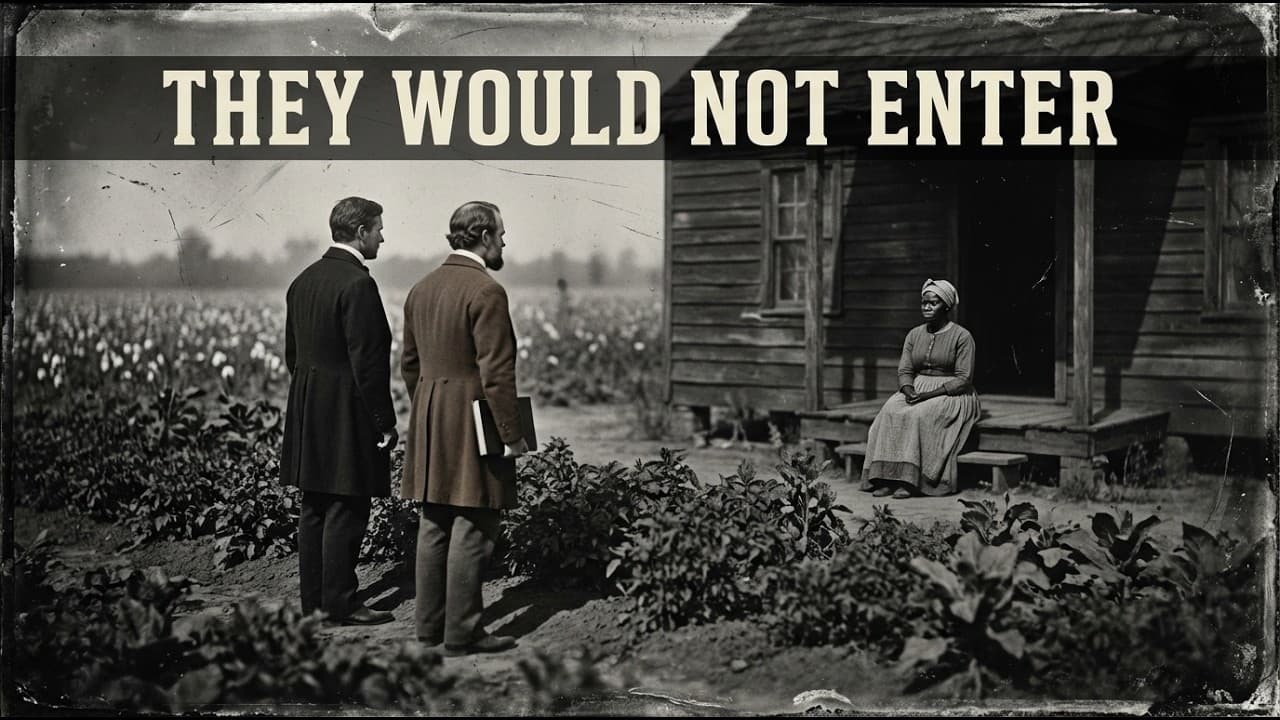
Cora Rue created a protective garden around her cabin that drew the attention of four neighboring planters. The unusual mix of herbs and a wild tobacco patch formed a boundary that altered power dynamics on the Harland plantation, prompting scrutiny and a formal note from Clement Harland.
Transcript
Somewhere in the red clay hills of central Georgia, there is a plantation record filed away in a county courthouse archive, water-stained and barely legible, that contains a single sentence no historian has ever been able to fully explain. >> Do we go in? It reads, "No white man [music] has crossed the line of the Rue Caban since the incident of la... Read More
Key Insights
- Cora Rue actively cultivated around her cabin forming a protective ring by autumn 1856.
- The garden contained recognizable herbs and a mysterious white flowered plant with dusk blooming habits.
- A wild ungrafted tobacco variety was grown by Rue, distinct from the plantation crop.
- Theodora Prout identified the unusual cultivation and alerted Harland.
- Clement Harland recorded the visit and notes about Rue’s plants in his ledger.
- Neighbors described the plants as unusual and potentially unsettling, contributing to a sense of boundary power shift.
- The four enslaved individuals were not crossing the boundary line after the incident, signaling social and physical deterrence.
- The event marks a documented moment where enslaved labor and plant knowledge intersected with plantation control.
Install to Summarize YouTube Videos and Get Transcripts
Explore YouTube Video Summarizer or Get YouTube Transcript Extractor
Questions & Answers
Q: A real search query question about the video (e.g. 'How to...', 'What is...', 'Why does...', 'When should...'). Question 1
What did Cora Rue grow around her cabin that changed how the Harland boundary was treated by nearby planters? The answer lies in the ring of plants Rue cultivated by late 1856, which included herbs like sassafras and pennyroyal, a dark leafed plant with white flowers that bloomed at dusk, and a specially grown tobacco patch. This combination created a perceptible boundary that drew attention from neighboring planters and sparked scrutiny from Clement Harland.
Q: Question 2
How did Clement Harland document the garden and what did he note about it in his records? Harland wrote that he visited Rue’s cabin, observed extensive and unusual cultivation around the structure, and recorded these observations in his ledger. The entry highlights that Rue was cooperative when asked about the plants, and notes that the cultivation was not part of ordinary field work, suggesting a deliberate, possibly protective, planting strategy.
Q: Question 3
Who alerted Harland to Rue's garden and what was the reaction? Theodora Prout, wife of neighbor Wesley Prout, observed the boundary garden with fascination and revulsion and sent a note to Harland prompting an inspection. Her curiosity and botanical knowledge helped catalyze the moment when the garden was officially brought to attention and questioned.
Q: Question 4
What types of plants were reported in Rue’s garden and what might they signify? The garden included sassafras, pennyroyal, black cohosh, crow’s foot, and a dusk blooming white flower with roots in disturbed clay, as well as a wild tobacco variety. These plants suggest practical uses in cooking and medicine, as well as a possible symbolic or protective purpose around Rue’s dwelling.
Q: Question 5
What does the term sound in the Harland ledger imply about Rue, and how does it relate to the garden? The ledger described Rue as sound, a term used to indicate physical and economic productivity, implying she was considered healthy and capable by the enslavers. Yet the garden’s existence contradicts the idea of control by showing Rue actively cultivating useful plants beyond ordinary duties.
Q: Question 6
What is the historical significance of the four masters and their boundary crossing policy? The four masters owned land around Rue’s cabin and collectively refused to cross the eastern boundary line after the 1857 incident. Their refusal to cross signifies a moment where farmer power, property boundaries, and enslaved labor intersected in a way that challenged routine plantation control.
Q: Question 7
How does the narrative frame the Harland plantation setting and the climate of the era? The story situates the Harland plantation in mid 19th century Georgia, a harsh climate with hot summers and a landscape defined by short-staple cotton. This backdrop shows how environmental conditions and economic systems intensified the brutality of slavery while shaping the actions of those involved.
Q: Question 8
What broader themes emerge from Rue’s garden and the response of the planters? Rue’s garden demonstrates agency and knowledge among enslaved people, the power of botanical cultivation as a form of resistance or self reliance, and how small acts of cultivation could disrupt established social power on a plantation, prompting official scrutiny and boundary negotiations.
Summary & Key Takeaways
-
In the mid 1850s Cora Rue cultivated plants around her cabin that were unusual to the Harland boundary, creating a perceptible ring of cultivation. The garden included various herbs and a distinct tobacco strain, signaling intentional cultivation beyond ordinary food and medicine.
-
The Prout family took notice and notified Clement Harland, leading to a documented inquiry about the garden and its plants.
-
The response from Harland and the surrounding planters culminated in a historically significant moment where the garden influenced behavior and boundary perception on the plantation.
Read in Other Languages (beta)
Share This Summary 📚
Summarize YouTube Videos and Get Video Transcripts with 1-Click
Try YouTube Summary with ChatGPT & Claude or YouTube Transcript Generator
Explore More Summaries from Liturgy of Fear 📚





Summarize YouTube Videos and Get Video Transcripts with 1-Click
Try YouTube Summary with ChatGPT & Claude or YouTube Transcript Generator