How a Runaway Slave Formed a Notorious Wild West Gang
TL;DR
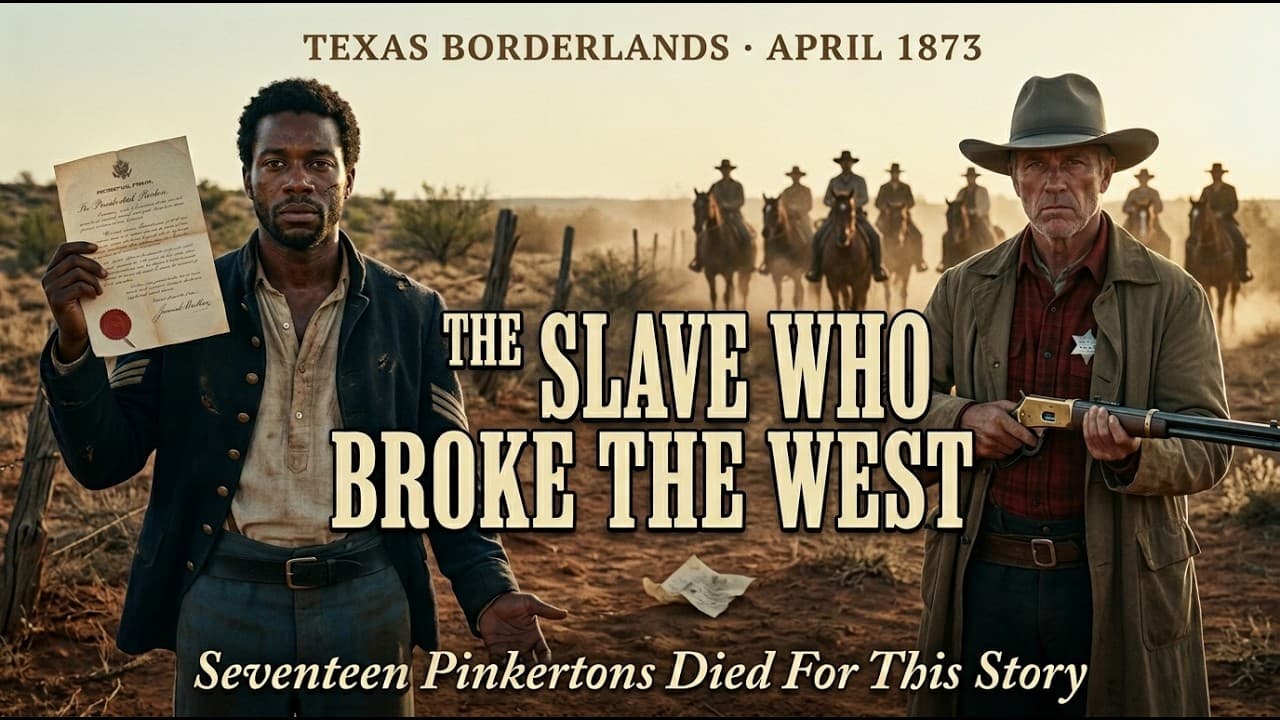
Jeremiah Walker, once a runaway slave, led a formidable gang in the post-Civil War American frontier. His band was unique, comprising freedmen, Comanche warriors, and others marginalized by society. They conducted strategic robberies, redistributing wealth to oppressed communities, challenging the federal government and economic powers. Walker's legacy is a complex narrative of resistance, survival, and the relentless pursuit of justice in a lawless land.
Transcript
In the spring of 1873, a federal marshall riding alone through the Chakaw nation found 17 bodies arranged in a perfect circle around a dying campfire. Each man shot once between the eyes, each man holding in his cold hand a single playing card from the same deck. The marshall counted the cards twice before he understood what he was looking at. The ... Read More
Key Insights
- Jeremiah Walker was a former slave who became a feared leader of a gang in the Wild West.
- Walker's gang was diverse, including freedmen, Comanche warriors, and Confederate guerrillas.
- The gang strategically robbed payrolls and banks, redistributing wealth to oppressed communities.
- Walker was seen as a folk hero by many, challenging the economic and social structures of the time.
- The federal government struggled to capture Walker, as he was protected by a vast network of supporters.
- Walker's story was suppressed by authorities, but it survived in songs and oral histories.
- The gang's operations demonstrated an alternative to the prevailing American economy.
- Walker's legacy is a testament to resistance against systemic oppression and injustice.
Install to Summarize YouTube Videos and Get Transcripts
Explore YouTube Video Summarizer or Get YouTube Transcript Extractor
Questions & Answers
Q: How did Jeremiah Walker become a gang leader?
Jeremiah Walker, originally a slave, escaped during the chaos of the Civil War and joined the Union Army. His military experience and strategic mind helped him form a diverse gang in the post-war frontier, including freedmen, Comanche warriors, and others marginalized by society. His leadership and tactical skills enabled the gang to conduct successful operations against economic powers, redistributing wealth to oppressed communities.
Q: What made Walker's gang unique?
Walker's gang was unique due to its diverse composition, including freedmen, Comanche warriors, Confederate guerrillas, and others marginalized by society. This diversity allowed them to operate effectively across different territories and cultures. Their operations were not just criminal acts but strategic strikes against economic powers, redistributing wealth to oppressed communities and challenging the social order of the time.
Q: How did Walker's gang conduct their operations?
Walker's gang conducted operations with military precision, targeting payrolls, banks, and other economic powers. They were known for their strategic planning and execution, often leaving behind messages to demonstrate their intent. The gang redistributed the stolen wealth to marginalized communities, gaining support and protection from a network of sympathizers across multiple states, making it difficult for authorities to capture them.
Q: Why was Walker considered a folk hero?
Walker was considered a folk hero because his actions challenged the economic and social structures of the time. By redistributing wealth to oppressed communities and resisting systemic oppression, he symbolized hope and resistance for many. His story, though suppressed by authorities, survived in songs and oral histories, representing an alternative to the prevailing American economy and inspiring future generations.
Q: What challenges did the federal government face in capturing Walker?
The federal government faced significant challenges in capturing Walker due to his protection by a vast network of supporters across multiple states. This network included freedmen, Comanche warriors, and others who saw Walker as a symbol of resistance. The government's inability to coordinate efforts and communicate effectively with field operatives further complicated their pursuit, ultimately leading to Walker's continued evasion.
Q: How was Walker's story suppressed?
Walker’s story was systematically suppressed by the federal government, the Pinkerton agency, and economic interests that profited from his death. This suppression aimed to erase the narrative of a black man successfully challenging the American economy and social order. Despite this, his story survived in fragments, such as songs, oral histories, and cultural artifacts, preserving his legacy as a symbol of resistance.
Q: What impact did Walker's gang have on the American economy?
Walker's gang demonstrated an alternative to the prevailing American economy by redistributing wealth to marginalized communities. Their operations challenged the economic powers and highlighted the federal government's failure to protect freedmen and other oppressed groups. This impact was significant enough to concern authorities, leading to efforts to suppress Walker's story and dismantle his network, fearing the potential for a broader insurgency.
Q: What was the outcome of Walker's resistance?
Walker’s resistance ended with his death, but his legacy continued through the stories and songs that survived. His actions inspired future generations to challenge systemic oppression and seek justice. Walker's story, though suppressed, remains a testament to the power of resistance and the possibility of alternative economic systems, influencing movements that followed and contributing to the ongoing struggle for equality and justice.
Summary & Key Takeaways
-
Jeremiah Walker, a former slave, became a notorious gang leader in the Wild West, leading a diverse group of outlaws who targeted economic powers and redistributed wealth to marginalized communities. His operations challenged the federal government and were supported by a network of sympathizers across multiple states. Despite his eventual death, Walker's legacy lived on in songs and stories, symbolizing resistance against systemic oppression.
-
Walker's gang was unique in its composition, including former Union soldiers, Comanche warriors, and others marginalized by society. They conducted strategic robberies, including payrolls and banks, redistributing wealth to oppressed communities. Walker's actions challenged the economic and social structures of the time, earning him a reputation as a folk hero among many.
-
The federal government struggled to capture Walker, as he was protected by a network of supporters. His story was suppressed by authorities, but it survived in songs and oral histories. Walker's legacy is a testament to resistance against systemic oppression and injustice, demonstrating an alternative to the prevailing American economy.
Read in Other Languages (beta)
Share This Summary 📚
Summarize YouTube Videos and Get Video Transcripts with 1-Click
Try YouTube Summary with ChatGPT & Claude or YouTube Transcript Generator
Explore More Summaries from Liturgy of Fear 📚




Summarize YouTube Videos and Get Video Transcripts with 1-Click
Try YouTube Summary with ChatGPT & Claude or YouTube Transcript Generator