What Are the Most Interesting Stars in the Milky Way?
TL;DR
The Milky Way has many fascinating stars, including Mira, a binary system with a pulsating red giant and a white dwarf, and BPM37093, a crystallized white dwarf that resembles a giant diamond. Other notable stars include HE 0437-5439, which moves at incredible speeds, and Apep, a triple star system expected to produce a gamma-ray burst.
Transcript
our galaxy contains a vast number of stars with some estimates going as high as 250 billion individual stars some like our own some vastly different often these stars are run-of-the-mill and very predictable but sometimes stars can end up in situations or go through strange circumstances that make them very different from most other stars so here a... Read More
Key Insights
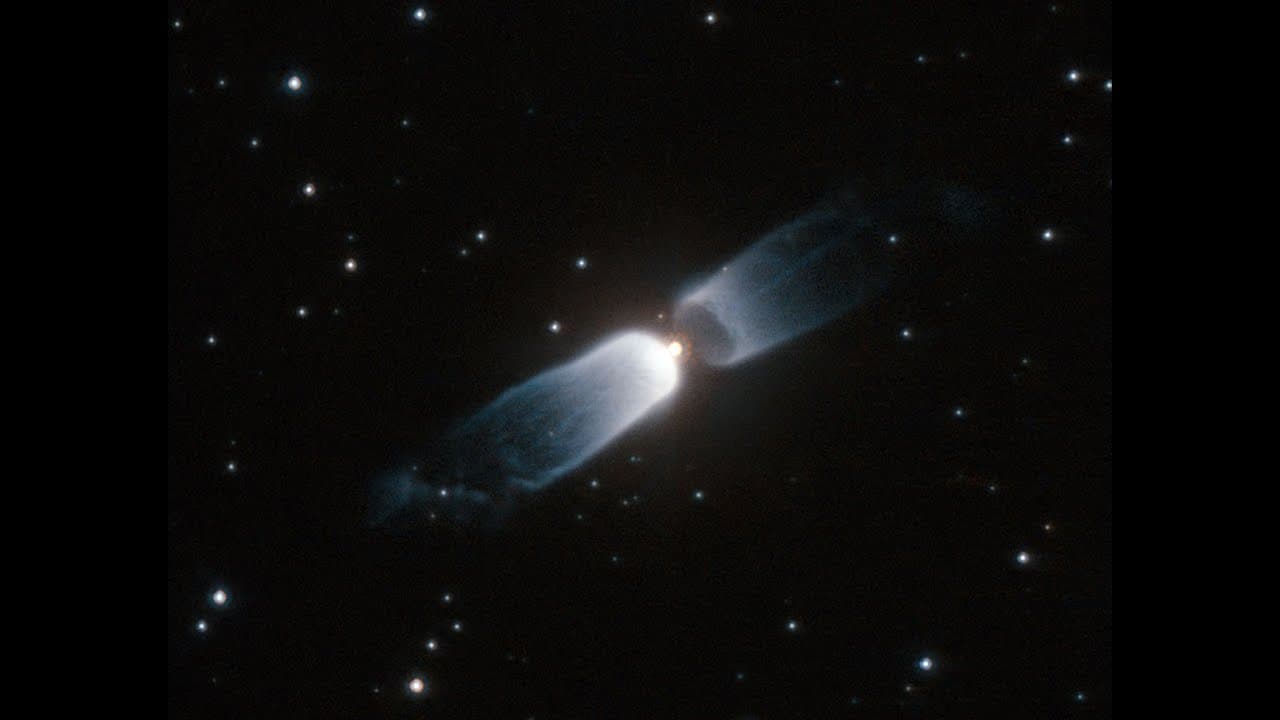
- 👨🦳 Mira is a binary star system with a red giant and a white dwarf companion, exhibiting shedding of material into space and the formation of a protoplanetary disk.
- 💽 SAO206462 has a protoplanetary disk with spiral arms, believed to be shaped by planets forming within the disk.
- 🤩 BPM37093 is a crystallized white dwarf star, resembling a giant diamond.
- ✴️ HE 0437-5439 is a star moving at an extraordinary speed, possibly due to encounters with a supermassive black hole.
- 🤩 MY Camelopardalis is a contact binary system in which two stars are incredibly close and will eventually merge to form a supergiant star.
- 🌥️ UI Scuti is one of the largest stars known, with a radius up to 1700 times larger than the sun's.
- 🤩 The star Apep is a triple star system that contains intriguing and violent Wolf-Rayet stars, expected to produce a gamma-ray burst.
- 🤩 VVV WIT07 is a star exhibiting unexplained dimming events, similar to Tabby's Star, with its cause still unknown.
- 🤩 Vega is a star with evidence of a debris disk and a rotation that causes it to be elongated at the poles.
Install to Summarize YouTube Videos and Get Transcripts
Explore YouTube Video Summarizer or Get YouTube Transcript Extractor
Questions & Answers
Q: What is unique about the Mira star system?
The Mira star system consists of a pulsating red giant and a white dwarf companion. It sheds material into space and forms a protoplanetary disk around the white dwarf, suggesting the formation of planets around a dead star.
Q: Why is BPM37093 referred to as a crystallized star?
BPM37093 is a white dwarf star that has crystallized due to high pressure. This process turns carbon into something resembling a giant diamond, making it unique among stars.
Q: What makes HE 0437-5439 move at an extraordinary speed?
HE 0437-5439 appears to be moving rapidly, possibly due to encounters with a supermassive black hole. It may have originated from a triple star system that encountered the black hole, resulting in one star being captured and the others merging to form the current star.
Q: How are the atmospheres of stars in the MY Camelopardalis star system interacting?
The two stars in the MY Camelopardalis star system are so close that their atmospheres are touching. This interaction will eventually lead to a merger and the formation of a supergiant star.
Summary & Key Takeaways
-
Mira is a binary star system consisting of a pulsating red giant and a white dwarf companion. It exhibits interesting phenomena such as shedding material into space and the formation of a protoplanetary disk around the white dwarf.
-
SAO206462 is a young star with a protoplanetary disk that exhibits spiral arms, believed to be shaped by recently formed planets in the disk.
-
BPM37093 is an incredibly dense white dwarf star that has crystallized, making it as much as 90% crystallized, resembling a giant diamond.
-
HE 0437-5439 appears to be moving at an extraordinary speed, possibly due to past encounters with a supermassive black hole.
-
MY Camelopardalis is a contact binary system where two stars are so close that their atmospheres are touching, eventually leading to a merger and the formation of a supergiant star.
Read in Other Languages (beta)
Share This Summary 📚
Summarize YouTube Videos and Get Video Transcripts with 1-Click
Try YouTube Summary with ChatGPT & Claude or YouTube Transcript Generator
Explore More Summaries from John Michael Godier 📚

Summarize YouTube Videos and Get Video Transcripts with 1-Click
Try YouTube Summary with ChatGPT & Claude or YouTube Transcript Generator