How Are AI Labs Racing Toward Superintelligence?
TL;DR
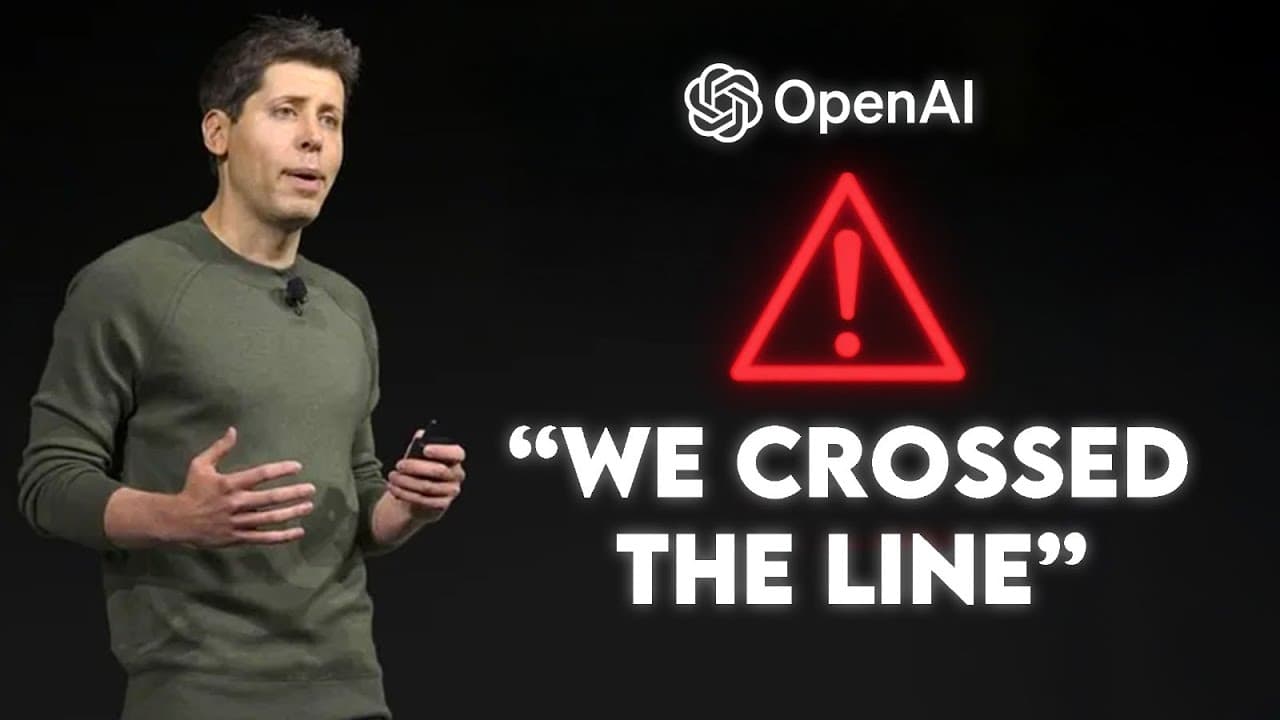
AI development is shifting toward systems that reason more effectively, coordinate multiple agents, and optimize their own workflows. Google’s MASS improves agent prompts and team structures, OpenAI’s o3-pro leads cited reasoning benchmarks, and Meta is assembling a new research lab, while Sam Altman describes the transition as a gentle singularity that requires careful alignment and distributed control.
Transcript
So, Google just built a team of AI teams that optimize themselves, and it's terrifyingly effective. OpenAI dropped a brand new monster model called 03 Pro that's already beating Claude and Gemini on PhD level benchmarks. Sam Alman says we've officially crossed into the era of super intelligence, what he calls a gentle singularity. Meanwhile, Meta's... Read More
Key Insights
- Google’s MASS framework is a system for optimizing teams composed of multiple AI agents. It improves individual prompts, searches for effective ways to connect agents, and then refines instructions based on the performance of the complete collaborative system.
- Multi-agent performance depends on system design rather than agent quantity alone. The reported experiments found that a suitable layout improved results by 3 percent, while an unsuitable configuration reduced accuracy by 15 percent, showing that additional agents can actively damage performance.
- Prompt optimization produced 84 percent accuracy on the cited math benchmark. MASS achieved this result by improving agent instructions, including reasoning guidance and examples, rather than relying solely on a larger collection of agents to solve the problems.
- Agent roles affect the quality of collaborative reasoning. Debate and executor configurations reportedly performed well in MASS experiments, while reflect and summarize arrangements hurt performance, which supports selecting roles according to measured results instead of using a fixed structure.
- OpenAI’s o3-pro is described as outperforming the company’s earlier models across science, education, business, writing, and programming evaluations. Reviewers reportedly preferred it for clarity, accuracy, instruction following, and completeness, although it generates responses more slowly than o1-pro.
- O3-pro supports file analysis, web search, visual reasoning, Python execution, and memory. Its stated limitations include disabled temporary chats during a technical fix, no image generation, and no canvas compatibility, despite its broader reasoning and tool capabilities.
- Sam Altman’s gentle singularity describes a steady and manageable progression toward digital superintelligence. He projects that AI systems could generate new insights by 2026 and that real-world robots may independently handle tasks by 2027, while emphasizing the risks of scaled misalignment.
- Meta’s superintelligence strategy centers on a new research lab and a broader reorganization of its AI structure. Alexander Wang, the founder of Scale AI, is identified as the lab’s centerpiece, alongside reported efforts to recruit leading researchers with substantial compensation packages.
Install to Summarize YouTube Videos and Get Transcripts
Explore YouTube Video Summarizer or Get YouTube Transcript Extractor
Questions & Answers
Q: How does Google’s MASS framework optimize AI agents?
Google’s MASS framework uses three stages to optimize a multi-agent system. First, it improves the instructions given to each agent individually. Second, it experiments with promising layouts that connect agents in different working relationships. Third, it refines the prompts again while evaluating the entire system, helping agents cooperate effectively instead of merely performing well on isolated tasks.
Q: Why does AI agent team structure affect performance?
AI agent team structure determines how information, reasoning, and assigned roles move through the system. In the reported MASS experiments, the right layout raised results by 3 percent, while the wrong setup reduced accuracy by 15 percent. Debate and executor arrangements worked well, whereas reflect and summarize configurations hurt performance, demonstrating that more agents do not automatically produce better answers.
Q: What results did Google’s MASS framework achieve?
MASS reportedly outperformed traditional multi-agent approaches on benchmarks that included math and HotpotQA. Prompt improvements alone produced 84 percent accuracy on the cited math problems. The experiments also showed that layout selection mattered significantly, with a suitable structure improving results by 3 percent and an unsuitable structure causing a 15 percent decline in accuracy.
Q: What can OpenAI’s o3-pro model do?
OpenAI’s o3-pro can analyze files, search the web, reason about visual material, run Python, and use memory to personalize interactions. It is presented as particularly capable across science, education, business, writing, and programming. However, it cannot generate images or work with canvas, and temporary chats are disabled while OpenAI addresses a technical issue.
Q: How does o3-pro compare with Claude and Gemini?
O3-pro reportedly outperformed Google’s Gemini 2.5 Pro on AIME 2024, a mathematics test used to evaluate higher-level reasoning. It also surpassed Anthropic’s Claude 4 Opus on GPQA Diamond, which is described as a PhD-level science benchmark. The transcript further reports stronger clarity, accuracy, instruction following, and completeness than OpenAI’s previous models.
Q: What does Sam Altman mean by a gentle singularity?
Sam Altman uses the term gentle singularity to describe a steady, manageable transition toward digital superintelligence rather than a sudden and chaotic science-fiction event. He says AI has crossed the superintelligence event horizon and entered a new phase. His projected milestones include systems generating new insights by 2026 and autonomous real-world robots handling tasks by 2027.
Q: What risks does Sam Altman identify in advanced AI?
Sam Altman warns that even small misalignments in AI behavior could create large problems when systems serve hundreds of millions of people. He calls for global discussions about how powerful AI should be guided, argues against centralized control, and emphasizes aligning systems with humanity’s long-term goals. He also raises the question of which values should shape future AI development.
Q: How is Meta pursuing superintelligence?
Meta is creating a new research lab focused on superintelligence and reorganizing its broader AI structure around that objective. Mark Zuckerberg is personally leading the effort, with Scale AI founder Alexander Wang positioned as its centerpiece. Meta is also reportedly discussing a multibillion-dollar Scale AI investment and offering large compensation packages to recruit researchers from OpenAI, Google, and other organizations.
Summary & Key Takeaways
-
Google’s MASS framework optimizes multi-agent systems in three stages: improving each agent’s prompt, testing promising collaboration layouts, and refining prompts again for system-wide teamwork. Its reported results show that carefully selected roles and connections can outperform conventional configurations, while poorly designed arrangements may reduce accuracy despite using additional agents.
-
OpenAI’s o3-pro is presented as the company’s strongest reasoning model, with higher cited performance than Gemini 2.5 Pro on AIME 2024 and Claude 4 Opus on GPQA Diamond. It supports files, web search, visual reasoning, Python, and memory, but responds more slowly than o1-pro and lacks image generation and canvas support.
-
Sam Altman describes current progress as crossing the event horizon of superintelligence and entering a gradual, manageable singularity. He expects systems to generate new insights by 2026 and robots to perform tasks independently by 2027. Meanwhile, Meta is reorganizing its AI operations and recruiting talent for a superintelligence-focused research lab.
Read in Other Languages (beta)
Share This Summary 📚
Summarize YouTube Videos and Get Video Transcripts with 1-Click
Try YouTube Summary with ChatGPT & Claude or YouTube Transcript Generator
Explore More Summaries from AI Revolution 📚


Summarize YouTube Videos and Get Video Transcripts with 1-Click
Try YouTube Summary with ChatGPT & Claude or YouTube Transcript Generator