What Is Bipolar Disorder and How Is It Treated?
TL;DR
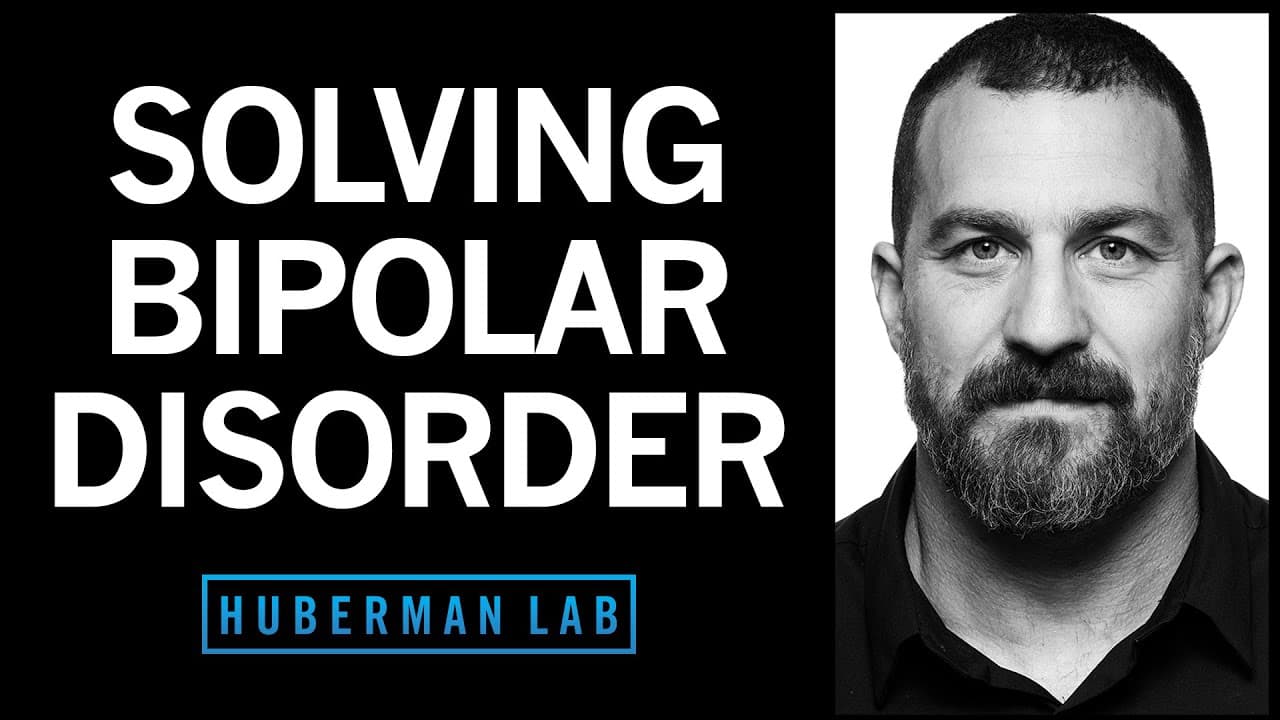
Bipolar disorder is a severe condition marked by extreme mood swings, characterized by manic episodes of elevated mood and energy, as well as depressive episodes. Treatments include mood stabilizers like lithium, and understanding the biological mechanisms is crucial for effective management. Recognizing symptoms early can significantly improve outcomes and reduce the risk of suicide, which is notably higher among those affected.
Transcript
- Welcome to the Huberman Lab Podcast, where we discuss science and science-based tools for everyday life. [upbeat rock music] I'm Andrew Huberman, and I'm a professor of neurobiology and ophthalmology at Stanford School of Medicine. Today we are going to be discussing bipolar disorder, often called bipolar depression. Bipolar depression is a condi... Read More
Key Insights
- 😣 Bipolar disorder is a severe condition that can have debilitating effects on individuals' lives, with a high risk of suicide.
- 💅 Recognition and understanding of bipolar disorder symptoms, such as manic and depressive episodes, are crucial for early intervention and effective treatment.
- ❓ The discovery of lithium as a treatment for bipolar disorder preceded the understanding of the underlying biological mechanisms, highlighting the complexity of psychiatric disorders.
- ☠️ Genetic factors play a significant role in bipolar disorder, with a high heritability rate. Environmental triggers can interact with genetic susceptibility to trigger bipolar episodes.
Install to Summarize YouTube Videos and Get Transcripts
Explore YouTube Video Summarizer or Get YouTube Transcript Extractor
Questions & Answers
Q: What are the key characteristics of a manic episode in bipolar disorder?
A manic episode is characterized by elevated mood, increased energy, distractibility, impulsivity, grandiosity, flight of ideas, agitation, no sleep, and rapid pressured speech.
Q: How do bipolar 1 and bipolar 2 differ?
Bipolar 1 involves extended periods of mania (lasting seven days or more) without necessarily experiencing depressive episodes. Bipolar 2 is characterized by both manic episodes (lasting four days or less) and depressive episodes.
Q: What are the heritability and genetic factors of bipolar disorder?
Bipolar disorder has a high heritability rate, with genetic factors contributing to 85% of the disorder. Environmental triggers and early-life stress can interact with genetic susceptibility to trigger or exacerbate bipolar episodes.
Q: How does bipolar disorder differ from borderline personality disorder?
Bipolar disorder involves manic and/or depressive episodes, often without external triggers. Borderline personality disorder, on the other hand, is characterized by mood shifts based on environmental triggers or perceived situations.
Summary & Key Takeaways
-
Bipolar disorder, also known as bipolar depression, involves massive shifts in mood, energy, and perception that can be maladaptive and have a damaging impact on individuals and their relationships.
-
The disorder encompasses both manic episodes (elevated mood, energy, impulsivity) and depressive episodes (low mood, loss of interest), but not everyone with bipolar disorder experiences both.
-
The condition is serious, with a greater risk of suicide, and can have a significant burden on individuals' lives.
Read in Other Languages (beta)
Share This Summary 📚
Summarize YouTube Videos and Get Video Transcripts with 1-Click
Try YouTube Summary with ChatGPT & Claude or YouTube Transcript Generator
Explore More Summaries from Andrew Huberman 📚





Summarize YouTube Videos and Get Video Transcripts with 1-Click
Try YouTube Summary with ChatGPT & Claude or YouTube Transcript Generator