What Is Fusion Power and Can It Replace Fossil Fuels?
TL;DR
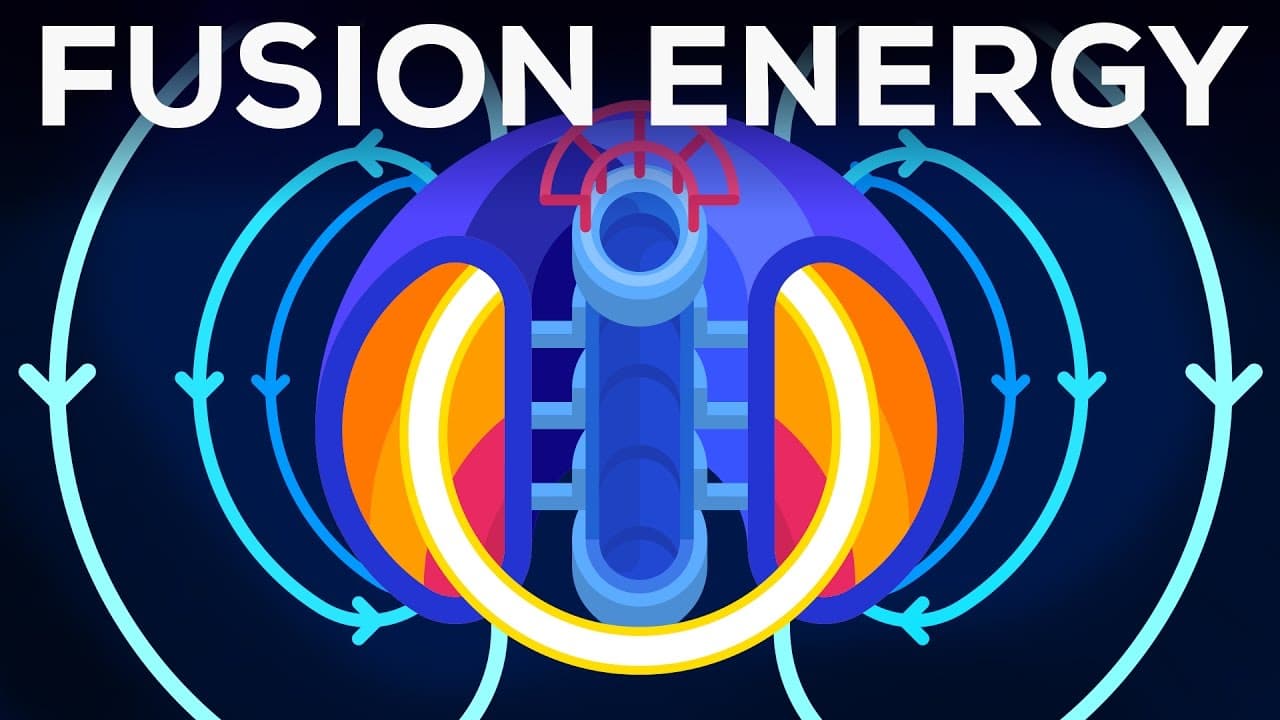
Fusion power has the potential to provide clean, unlimited energy by mimicking the sun's nuclear fusion process. While current technology allows scientists to achieve fusion, it remains expensive and unproven for commercial use, making its viability uncertain. If successful, it could utilize hydrogen isotopes from seawater and lunar Helium-3, but high costs pose significant challenges.
Transcript
The fundamental currency of our universe is energy. It lights our homes, grows our food, powers our computers. We can get it lots of ways: Burning fossil fuels, splitting atoms, or sunlight striking photovoltaics. But there's a downside to everything Fossil fuels are extremely toxic, Nuclear waste is... well, nuclear waste, And, there are not enoug... Read More
Key Insights
- 😎 Fusion power replicates the sun's nuclear fusion process to generate clean, unlimited energy on Earth.
- 🏑 Current fusion experiments involve complex technologies like magnetic fields and powerful lasers to achieve fusion reactions.
- 🌊 Hydrogen isotopes in sea water serve as potential fuel sources for fusion reactors, with Helium-3 from the moon as a valuable alternative.
- 🤳 Fusion reactors are considered safer than traditional nuclear plants due to their self-limiting nature.
- ✋ Despite the promise of unlimited clean energy, the high cost and unproven nature of fusion technology present significant challenges.
- ✊ Investing in fusion power poses a significant financial gamble, raising questions about its commercial viability.
- 👍 Consideration of other proven clean energy sources may compete with the development of fusion technology.
Install to Summarize YouTube Videos and Get Transcripts
Explore YouTube Video Summarizer or Get YouTube Transcript Extractor
Questions & Answers
Q: How does fusion power work?
Fusion power replicates the sun's process by merging nuclei at extremely high temperatures, resulting in energy release that can be harnessed for power generation.
Q: What are the current methods used for achieving fusion on Earth?
Scientists utilize magnetic fields in confinement reactors and powerful lasers in inertial confinement to reach the extreme temperatures required for fusion reactions.
Q: What are the potential fuel sources for fusion reactors?
Hydrogen isotopes like Deuterium and Tritium, found in abundance in sea water, are the primary fuel sources, with the possibility of using Helium-3 mined from the moon.
Q: What are the main challenges and drawbacks of fusion power?
The main challenges include the high cost of developing fusion technology, uncertainty about commercial viability, and the need to address potential environmental risks associated with radioactive fuel.
Summary & Key Takeaways
-
Fusion power, mimicking the sun's process, generates energy from merging nuclei, hoped to be harnessed in fusion reactors on Earth.
-
Current fusion experiments involve magnetic fields and lasers to create the extreme temperatures needed for fusion reactions.
-
The potential of fusion power lies in its efficiency and use of hydrogen isotopes as fuel, with the moon's Helium-3 deposits being a possible solution for rare isotopes.
Read in Other Languages (beta)
Share This Summary 📚
Summarize YouTube Videos and Get Video Transcripts with 1-Click
Try YouTube Summary with ChatGPT & Claude or YouTube Transcript Generator
Explore More Summaries from Kurzgesagt – In a Nutshell 📚





Summarize YouTube Videos and Get Video Transcripts with 1-Click
Try YouTube Summary with ChatGPT & Claude or YouTube Transcript Generator