How to Create an Electron Beam in Air with DIY Apparatus
TL;DR
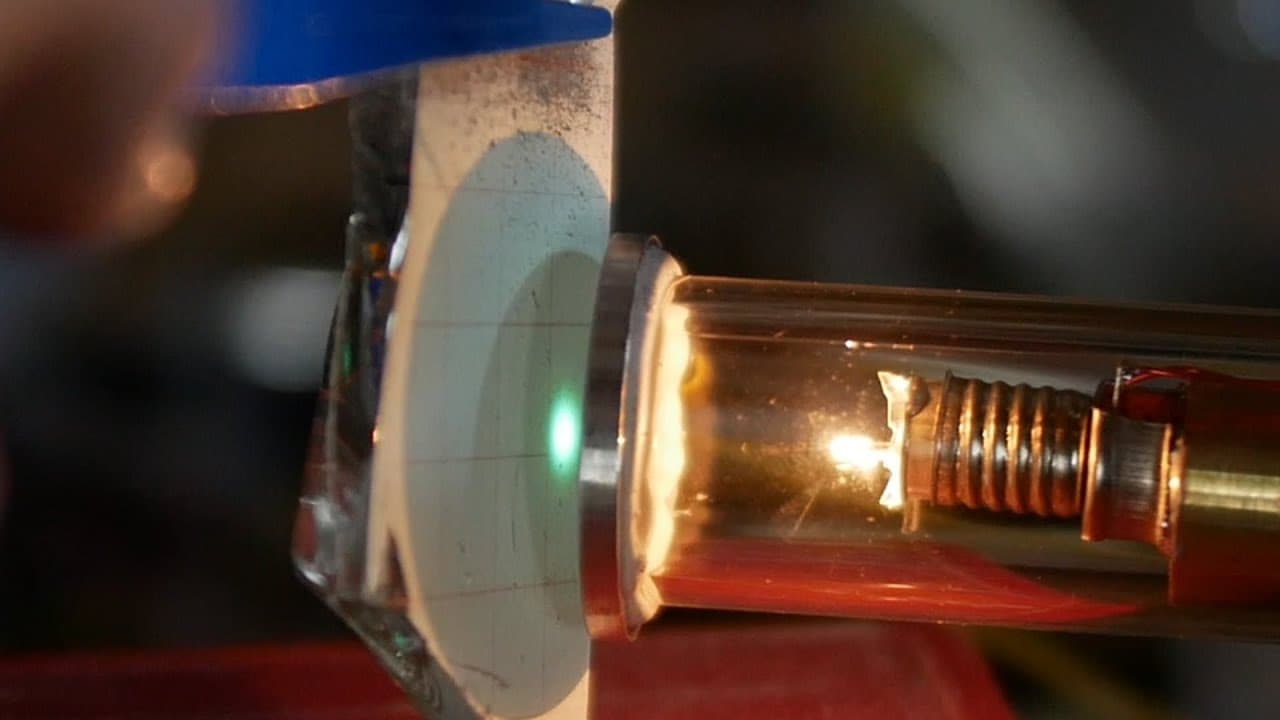
To create an electron beam in air, you'll need a vacuum setup with a glass tube, aluminum plate, and a filament to generate electrons. Special apertures, only 100 nanometers thick, allow these electrons to pass while maintaining a vacuum, enabling applications like sterilizing medical instruments and curing materials without the hazards of radioactive sources.
Transcript
today on applied science i want to show you one of the coolest things i've seen in a long time with this apparatus it can accelerate electrons and shoot them out through a special aperture into air and we can see the beam there and then also we can put things in front of it like a phosphor screen this one came out of an oscilloscope and actually se... Read More
Key Insights
- 😁 Electron beam apparatus consists of a glass tube, aluminum plate, and filament for electron generation.
- 🤔 Special apertures, 100 nanometers thin, enable electron passage while maintaining vacuum integrity.
- 😁 Penetration depth of electron beams varies based on material density, beam energy, and thickness.
- 😁 Industrial applications of electron beams include sterilizing medical instruments, cross-linking materials, and curing paints.
- 😁 Electron beams provide controllable, safe radiation for various industrial processes.
- 😁 Explore experiments with electron beams on materials like glow powders and calcite for unique effects.
- 😁 Electron beam application in cancer treatments allows precise, limited-depth radiation therapy.
Install to Summarize YouTube Videos and Get Transcripts
Explore YouTube Video Summarizer or Get YouTube Transcript Extractor
Questions & Answers
Q: How is the electron beam apparatus constructed?
The apparatus consists of a glass tube with a filament inserted for electron generation, an aluminum plate with a special aperture, and a high-quality epoxy for sealing.
Q: What is the special aperture used in the apparatus?
The special aperture, 100 nanometers thick, allows electrons to pass through while maintaining vacuum integrity, ensuring a stable electron beam in the air.
Q: How are materials selected for electron beam penetration?
Material density, beam energy, and thickness determine penetration depth. Thicker materials like water limit penetration, while thinner materials like silicon nitride are more penetrable.
Q: What are some industrial applications of electron beams?
Electron beams are used for sterilizing medical instruments, cross-linking PVC insulation, manufacturing heat shrink tubing, and curing paints, offering safe and controlled radiation processes.
Summary & Key Takeaways
-
Create an electron beam in the air with a special apparatus.
-
Understand the components and construction of the apparatus, including vacuum setup.
-
Explore industrial applications and experiments using the electron beam.
Read in Other Languages (beta)
Share This Summary 📚
Summarize YouTube Videos and Get Video Transcripts with 1-Click
Try YouTube Summary with ChatGPT & Claude or YouTube Transcript Generator
Explore More Summaries from Applied Science 📚



Summarize YouTube Videos and Get Video Transcripts with 1-Click
Try YouTube Summary with ChatGPT & Claude or YouTube Transcript Generator