How to manage to-do lists without overwhelm?
TL;DR
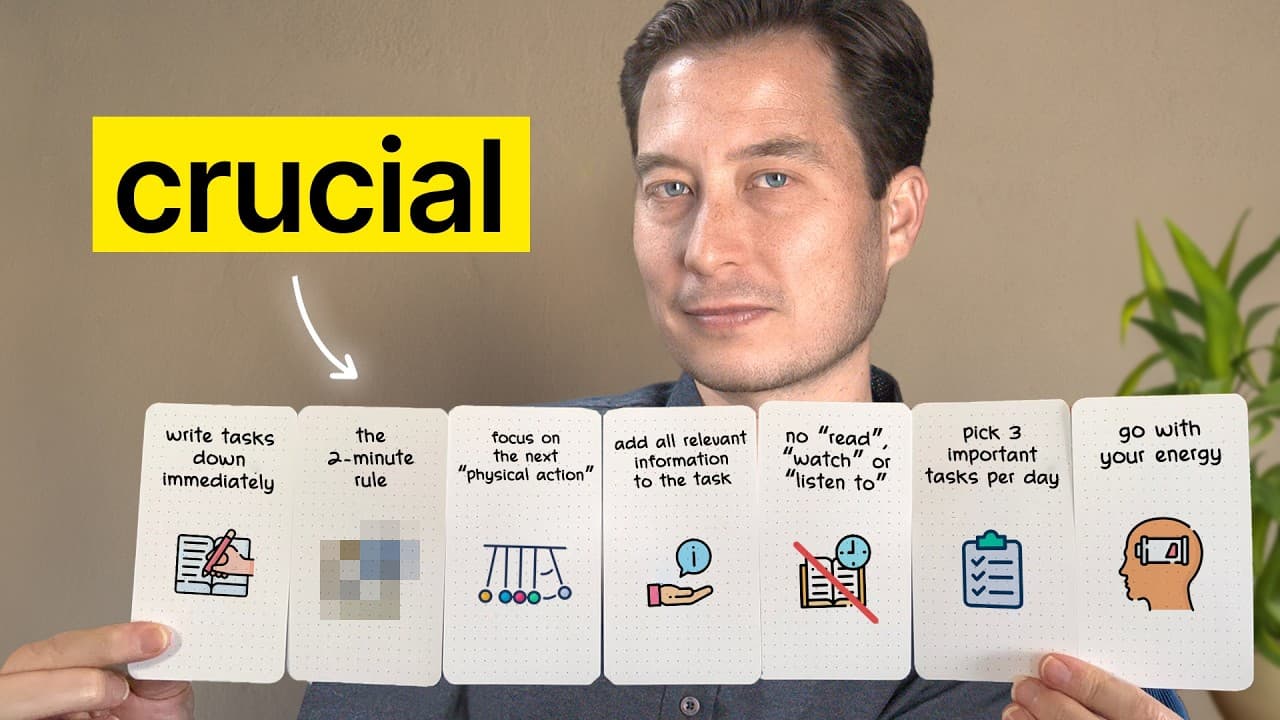
Capture every task immediately so nothing slips through the cracks, then apply the two-minute rule to keep small tasks from piling up. Write clear, action oriented next steps and include all essential details in the task. Limit daily focus to three key tasks and align work with your energy levels for better flow.
Transcript
today I'm sharing seven rules I follow when it comes to my task management stay until the end for a surprisingly powerful bonus tip that will help a lot with to-do list overwhelm write tasks down immediately this happens to me all the time I'm taking out the trash walking the dog playing with the kids or whatever and a to-do pops into my head somet... Read More
Key Insights
- Task capture should be immediate to prevent mental clutter.
- The two minute rule prevents small tasks from overwhelming the list.
- Use specific action verbs to improve task clarity and execution.
- Include all critical information in each task to avoid searching for context.
- Content consumption should be routed to read later rather than added to the to do list.
- Limit daily focus to three tasks to maintain realism and momentum.
- Schedule according to energy levels, reserving deep work for peak energy.
- Adopt a mindset that many tasks won’t be done, reducing guilt and increasing intentionality.
Install to Summarize YouTube Videos and Get Transcripts
Explore YouTube Video Summarizer or Get YouTube Transcript Extractor
Questions & Answers
Q: How to start managing to do lists without getting overwhelmed?
Start by capturing every task as soon as it appears, using your mobile device or smartwatch to minimize friction. This keeps your inbox from filling up with mental clutter and ensures you can address items later with clear context. The approach creates momentum from small wins, which helps sustain long term productivity.
Q: What is the two minute rule and why does it matter?
The two minute rule says if a task takes less than two minutes, do it now rather than adding it to your list. This prevents tiny tasks from accumulating, frees mental space, and maintains focus on larger, more meaningful work. It creates a quick win that can boost motivation and progress.
Q: How should tasks be phrased on the list for better completion rates?
Tasks should use action verbs like write, schedule, send, look up, find, or call, making the next action super clear and concrete. Avoid vague terms like think about, consider, or figure out. This clarity increases the likelihood that you will complete the task without overthinking.
Q: Why add all relevant information directly to the task?
Each task should carry essential details such as links, phone numbers, emails, or notes in the task itself. This eliminates the need to search through multiple sources and enables instant access when you start working. It streamlines execution and reduces context switching.
Q: Why should content like articles or videos not be on the to do list?
Content consumption is considered optional and should be moved to a read later app instead of the to do list. This prevents a never ending stream of non essential items from cluttering your task manager, allowing you to focus on what truly matters and what fits your priorities.
Q: What is the three task rule and how does it help productivity?
The rule is to pick a maximum of three tasks per day from your full list to complete. This constraint makes the day feel manageable and realistic, reducing overwhelm and increasing the odds of finishing meaningful work. It helps sustain motivation by providing achievable daily goals.
Q: How should energy levels influence task scheduling?
Reserve the most demanding deep work for mornings when energy is highest, and place lighter, easier tasks in the afternoon when energy is lower. Tagging tasks by energy level can help filter and match work with current capacity, improving focus and output.
Q: What is the bonus mindset tip about tasks not getting done?
Accept that many tasks will not be completed and that is okay. Only commitments that reach today’s list become intentions you act on. This reduces guilt, frees cognitive resources, and emphasizes intentional choices about how you spend time and attention.
Summary & Key Takeaways
-
A compact system is built on capturing tasks instantly, keeping the inbox clean, and avoiding cognitive burden by deferring non essential content. The approach includes a two minute rule, adding relevant information, and focusing on the next physical action to ensure progress. The result is reduced overwhelm and clearer daily priorities.
-
A disciplined routine prioritizes only three tasks per day to maintain feasibility and momentum. It also recommends energy aware scheduling, reserving deep work for peak energy times and lighter tasks for lower energy periods. The method reduces procrastination and increases task completion rates.
-
The bonus mindset shifts the user from guilt to selective action, accepting that many tasks won’t be done and that’s okay. Tasks only become real commitments once they reach today’s list. This creates psychological space and a clearer path to meaningful accomplishments.
Read in Other Languages (beta)
Share This Summary 📚
Summarize YouTube Videos and Get Video Transcripts with 1-Click
Try YouTube Summary with ChatGPT & Claude or YouTube Transcript Generator
Explore More Summaries from Tiago Forte 📚




Summarize YouTube Videos and Get Video Transcripts with 1-Click
Try YouTube Summary with ChatGPT & Claude or YouTube Transcript Generator