How to Build a Consumer Electronics Brand
TL;DR
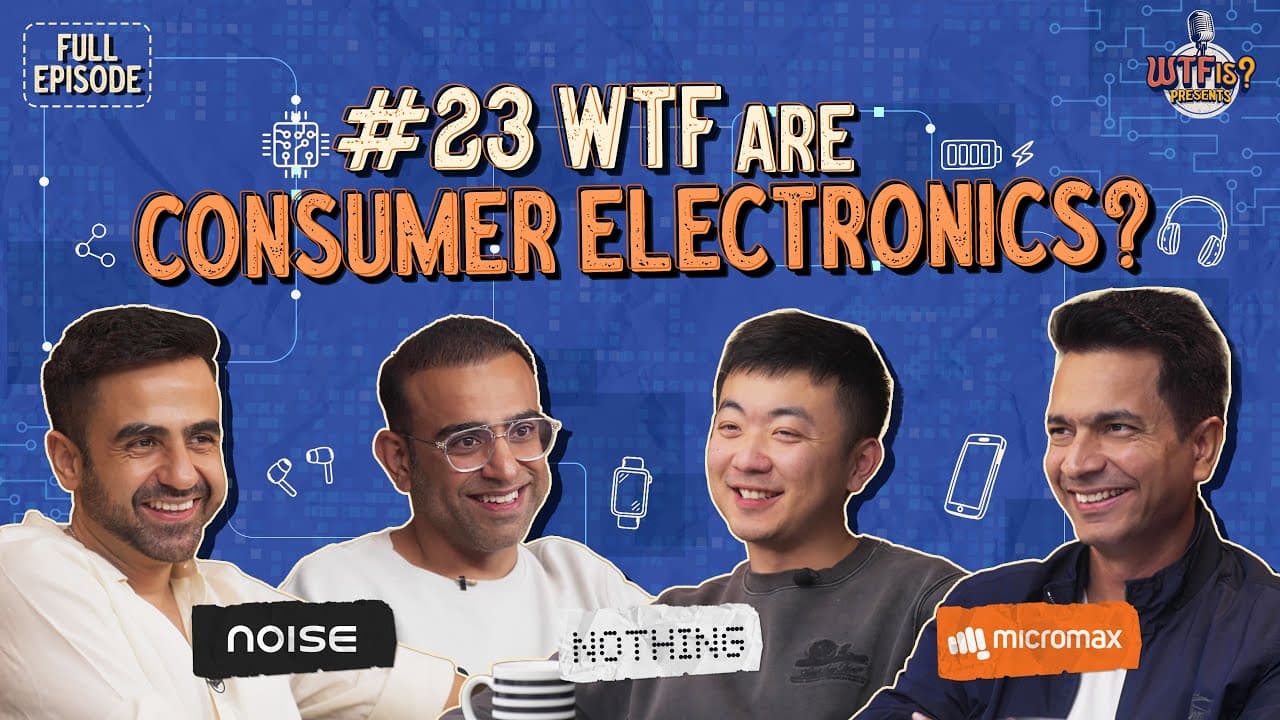
Building a consumer electronics brand requires product obsession, distinctive positioning, supply-chain access, efficient distribution, and a community that proves genuine customer interest. Carl Pei’s path from running a 70,000-member Meizu fan community to joining Meizu, helping launch OnePlus internationally, and co-founding Nothing shows how practical experience and self-created opportunities can substitute for a conventional career route.
Transcript
Today is for any young Indian boy or girl, under the age of 25, who wants to start a consumer electronic brand. Start? Okay, ready? All right. Hi, guys, thank you for coming home and doing this. I think Carl had to travel from further, further away. -Mm-hmm. -Amit and Rahul live closer in Delhi. So maybe we start by speaking about ourselves, giving... Read More
Key Insights
- Carl Pei’s interest in technology was shaped by direct product experiences. Using the first iPod, importing and jailbreaking the first iPhone, and noticing responsive visual details on the first iPad showed him how thoughtful hardware and software could inspire deep customer trust.
- Apple’s commercial strength and its ability to inspire are different measures of success. Pei credits Tim Cook with strong shareholder value creation, but believes the earlier Apple was more effective at motivating young people to pursue careers in technology.
- Online communities can become evidence of entrepreneurial ability. Pei created a Meizu fan community that reached about 70,000 members, shared firmware information, and supported customization, eventually attracting the attention of the company’s professional CEO and producing a job opportunity.
- Y Combinator’s value is strongly connected to branding and founder preparation. Pei suggests its relatively small investment is less important than the credibility attached to participation, the easier path toward subsequent fundraising, and its useful educational content about company building and raising capital.
- Career opportunities can emerge from public work performed before formal employment. Pei’s websites, blogs, advertising activity, and fan community demonstrated business and marketing ability without relying on a completed university degree or a conventional application process.
- Organizational structure can limit a company’s potential even when its products are promising. Pei left Meizu after concluding that placing family members in key roles, including finance and international operations, made it difficult for professional managers to operate and for the business to scale.
- Online distribution can create a meaningful cost advantage in consumer electronics. Xiaomi sold phones online and reduced distribution costs, allowing it to undercut competitors and prompting OPPO to create OnePlus as an online-focused response supported by OPPO’s established supply chain.
- International expansion can begin through a narrowly framed internal proposal. Pei argued that OnePlus could remain focused on competing in China while he independently developed international markets, positioning overseas business as additional revenue rather than a distraction from the original strategy.
Install to Summarize YouTube Videos and Get Transcripts
Explore YouTube Video Summarizer or Get YouTube Transcript Extractor
Questions & Answers
Q: How did Carl Pei become interested in consumer technology?
Carl Pei became interested in consumer technology through hands-on experiences with early Apple products. His first iPod required a FireWire card, installation work, and music management through RealPlayer. He later imported and jailbroke an early iPhone. The first iPad’s interface details, including graphics whose lighting changed when the device tilted, strengthened his admiration for careful product design.
Q: How can an online community create career opportunities?
An online community can demonstrate product knowledge, initiative, communication skills, and the ability to attract users before a person receives a formal role. Carl Pei created a Meizu fan community after discovering its products in 2006. It grew to about 70,000 members and provided firmware and customization information. That work led Meizu’s professional CEO to contact him about international expansion.
Q: Why did Carl Pei leave university and join Meizu?
Carl Pei faced a choice between completing a Y Combinator application and accepting an invitation to help Meizu become more international. He chose the immediate opportunity, did not finish university, and moved to Hong Kong in 2011. His existing familiarity with Meizu and the chance to participate in the early development of an interesting consumer technology company made the role attractive.
Q: Why did Carl Pei leave Meizu after about a year?
Carl Pei left Meizu after realizing that it operated as a family business with family members occupying several key positions. He believed this structure made it difficult to build a very large company and constrained the professional CEO’s ability to do his work. Positions mentioned in the discussion included finance and international operations, both of which affected important business decisions.
Q: Why did Carl Pei choose OPPO instead of Xiaomi?
Carl Pei viewed Xiaomi as a fast-moving, venture-backed company with aggressive, highly capable, results-oriented employees, and he found that environment intimidating. OPPO felt more like a traditional manufacturing culture. He reasoned that joining the less aggressive organization would give him a better chance to stand out and contribute. He ended the Xiaomi interview process after reaching an agreement with OPPO.
Q: Why did OPPO create the OnePlus brand?
OPPO created OnePlus as a response to Xiaomi’s rise in online smartphone sales. Xiaomi’s online model lowered distribution costs and enabled more competitive pricing. OnePlus was intended to operate online while using the supply-chain capabilities OPPO had already developed. The original focus was China, where the new brand could compete directly with Xiaomi’s distribution strategy and market momentum.
Q: How did Carl Pei secure responsibility for OnePlus international markets?
Carl Pei asked to participate when OPPO created OnePlus, but he was initially told that the new brand was intended only for China. He argued that an international operation would not interfere with the China team because he could run it separately. By presenting overseas activity as additional business while the main team retained its domestic focus, he gained the opportunity at age 24.
Q: What does Carl Pei identify as Y Combinator’s main advantage?
Carl Pei identifies Y Combinator’s brand, educational content, founder selection, and fundraising preparation as important advantages. He says the capital itself is relatively small and comes with a meaningful ownership cost. The stronger benefit is credibility: having Y Combinator on a founder’s record can make later funding rounds easier, while its published guidance helps entrepreneurs understand company building and fundraising.
Summary & Key Takeaways
-
Carl Pei’s interest in consumer technology began with Apple products. The first iPod required him to install a FireWire card in his PC, while the first iPhone required overseas purchasing, a contract cancellation, shipping, and jailbreaking. Apple’s attention to small interface details deepened his trust in thoughtful product design.
-
Pei developed business and marketing skills by making websites, building traffic, selling advertising, and running an online Meizu fan community. The community grew to about 70,000 members and covered firmware updates and customization. That visible initiative led Meizu’s professional CEO to invite him to support the company’s international ambitions.
-
After leaving Meizu, Pei chose OPPO over other opportunities because he believed he could contribute more within its manufacturing-oriented culture. OPPO created OnePlus as an online brand to respond to Xiaomi. At age 24, Pei argued that international expansion could add incremental business while the core team remained focused on China.
Read in Other Languages (beta)
Share This Summary 📚
Summarize YouTube Videos and Get Video Transcripts with 1-Click
Try YouTube Summary with ChatGPT & Claude or YouTube Transcript Generator
Explore More Summaries from Nikhil Kamath 📚




Summarize YouTube Videos and Get Video Transcripts with 1-Click
Try YouTube Summary with ChatGPT & Claude or YouTube Transcript Generator