Is Society Prepared for the AI Tsunami?
TL;DR
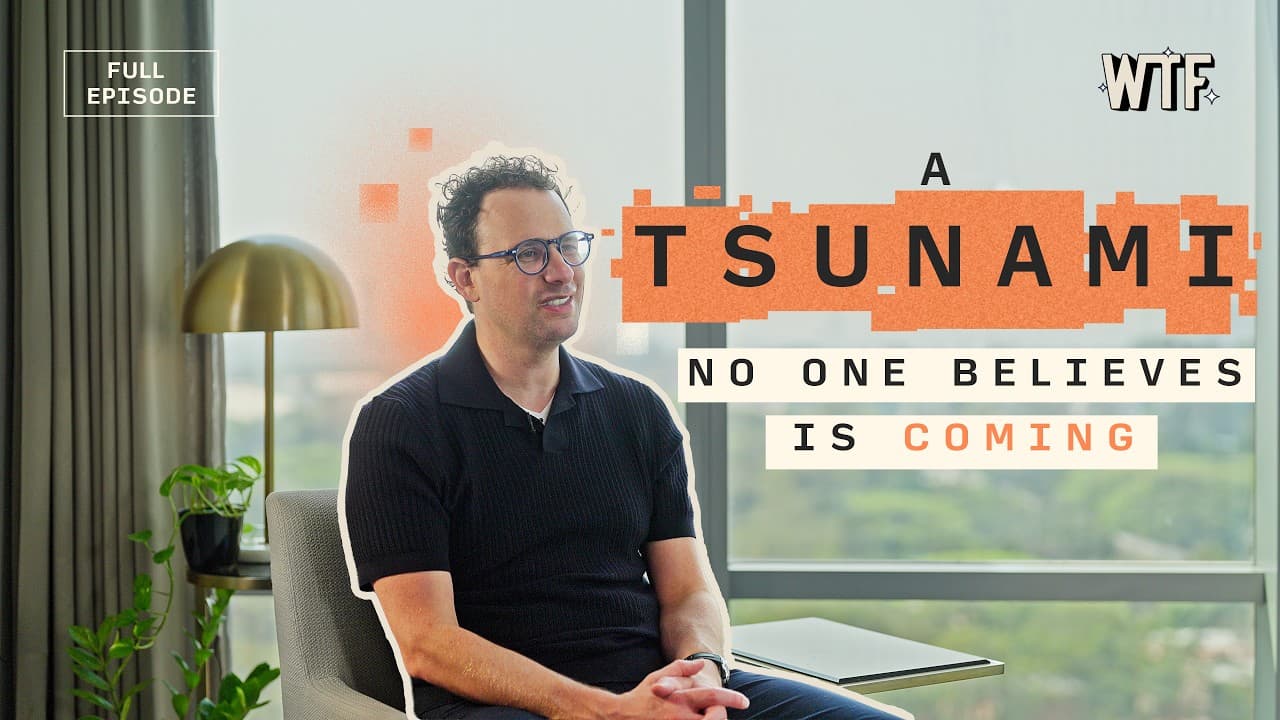
AI is rapidly progressing towards human-level intelligence, yet society remains largely unaware of the impending changes and risks. Dario Amodei, a key figure in AI development, emphasizes the need for proactive regulation and critical thinking to navigate the transformative impact of AI. He argues that while AI can enhance human capabilities, it also poses significant challenges, including potential job displacement and ethical concerns.
Transcript
Okay. [music] Heat. [music] >> [music] [music] >> So I started playing with Claude. It's getting to that point where sometimes it surprises me by how much it [music] knows me. I don't know if that makes sense. It is surprising to me that we are in my view so close to these models reaching the level of human intelligence and yet there doesn't seem t... Read More
Key Insights
- AI models are approaching human-level intelligence, raising significant societal implications.
- Dario Amodei believes in scaling laws, which suggest that increasing model size and data leads to better AI performance.
- Anthropic withheld an AI model release to avoid sparking an arms race, prioritizing safety over commercial interests.
- Amodei argues that critical thinking is essential as AI takes over more cognitive tasks.
- AI's potential to understand users deeply poses both opportunities for assistance and risks of exploitation.
- Amodei sees a role for government and regulation in balancing AI's power and societal impact.
- India is viewed as a partner for AI integration, not just a consumer market, by companies like Anthropic.
- Biotech, particularly areas like peptide-based therapies, is identified as a promising field for AI-driven innovation.
Install to Summarize YouTube Videos and Get Transcripts
Explore YouTube Video Summarizer or Get YouTube Transcript Extractor
Questions & Answers
Q: What are scaling laws in AI?
Scaling laws in AI suggest that as you increase the size of AI models and the amount of data they process, their performance improves significantly. This principle implies that with more computational resources and data, AI models can achieve higher levels of intelligence and capability, potentially reaching or surpassing human-level cognitive tasks.
Q: Why did Anthropic withhold an AI model release?
Anthropic withheld the release of an AI model to avoid triggering an arms race in AI development. The decision was based on concerns that releasing the model prematurely could lead to unsafe advancements and insufficient time to address safety protocols. This move reflects Anthropic's commitment to prioritizing safety and ethical considerations over immediate commercial gains.
Q: How does AI's understanding of users pose risks?
AI's ability to deeply understand users can lead to both positive and negative outcomes. While it can act as a helpful guide, offering personalized assistance and insights, it also poses risks of exploitation and manipulation. If misused, AI could use personal data to influence or take advantage of users, highlighting the need for ethical guidelines and user protections.
Q: What role does Dario Amodei see for government in AI regulation?
Dario Amodei advocates for government involvement in AI regulation to ensure that the technology is developed and deployed safely. He believes that proactive, sensible regulation can help balance the benefits of AI with its potential risks, such as economic disruption and ethical concerns. Amodei emphasizes that government oversight is crucial for maintaining a fair and equitable impact of AI on society.
Q: How does Anthropic view India's role in AI?
Anthropic sees India not just as a consumer market but as a partner in AI integration. The company aims to collaborate with Indian firms to enhance their capabilities using AI, rather than merely selling products. This partnership approach is intended to leverage local expertise and improve industry-specific applications, fostering mutual growth and innovation.
Q: What industries could AI disrupt according to Dario Amodei?
Dario Amodei identifies biotech, particularly areas like peptide-based therapies, as a promising field for AI-driven innovation. He suggests that AI will significantly impact industries by enhancing capabilities and enabling new discoveries. However, Amodei also warns of potential job displacement and stresses the importance of critical thinking and adaptability in navigating these changes.
Q: What is the importance of critical thinking in the age of AI?
Critical thinking is crucial as AI takes over more cognitive tasks, potentially leading to a deskilling of human workers. Dario Amodei emphasizes that maintaining and cultivating critical thinking skills will be essential for individuals to navigate a world increasingly influenced by AI. These skills will help people assess information, make informed decisions, and avoid being misled by AI-generated content.
Q: Why is biotech considered a promising field for AI?
Biotech is seen as a promising field for AI due to its potential for significant advancements in medical and therapeutic applications. AI can enhance drug discovery, optimize treatment protocols, and facilitate personalized medicine. Dario Amodei highlights the potential for AI to drive a renaissance in biotech, particularly in areas like peptide-based therapies, where AI can aid in designing and optimizing new treatments.
Summary & Key Takeaways
-
AI is nearing human-level intelligence, but society lacks awareness of the associated risks and changes. Dario Amodei highlights the importance of scaling laws and the need for responsible AI deployment. He stresses the role of critical thinking as AI advances and calls for government regulation to ensure AI benefits society.
-
Anthropic, co-founded by Amodei, withheld an AI model release to prevent an arms race, showcasing a commitment to safety. The company views India as a crucial partner in AI integration, aiming to enhance local industries rather than merely viewing the country as a market.
-
Amodei identifies biotech, especially peptide-based therapies, as a promising area for AI-driven growth. He emphasizes the potential for AI to revolutionize industries while warning of the need for proactive measures to mitigate risks, including job displacement and ethical concerns.
Read in Other Languages (beta)
Share This Summary 📚
Summarize YouTube Videos and Get Video Transcripts with 1-Click
Try YouTube Summary with ChatGPT & Claude or YouTube Transcript Generator
Explore More Summaries from Nikhil Kamath 📚






Summarize YouTube Videos and Get Video Transcripts with 1-Click
Try YouTube Summary with ChatGPT & Claude or YouTube Transcript Generator