How Is India’s Beauty and Skincare Market Growing?
TL;DR
India’s beauty and skincare growth is being fueled by strong products, authentic founder storytelling, established communities, influencer marketing, and omnichannel distribution. Diipa Khosla’s experience shows how a creator audience can accelerate launch momentum, but sustained growth still depends on product performance, focused hero products, clear market positioning, and the grit to build across India and international markets.
Transcript
-Haircare as personal care. -You're talking personal care haircare. -We play in the other haircare. -[Nikhil] Haircare is seven billion? -Skincare is? -Haircare is 7-8 billion. -Of which majority is oil, by the way. -You're confusing us! You're talking about haircare or personal care haircare? No, I want to know the break-up of skincare, makeup, ha... Read More
Key Insights
- India’s beauty market is divided across skincare, makeup, haircare, fragrance, salons, and other personal care categories. The discussion highlights that understanding each category’s economics and consumer behavior is necessary because growth drivers, pricing, distribution needs, and established habits differ significantly between segments.
- Haircare is described as a 7–8 billion market, with oil accounting for the majority. This makes hair oil both a large existing habit and a difficult category, since new brands must distinguish themselves within a market where consumers already recognize the product format and have established alternatives.
- A focused hero product can anchor a young beauty brand. Indē wild’s Champi Hair Oil is described as contributing roughly 50–55% of sales, showing how one culturally resonant product can become the primary commercial engine while also introducing customers to the broader brand.
- Founder storytelling is a meaningful component of beauty brand development. Diipa Khosla connected Champi Hair Oil to a familiar Indian haircare practice, while her existing credibility in beauty helped communicate the product to consumers across different markets without separating the founder’s identity from the brand narrative.
- An established audience can provide powerful initial distribution. Khosla calls her community of 2.5 million a trampoline jump for indē wild, meaning it accelerated awareness and launch momentum. She also stresses that an audience is not sufficient by itself, because continued success depends on the underlying product.
- Product simplification was central to indē wild’s first skincare launches. Its AM serum was presented as combining 12 serums in one, while the PM serum combined eight in one. The positioning offered customers an alternative to a complicated 12-step routine through products described as skincare basics.
- International ambition was built into indē wild’s early strategy. The company entered the US, UK, and India during its first nine months, using Khosla’s globally developed beauty community as an advantage. The discussion nevertheless treats international expansion as a broader challenge for Indian brands, not an automatic outcome.
- India’s beauty industry requires more than online attention. The episode’s topics connect community building and influencer marketing with sampling, physical distribution, minis, quick commerce, salons, and omnichannel retail, indicating that discovery, trial, availability, and repeat use must work together to support lasting growth.
Install to Summarize YouTube Videos and Get Transcripts
Explore YouTube Video Summarizer or Get YouTube Transcript Extractor
Questions & Answers
Q: What is fueling India’s beauty and skincare growth?
India’s beauty and skincare growth is linked to product innovation, founder storytelling, community building, influencer marketing, and wider distribution. The discussion also identifies fragrance, salons, quick commerce, Tier 2 markets, social selling, technology, and omnichannel retail as important areas. Founders must connect cultural familiarity and strong narratives with products that perform and remain accessible across relevant purchasing channels.
Q: How did Diipa Khosla build indē wild?
Diipa Khosla built indē wild after developing a global beauty career and an online community of 2.5 million people. She had previously worked on major beauty partnerships and became the face of brands including Maybelline and Kerastase. During the pandemic, she sought a new challenge and moved into business, launching indē wild three and a half years before the discussion.
Q: How did Diipa Khosla’s creator career help her brand?
Diipa Khosla says her existing community of 2.5 million provided a trampoline jump for indē wild. Her beauty-focused content background gave the company early visibility, credibility, and access to consumers across markets. However, she explicitly distinguishes that initial boost from long-term success, emphasizing that a creator audience is not everything and that the product itself still matters.
Q: What were indē wild’s first skincare products?
Indē wild’s first products were its AM and PM serums. Khosla describes the AM product as combining 12 serums in one and the PM product as combining eight serums in one. Their purpose was to reduce the need for a complicated 12-step routine, serving instead as dependable skincare basics comparable to a T-shirt and jeans.
Q: Why did indē wild’s Champi Hair Oil become important?
Champi Hair Oil became indē wild’s major hero product and is described as accounting for approximately 50–55% of its sales. It built on the culturally familiar practice of champi while using strong storytelling to make the format relevant to the brand’s audience. Its success demonstrates how a single focused product can drive recognition, sales, and broader brand discovery.
Q: Why is community important when building a beauty brand?
Community can accelerate awareness, provide an initial customer base, and give founders direct credibility in a crowded beauty market. Khosla’s community was built authentically over time through her work in the beauty space, rather than appearing only when indē wild launched. The discussion also makes clear that community is an advantage, not a replacement for effective products, positioning, and distribution.
Q: How did indē wild approach international expansion?
Indē wild launched in the US, UK, and India within its first nine months. This approach reflected Khosla’s international background and the global reach of the audience she had built through content creation and beauty partnerships. The brand’s experience suggests that a founder’s cross-market credibility can accelerate entry, although products and narratives must still connect with customers in each market.
Q: Why does omnichannel distribution matter in beauty?
The discussion treats omnichannel retail as an important part of cracking the beauty and personal care industry. Its listed topics connect online community and influencer discovery with sampling, minis, salons, social selling, quick commerce, and broader distribution. Together, these channels help consumers encounter a product, try it in an accessible format, purchase it conveniently, and potentially become repeat customers.
Summary & Key Takeaways
-
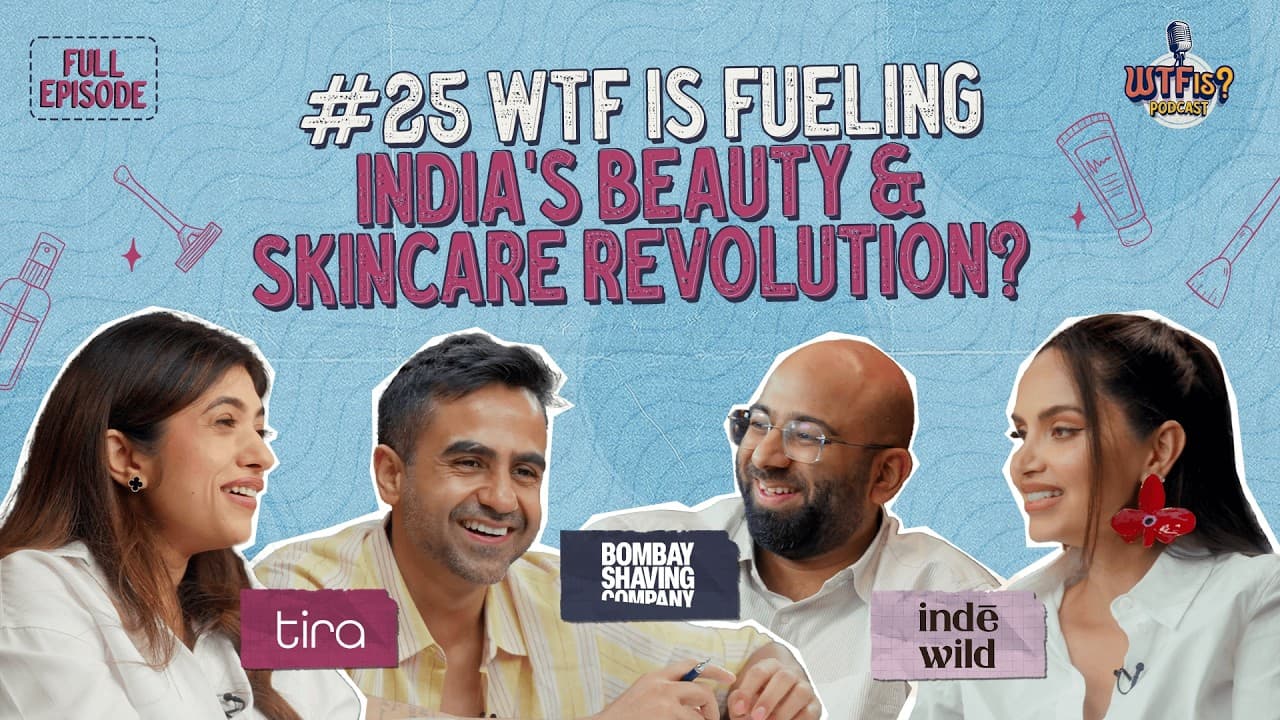
The discussion brings together leaders from Tira, Bombay Shaving Company, and indē wild to examine India’s expanding beauty and personal care market. Their conversation covers market categories, valuations, salons, fragrance, distribution, influencer marketing, sustainability, technology, celebrity brands, quick commerce, and the prospects for Indian beauty companies seeking international customers.
-
Diipa Khosla traces her path from Delhi and boarding school in Ooty to Amsterdam, law school in London, global content creation, and entrepreneurship. She describes recognizing Instagram’s potential around 2015, building a community of 2.5 million, and using that audience as an initial launch advantage for indē wild.
-
Indē wild began with AM and PM serums designed to simplify skincare, then found a major hero product in Champi Hair Oil. The brand launched across the US, UK, and India within its first nine months. Its story illustrates how cultural narratives, founder credibility, product focus, and community can reinforce one another.
Read in Other Languages (beta)
Share This Summary 📚
Summarize YouTube Videos and Get Video Transcripts with 1-Click
Try YouTube Summary with ChatGPT & Claude or YouTube Transcript Generator
Explore More Summaries from Nikhil Kamath 📚




Summarize YouTube Videos and Get Video Transcripts with 1-Click
Try YouTube Summary with ChatGPT & Claude or YouTube Transcript Generator