Are College Degrees Becoming Obsolete with AI?
TL;DR
AI is advancing rapidly, with predictions that it could handle 80% of jobs in the next few years. Young people should focus on adaptability and learning how to learn, rather than specializing in a single skill. The future will demand flexibility and the ability to leverage AI effectively.
Transcript
[music playing] You seem like a very certain person. You take the contrarian opinion in a very certain manner. Almost certainly, with no doubt, there isn't a job where AI won't be able to do 80% of all jobs. And that's what today's 20 or 22-year-old has to take for granted. Hi, Vinod. Thank you for doing this. For our audience in India, which are l... Read More
Key Insights
- AI is projected to perform 80% of all jobs in the near future, revolutionizing the job market.
- Adaptability and the ability to learn new skills quickly will be crucial for future success.
- Specialization in a single field may become less valuable as AI capabilities expand.
- AI has the potential to offer free, high-quality education and healthcare globally.
- The economic landscape may shift towards deflation as AI reduces the cost of many services.
- Strategic thinking and long-term vision are key traits for successful entrepreneurs.
- Electric vehicles are expected to dominate land transportation, despite current slow adoption.
- Blockchain technology holds promise for secure, decentralized applications beyond cryptocurrencies.
Install to Summarize YouTube Videos and Get Transcripts
Explore YouTube Video Summarizer or Get YouTube Transcript Extractor
Questions & Answers
Q: How will AI impact job availability in the future?
AI is expected to handle 80% of all jobs in the near future, significantly altering the job market landscape. This shift will require individuals to focus on adaptability and continuous learning, as traditional specialization in a single field may become less valuable. The ability to leverage AI effectively will be crucial for future employment and success.
Q: What skills will be important in an AI-driven world?
In an AI-driven world, adaptability and the ability to learn new skills quickly will be essential. Individuals should focus on developing a broad knowledge base and the capacity to think from first principles. Being able to use AI tools effectively and staying flexible in the face of rapid technological changes will be key to thriving in the future job market.
Q: Will education and healthcare become free due to AI?
AI has the potential to provide free, high-quality education and healthcare globally. As AI systems advance, they could offer personalized tutoring and medical advice at a fraction of the current cost, making these services accessible to everyone. This could lead to a deflationary economy where essential services are available at minimal or no cost.
Q: What role will electric vehicles play in future transportation?
Electric vehicles are expected to dominate land transportation in the future, despite current slow adoption rates. The transition to electric mobility is seen as inevitable, driven by technological advancements and environmental considerations. This shift will require overcoming incumbent resistance and scaling up infrastructure to support widespread EV adoption.
Q: How can entrepreneurs succeed in a rapidly changing world?
Successful entrepreneurs in a rapidly changing world will need to focus on strategic thinking and long-term vision. They should leverage AI to enhance their offerings and stay competitive. Building a strong team, selecting the right investors, and maintaining the ability to adapt quickly to new trends and technologies will be crucial for entrepreneurial success.
Q: What are the potential uses of blockchain technology?
Blockchain technology holds promise for secure, decentralized applications beyond cryptocurrencies. It can be used for creating stablecoins, software contracts, and distributed networks. These applications can provide transparency, efficiency, and security in various sectors, including finance, supply chain, and telecommunications, offering significant advantages over traditional centralized systems.
Q: Will AI lead to a deflationary economy?
AI could lead to a deflationary economy by significantly reducing the cost of many services. As AI systems handle tasks more efficiently, the production of goods and services could increase, driving prices down. This deflationary effect would make essential services like education and healthcare more accessible, potentially improving the quality of life for many people.
Q: How should young people prepare for the future job market?
Young people should prepare for the future job market by focusing on adaptability and learning how to learn. They should develop a broad knowledge base and the ability to quickly acquire new skills. Emphasizing flexibility, first principles thinking, and the effective use of AI tools will be crucial for navigating the uncertainties of the future job landscape.
Summary & Key Takeaways
-
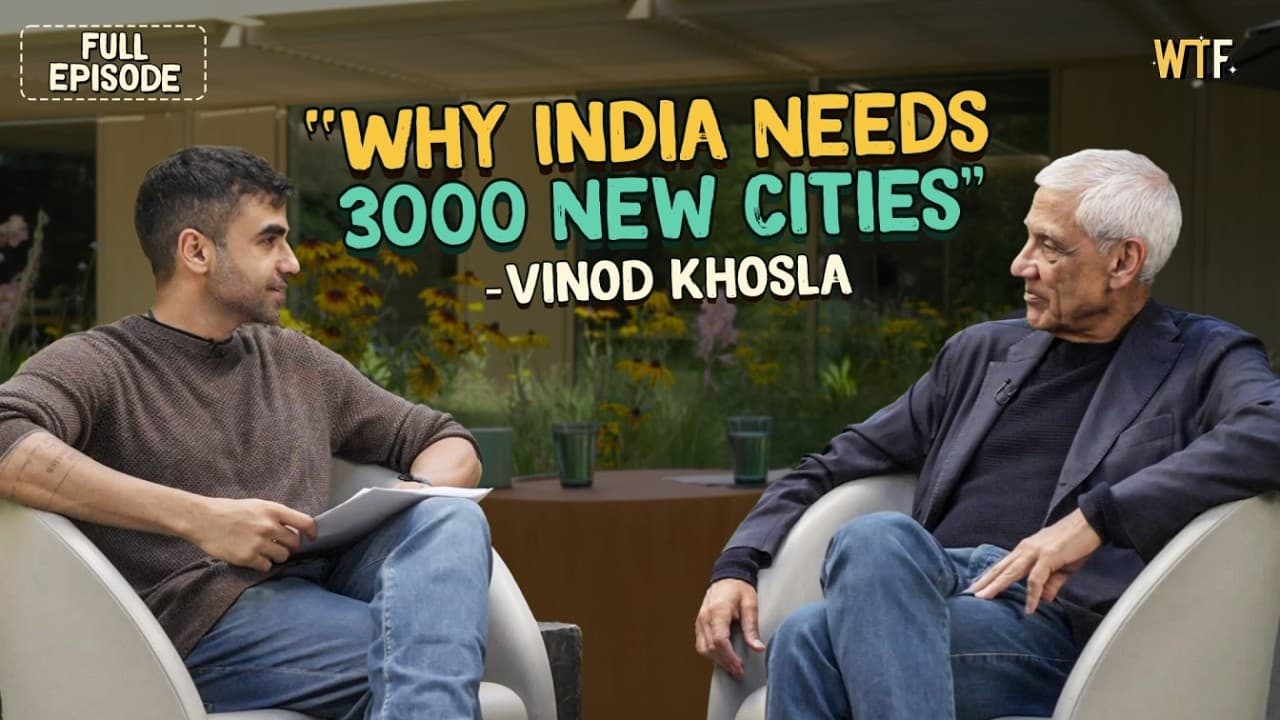
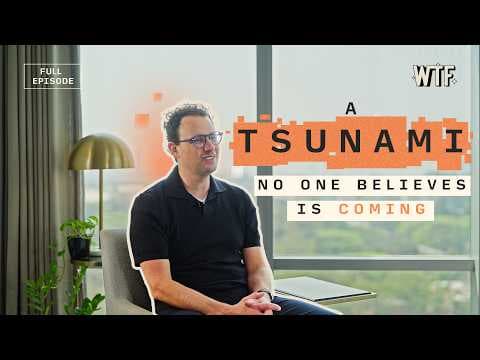
Vinod Khosla discusses the rapid advancement of AI and its potential to handle 80% of jobs in the near future. He emphasizes the importance of adaptability and learning agility for young people entering the workforce. Khosla predicts a future where AI provides free education and healthcare, leading to a deflationary economy.
-
The conversation explores the possibility of electric vehicles becoming the norm and the role of blockchain in secure, decentralized applications. Khosla advises entrepreneurs to focus on strategic thinking and long-term goals, highlighting the importance of leveraging AI to stay competitive.
-
Khosla argues that specialization may become less important as AI capabilities grow, and he envisions a world where AI democratizes access to high-quality services. He stresses the need for flexibility and first principles thinking to navigate the uncertainties of the future job market.
Read in Other Languages (beta)
Share This Summary 📚
Summarize YouTube Videos and Get Video Transcripts with 1-Click
Try YouTube Summary with ChatGPT & Claude or YouTube Transcript Generator
Explore More Summaries from Nikhil Kamath 📚


Summarize YouTube Videos and Get Video Transcripts with 1-Click
Try YouTube Summary with ChatGPT & Claude or YouTube Transcript Generator