Why Do McDonald’s and Burger King Struggle in Vietnam
TL;DR
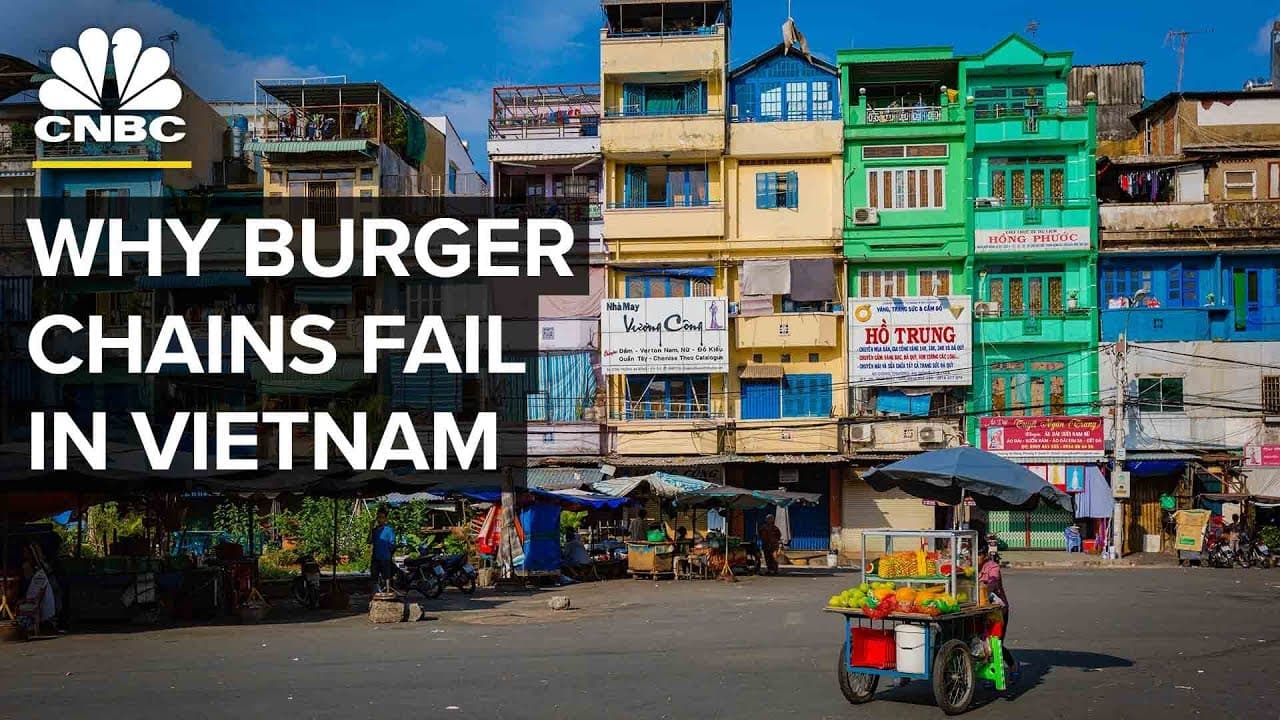
McDonald’s and Burger King fail to win in Vietnam because local street vendors offer cheaper, faster options and Vietnamese taste preferences favor sharing meals. International chains underestimated local competition and high prices while Vietnamese diners prefer street foods and family style serving, impeding mass adoption despite initial hype.
Transcript
Fast-food restaurants dominate markets all over the world Burger King has more than 16,000 locations in over 100 nations And McDonald's has over 36,000 There's one in a decommissioned airplane in New Zealand And there's even one in Vatican City Fast food is a more than half a trillion a year business But there is one place where these chains can't ... Read More
Key Insights
- McDonald’s and Burger King entered Vietnam with aggressive expansion plans but opened far fewer stores than projected.
- Vietnamese consumers rely heavily on local vendors who offer cheaper, more accessible meals than fast food chains.
- The Vietnamese market prefers street food and limited sharing meals, reducing appeal of typical burger servings.
- Prices for McDonald’s and Burger King are seen as higher compared to local food options, hindering adoption.
- KFC and Pizza Hut have higher relative market presence by better aligning with local tastes and pricing.
- Historical diplomatic ties influence market dynamics, with lingering sensitivities affecting foreign brands.
- Vietnam has a large number of local food outlets, making fast food chains a small portion of the market share.
- Menu adaptation alone is not enough; deeper cultural and economic alignment is required for growth.
Install to Summarize YouTube Videos and Get Transcripts
Explore YouTube Video Summarizer or Get YouTube Transcript Extractor
Questions & Answers
Q: How many McDonald’s stores were open in Vietnam by 2018 according to the transcript?
The transcript states that McDonald’s launched in 2014 and had only 17 stores in Vietnam by 2018. This illustrates the slower-than-expected expansion compared to its global footprint. The small store count reflects market challenges beyond hype, including competition from local vendors and pricing sensitivity among Vietnamese consumers.
Q: What is the approximate number of Burger King stores in Vietnam as of 2018?
According to the transcript, Burger King had 13 stores in Vietnam as of 2018. This mirrors the limited footprint despite earlier investment and development plans, and underscores challenges in achieving mass-market penetration in a market dense with local food outlets and price-conscious consumers.
Q: Why do local Vietnamese street vendors impact fast food chains more than in some other markets?
Vietnamese customers have easy access to street stalls and local vendors offering food at lower prices, with 78 percent of food spend going to local vendors per the transcript. This abundance of cheaper, quick, and familiar options makes it hard for international chains to justify higher prices and compete for casual meals.
Q: What serving style in Vietnam reduces the appeal of burgers for some diners?
The transcript notes that Vietnamese eating culture often favors family-style serving rather than individual meals, which makes burgers less compatible with local dining habits. This cultural preference reduces the appeal of purchasing burgers meant for single servings compared to shared meals from local vendors.
Q: How does price affect the appeal of fast food in Vietnam according to the transcript?
Prices at McDonald’s and Burger King are considered premium relative to local vendors. Because street food can feed more people per dollar, many Vietnamese customers opt for cheaper meals, limiting the market appeal of fast food chains and hindering rapid growth.
Q: What adaptation strategies did KFC use to succeed in Vietnam, based on the transcript?
KFC adjusted its menu to better fit local tastes, introducing items like chicken rice and a shrimp burger. This demonstrates that successful foreign brands in Vietnam often win by tailoring offerings to reflect local culinary preferences, which helps justify pricing and expands appeal beyond standard Western menus.
Q: What is a major driver behind the slow growth of McDonald’s and Burger King in Vietnam?
A major driver is the competitive landscape created by abundant local options and the perceived value of cheaper, familiar Vietnamese foods. Even with menu tweaks, the fundamental economics and cultural dining patterns favor street vendors and family-style meals, slowing the pace of expansion for international chains.
Q: What does the video suggest is necessary for foreign fast food brands to grow in Vietnam beyond menu changes?
The video implies that beyond menu customization, brands must deeply align with local eating culture, pricing, and competitive dynamics. This includes embracing local foods, family dining norms, and price points that compete with street vendors, as well as strategic market scaling across cities to gain traction.
Summary & Key Takeaways
-
Vietnamian fast food chains face stiff competition from local street vendors in top cities and struggle to compete on price and serving style. International brands attempted taste adaptations like local menu items but market dynamics favor affordability and crowding by street food economy. The result is slow expansion and limited store counts.
-
KFC and Pizza Hut have fared better by aligning with local tastes and price points, while McDonald’s and Burger King remain minority players. The Vietnamese market requires more than menu tweaks to catalyze rapid growth and scale across cities.
-
Overall, the Vietnamese market values cost effectiveness and local flavors, making large foreign fast food chains struggle to achieve mass adoption despite global presence.
Read in Other Languages (beta)
Share This Summary 📚
Summarize YouTube Videos and Get Video Transcripts with 1-Click
Try YouTube Summary with ChatGPT & Claude or YouTube Transcript Generator
Explore More Summaries from CNBC 📚


Summarize YouTube Videos and Get Video Transcripts with 1-Click
Try YouTube Summary with ChatGPT & Claude or YouTube Transcript Generator