How to Build and Sell Software with AI Without Coding
TL;DR
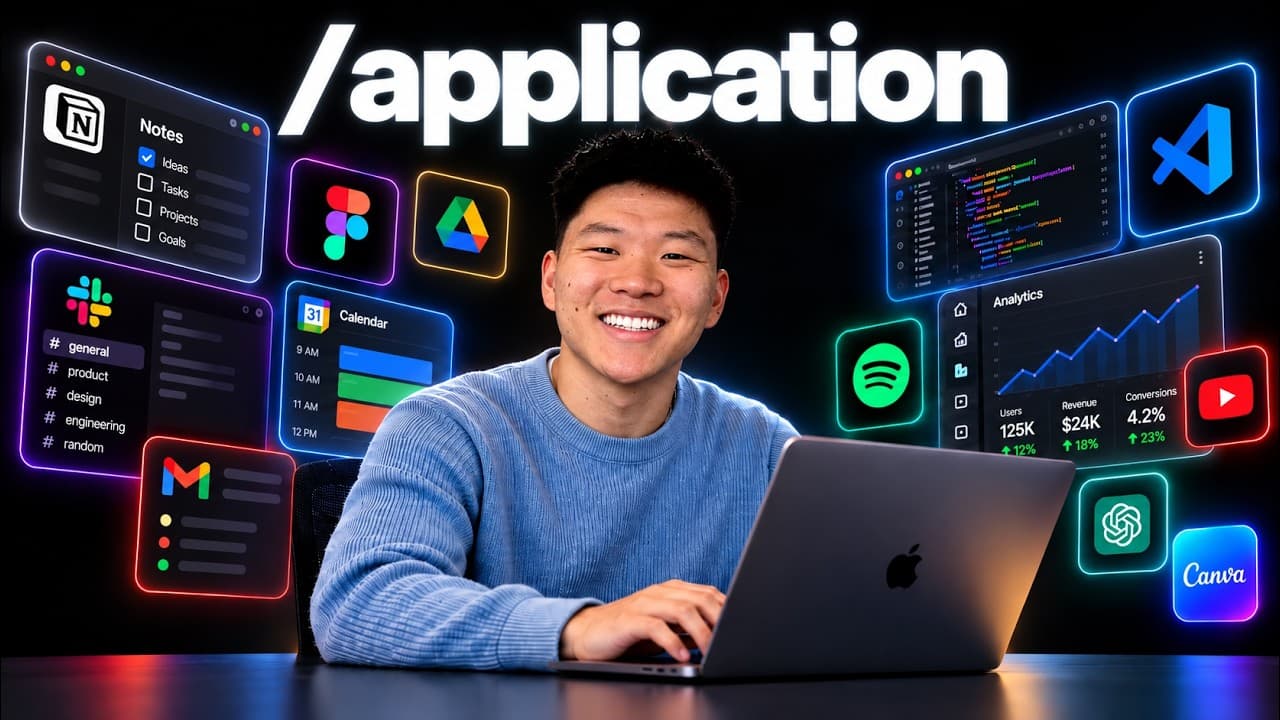
AI tools let non coders ship production ready apps with prompts. You can move about 100x faster and own end to end features from backend to frontend using a generalist approach. Start with fundamentals, test rigorously, and plan for data privacy and security as you scale.
Transcript
So you've been coding in Python for over 10 years now. How different do you view the software engineering space now that we have all these AI tools? >> I don't write a single line of code anymore. Not a single. So everything goes through codecs or through cloud code. Think about any skill you would learn. You're not going to start at the elite leve... Read More
Key Insights
- AI tools enable building useful software with a single prompt, dramatically reducing development time and lowering the barrier for non technical builders.
- The speed increase is substantial, with arguments suggesting around 100x faster development for certain tasks when using AI tooling and intelligent agents.
- People can create entire software products suitable for sale even with limited technical background by leveraging AI agents and cloud code.
- The traditional split between backend and frontend roles is blurring as AI agents can work across the stack, encouraging a more generalist skill set.
- Specialization remains valuable in large enterprises, but for many builders the ability to own end to end delivery with AI support reduces bottlenecks and speeds up shipping.
- When building with AI, teams should maintain ownership of complete product aspects and allow agents to manage implementation end to end with limited external handoffs.
- Security and privacy obligations rise with scale, making it essential to anticipate data handling risks and implement safety measures before data breaches occur.
- The shift to AI driven development also changes architectural thinking, favoring modular design, clear interfaces, and robust testing to ensure reliable outputs from agents.
Install to Summarize YouTube Videos and Get Transcripts
Explore YouTube Video Summarizer or Get YouTube Transcript Extractor
Questions & Answers
Q: A real search query question about the video (e.g. 'How to...', 'What is...', 'Why does...', 'When should...'). Question 1
How can someone with no coding experience start building and selling software using AI tools? The answer is to start with accessible AI agents and cloud based coding tools to create end to end features, test them in small increments, and iterate based on feedback. Prioritize learning core engineering principles, such as reliable data flows, clear interfaces, and user driven validation. Begin by prototyping a minimal viable product that demonstrates the core value proposition and scale from there.
Q: Question 2
What is the expected speed up when using AI to develop software compared to traditional methods? The video suggests a substantial improvement, with estimates like 100x faster for moving from idea to a shippable construct, thanks to prompts that can generate useful production ready code. This acceleration depends on the complexity of the project and the team’s proficiency with AI tools.
Q: Question 3
Why does being a generalist matter in AI driven development? The key point is that AI agents can cross the entire stack, so a generalist who can coordinate backend, frontend, and data storage can move faster than specialists who rely on others for handoffs. This reduces bottlenecks and enables end to end shipping with fewer dependencies.
Q: Question 4
What are landmines to watch for when scaling software built with AI? Data privacy and security are major concerns, because breaches have lasting consequences. It is crucial to implement proper data handling practices, secure storage, access controls, and monitoring from the outset to protect personal information and maintain user trust.
Q: Question 5
What change in mindset does AI enable for developers? Developers can think bigger and ship more ambitious projects because AI reduces the effort needed to implement complex features. This shift requires embracing end to end ownership, validating outputs with real users, and designing architectures that accommodate rapid experimentation.
Q: Question 6
How should teams structure work when using AI assistants? The approach favors ownership of complete product aspects by individuals, with collaboration through reviews rather than heavy interdependent handoffs. Teams can still have roles, but AI enabled delivery should allow one person to drive features from start to finish with high quality.
Q: Question 7
What practical steps help ensure an AI built app works for users? Start with a solid testing plan that covers user flows, edge cases, and data privacy considerations. Regularly validate outputs with real users, monitor performance, and have rollback or remediation plans for when AI produced results diverge from expected behavior.
Q: Question 8
What is the role of architecture when shipping with AI agents? Favor modular design, clear interfaces, and testable components so agents can operate across the stack. This reduces coupling, makes debugging easier, and supports scalable collaboration between humans and AI agents as the product grows.
Summary & Key Takeaways
-
A non technical founder can use AI agents to create end to end software without traditional coding, leveraging rapid iteration and automation to ship features quickly.
-
Generalists can outperform specialists in AI aided environments since agents can cover more of the stack, enabling faster delivery and broader experimentation.
-
Security and data privacy become critical as software scales, requiring proactive planning and controls to prevent breaches and protect personal information.
Read in Other Languages (beta)
Share This Summary 📚
Summarize YouTube Videos and Get Video Transcripts with 1-Click
Try YouTube Summary with ChatGPT & Claude or YouTube Transcript Generator
Explore More Summaries from Nate Herk | AI Automation 📚






Summarize YouTube Videos and Get Video Transcripts with 1-Click
Try YouTube Summary with ChatGPT & Claude or YouTube Transcript Generator