How Will AI Change Cybersecurity Defense? Part 2 with Four Flynn
TL;DR
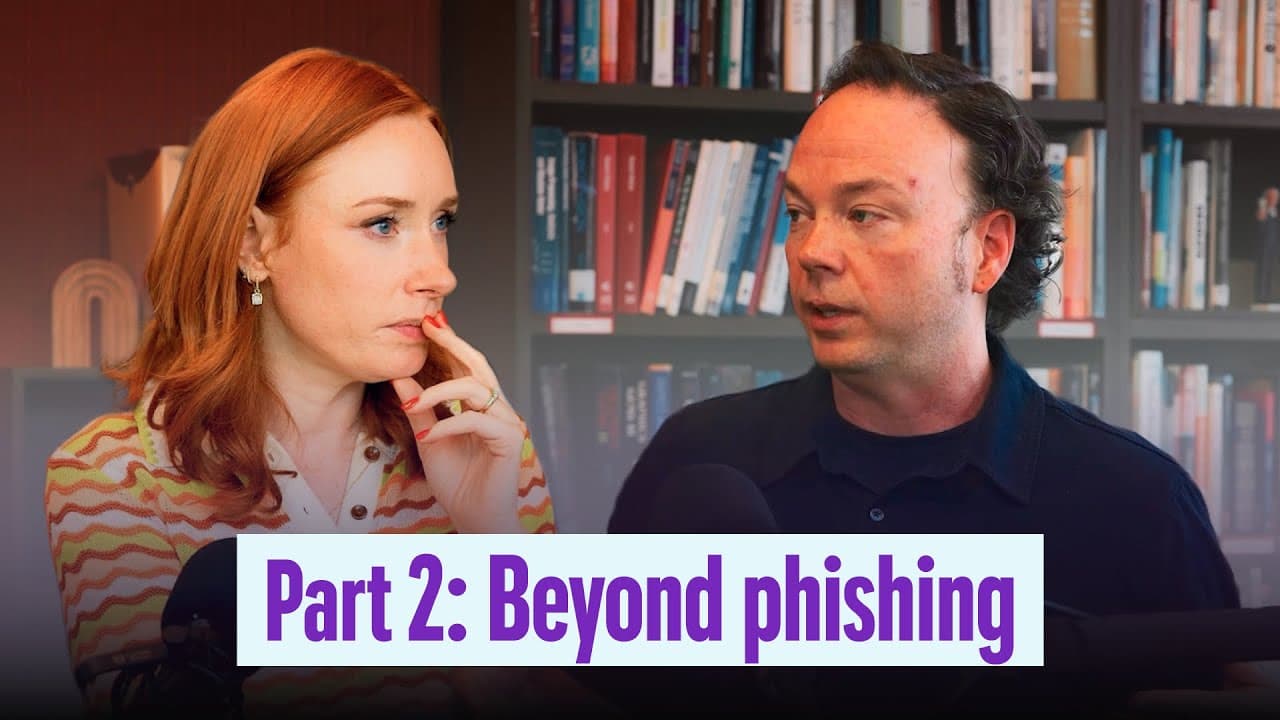
AI could give cybersecurity defenders the long-term advantage by helping them discover and repair vulnerabilities before sophisticated capabilities spread to more attackers. Four Flynn also explains how nation-state prepositioning, ransomware, million-dollar zero-days, and Project Zero’s 90-day disclosure policy shape the contest between attackers and defenders. Read on to understand the threats, incentives, and defensive practices behind that outlook.
Transcript
HANNAH FRY: Who do you think wins in the long term? In the long run, which way does the seesaw swing? Is it cyber criminals or security? FOUR FLYNN: Well, I have to say that I think the defenders ultimately will win to some extent. I mean, we won't necessarily win every battle, but I hope that we can win the war. [MUSIC PLAYING] HANNAH FRY: Welcom... Read More
Key Insights
- Cyber threat actors are divided into several broad groups, including nation-state operators, loosely affiliated groups, and independent attackers. Their motivations range from geopolitical espionage and support for warfare to direct financial gain through attacks such as ransomware.
- Prepositioning is the practice of quietly infiltrating critical infrastructure before an open conflict begins. Attackers may periodically return to confirm that they retain command and control and could still disrupt systems such as power grids if geopolitical conditions change.
- Modern ransomware works by slowly compromising an organization before suddenly denying access to essential databases and backups. The resulting outage gives attackers leverage to demand cryptocurrency in exchange for decrypting data and restoring the victim’s ability to operate.
- Zero-day vulnerabilities can be worth millions of dollars because multiple kinds of buyers seek them. Potential purchasers include governments, companies that equip law enforcement, and malicious actors, creating a black or gray market in which ethical boundaries can become contested.
- AI could make sophisticated vulnerability discovery accessible to more attackers. Defensive investment is therefore intended to find and repair weaknesses first, improve the resilience of the wider ecosystem, and prevent capabilities that were once rare and expensive from spreading unchecked.
- Project Zero is a Google effort whose specialists find novel vulnerabilities and disclose them through a transparency-focused process. Its 90-day deadline gives affected companies a defined period to patch a reported flaw before technical information is released publicly.
- Public disclosure changes security incentives by making delay costly. Before firm deadlines became normal, companies could postpone reported fixes for months or longer, leaving consumers exposed when malicious groups independently discovered and exploited the same unresolved weaknesses.
- EternalBlue illustrates the danger of retaining vulnerabilities for government use. A leaked toolkit included novel flaws that were later weaponized in WannaCry, while the discussion notes that Microsoft had produced a patch somewhere along the timeline, showing that available fixes still require deployment.
Install to Summarize YouTube Videos and Get Transcripts
Explore YouTube Video Summarizer or Get YouTube Transcript Extractor
Questions & Answers
Q: How is AI changing cybersecurity defense?
AI could make sophisticated vulnerability discovery less scarce and accessible to more attackers. Defenders are therefore investing in AI-based security systems to find and repair weaknesses early, strengthen the broader software ecosystem, and prevent powerful capabilities from spreading unchecked.
Q: Does Four Flynn think attackers or cybersecurity defenders will win?
Four Flynn thinks defenders will ultimately win to some extent. He cautions that defenders will not necessarily win every battle, but he hopes they can win the broader war.
Q: Who are the main types of cyber threat actors?
Cyber threat actors include nation-state operators, groups loosely affiliated with governments, and independent attack groups. Their motives range from espionage and support for warfare to raising funds or pursuing direct financial gain through attacks such as ransomware.
Q: What is cyber prepositioning in critical infrastructure?
Cyber prepositioning means infiltrating critical infrastructure before an open conflict begins so it can potentially be disrupted later. Attackers may return every few months to confirm that they retain command and control and that their systems still work.
Q: How does modern ransomware disrupt a company?
Attackers may slowly and quietly compromise a company before suddenly blocking access to both its core database and backups. With the business offline, they demand Bitcoin or another cryptocurrency in exchange for decrypting the data and restoring operations.
Q: Why are zero-day vulnerabilities worth millions of dollars?
Zero-day vulnerabilities attract several kinds of buyers, including governments, companies that equip law enforcement, and malicious actors. Four Flynn says some can be worth millions or even many millions of dollars, creating an active black or gray market.
Q: How does Project Zero’s 90-day disclosure policy work?
Project Zero reports a vulnerability to the responsible company and gives it 90 days to remediate the flaw. If the company does not patch it within that period, technical information can be disclosed publicly, creating pressure for a timely fix.
Q: Why can transparent vulnerability disclosure improve cybersecurity?
Transparent disclosure makes delayed remediation visible and costly instead of allowing companies to postpone fixes for months or longer. The approach encouraged formal processes for vulnerability reporting, assessment, rewards, and remediation across the industry.
Summary & Key Takeaways
-
Cyber threats come from nation-states, affiliated groups, and independent criminals with different motives. Governments may pursue espionage, support warfare, or quietly establish access to critical infrastructure for possible future disruption. Financially motivated groups often use ransomware to steal or encrypt essential data, block access to backups, and demand cryptocurrency payments.
-
The vulnerability market includes companies, governments, researchers, and malicious actors. Valuable zero-day flaws can sell for millions of dollars, creating complicated incentives around discovery and disclosure. AI could make vulnerability research more accessible to attackers, so defenders must invest in systems that identify and repair weaknesses before those weaknesses cause widespread damage.
-
Project Zero changed security incentives through transparent vulnerability disclosure and a 90-day deadline for companies to issue patches. The policy encouraged organizations to establish formal reporting, assessment, reward, and remediation processes. The broader discussion also addresses social engineering, passkeys, risk-based authentication, autonomous agents, privacy challenges, and the need for global cooperation.
Read in Other Languages (beta)
Share This Summary 📚
Summarize YouTube Videos and Get Video Transcripts with 1-Click
Try YouTube Summary with ChatGPT & Claude or YouTube Transcript Generator
Explore More Summaries from Google DeepMind 📚




Summarize YouTube Videos and Get Video Transcripts with 1-Click
Try YouTube Summary with ChatGPT & Claude or YouTube Transcript Generator